
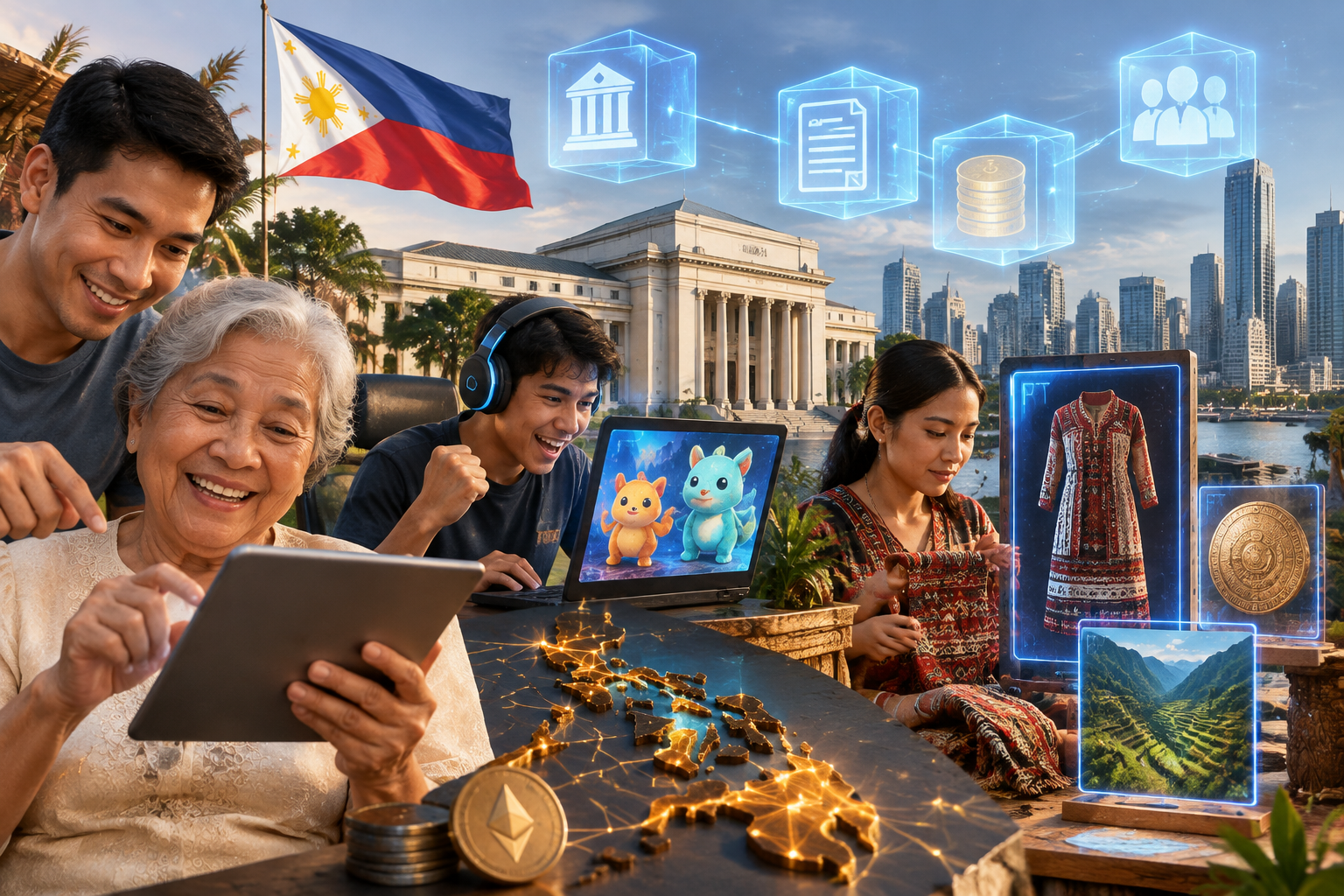
The Philippines Defies Global NFT Trends with Record-Breaking Adoption
The Philippines has emerged as an unlikely global leader in non-fungible token ownership. According to an independent survey by Finder, 32 percent of Filipino internet users own NFTs—a figure that outpaces every other nation surveyed, including the United States at 2.8 percent and Canada at 2.5 percent. The global average sits at just 1.7 percent. What makes this statistic particularly striking is the demographic profile: Filipinos aged 65 and above are among the most likely to own NFTs, challenging the assumption that digital assets are exclusively a youth phenomenon.
Finder’s research also projects that NFT adoption in the Philippines could soon reach 41.5 percent. The Australian-based information service attributes this surge largely to play-to-earn gaming models, particularly Axie Infinity, which enabled thousands of Filipinos to generate income through NFT-based gameplay during periods of economic uncertainty. This grassroots adoption has created a foundation that extends far beyond speculative trading.
Government Embraces NFT Technology for Public Accountability
Perhaps the most significant development in 2026 is the Philippine government’s direct incorporation of NFT-style technology into public recordkeeping. Under the Digital Bayanihan Chain initiative, the Department of Information and Communications Technology has begun placing national budget records, contracts, and public documents on blockchain platforms. Beginning with the 2026 General Appropriations Act, every peso of taxpayer money is recorded on an immutable ledger accessible to citizens, watchdog groups, and auditors.
DICT officials describe the system as a “digital seal of truth”—once a document is minted as a tokenized record, it cannot be altered or erased, even across administrations. This application of NFT technology for governance represents one of the first large-scale implementations of its kind globally, positioning the Philippines as a pioneer in blockchain-enhanced transparency.
Cultural Preservation Meets Digital Innovation
Beyond governance and gaming, Filipino creators are leveraging NFTs to preserve and monetize cultural heritage. Minted MNL, the country’s premier platform for collectors and historians, has expanded its mission to bridge traditional numismatics with digital collecting. Chairman Sigrid Carandang emphasizes that technology has strengthened rather than replaced the collector’s mindset: “Technology has helped collectors become more informed. They can use tools like Google, image search, and AI to learn about coins, understand their value, and research their history”.
The organization’s “Where Stories Bloom” Summer Show 2026, held at The Westin Manila, featured auctions, authentication services, and educational programs designed to make collecting accessible to newcomers. Meanwhile, social enterprise Kandama has partnered with Filipino-led blockchain firm Tetrix to transform Ifugao woven masterpieces into NFTs, creating digital twins of indigenous fashion pieces that have garnered international attention, including a feature in Vogue Italia.
The $60 Billion Tokenized Asset Opportunity
Industry projections paint a bullish picture for the Philippines’ broader tokenized economy. A white paper released by local crypto exchange PDAX, in partnership with Saison Capital and Onigiri Capital, estimates the country could unlock a $60 billion tokenized-asset market by 2030. The report, titled “Project Bayani: The Philippines’ Asset Tokenization Opportunity,” identifies tokenized government bonds, equities, and mutual funds as key drivers of financial inclusion.
The data reveals a striking disparity: while just under five percent of Filipinos invest in traditional markets such as stocks or bonds, 14 percent already own cryptocurrencies. This suggests that the population is significantly more comfortable with digital-native financial products than conventional instruments—a dynamic that positions NFT-based assets for sustained growth.
Regulatory Clarity and Industry Leadership
The regulatory environment is maturing alongside market growth. In June 2026, the Bangko Sentral ng Pilipinas approved Memorandum No. M-2026-023, establishing unified guidelines for coin and token listing across all authorized virtual asset service providers. The Blockchain Council of the Philippines also appointed Luis Buenaventura—a former Yield Guild Games country manager and the first Filipino NFT artist whose works sold at both Christie’s and Sotheby’s—as its new president.
Buenaventura framed the council’s mission in explicitly national terms: “The Council’s role is more critical than ever this 2026, both in terms of industry partnerships and nation-building”.