
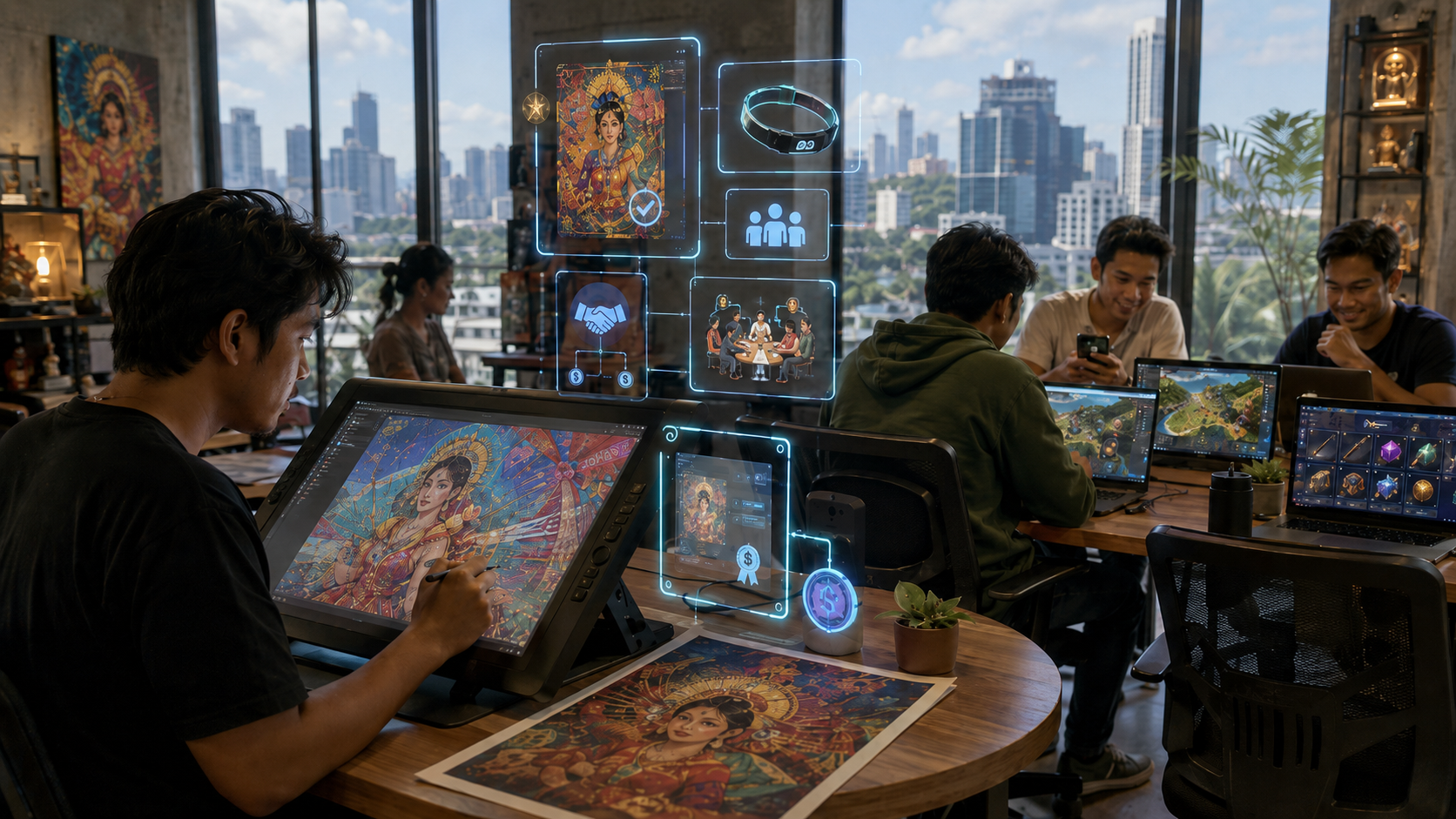
In Manila’s creative districts, digital artists are no longer selling mere JPEGs. They are issuing smart-contract-based certificates of authenticity that unlock exhibition access, royalty shares, and community governance. At the same time, gaming guilds in Cabanatuan and Batangas manage thousands of NFT-based game assets for players earning a living in titles like Axie Infinity and Pixels. This dual evolution has repositioned the Philippines as Southeast Asia’s most organic NFT adoption laboratory, where collectibles are judged less by hype and more by utility.
The State of NFT Collectibles in the Philippines in 2026
According to Statista’s NFT market outlook for the Philippines, updated January 2026, the number of NFT users in the country is projected to reach 1.1 million by year-end, driven primarily by gaming and digital art segments. Unlike the 2021 boom dominated by speculative floor-price flipping, the 2026 market shows a clear shift toward creator-owned economies and in-game asset interoperability. Average transaction values have declined, but user retention and repeat engagement have improved significantly, reflecting a maturation from gambling-like behavior to genuine consumption and collection.
From Digital Art to Cultural Heritage
Filipino artists such as Luis Buenaventura and community platforms like Art by the Sea have moved beyond minting single works. They now issue “story tokens” that bundle high-resolution files, physical prints, artist studio visits, and secondary-sale royalties. Indigenous weaving patterns from the Cordillera region have also been tokenized under strict community consent frameworks. This allows collectors to own a digital provenance record while royalties flow directly to artisan cooperatives. The approach directly counters earlier criticism that NFTs strip cultural assets from their context. Instead, the metadata acts as a permanent attribution layer accessible through public blockchain explorers.
Gaming NFTs and Guild Economies
The video game sector remains the largest driver of NFT adoption in the Philippines. Yield Guild Games and its local offshoot YGG Pilipinas now manage more than 40,000 scholar accounts, but the assets themselves have evolved. Instead of single Axie monsters, players hold land plots, crafting blueprints, tournament badges, and cross-game avatars. These items function less like lottery tickets and more like rental equipment in a digital gig economy. Game developers such as XOVOX Labs, based in Cebu, have introduced soulbound tokens that record player achievement and cannot be resold. This counters pay-to-win dynamics while preserving collector value for limited-edition cosmetic NFTs.
Regulatory Clarity and Real-World Impact
The Bangko Sentral ng Pilipinas and the Securities and Exchange Commission have not declared NFTs as securities by default, but they have repeatedly warned against unregistered investment schemes disguised as digital collectibles. In response, local marketplaces like Scarletbox have adopted a self-regulatory framework: mandatory disclosure of royalty splits, identity verification for artists, and a 30-day cooling-off period for first-time buyers. This has reduced fraud complaints by 23 percent in the first quarter of 2026, according to the marketplace’s transparency report. The Statista link above provides additional adoption and revenue data that supports this upward trend.
Why the Philippine Model Stands Out
What makes the Philippine NFT landscape distinctive is its grassroots, income-oriented foundation. Rather than being driven by luxury auction houses or celebrity drops, adoption grew from play-to-earn necessity during the pandemic and then expanded into creative livelihoods. Today, a digital illustrator in Davao can earn recurring royalties from a 100-edition NFT collection while simultaneously renting gaming assets to scholars in Manila. This hybrid “create-to-earn and play-to-earn” model has caught the attention of regional Web3 investors looking for sustainable use cases beyond speculation.
Challenges Still Facing Mass Adoption
Infrastructure gaps remain. High gas fees on Ethereum have pushed many creators to Polygon and Ronin, while internet reliability in rural areas limits real-time gameplay. Education is another hurdle, as many new collectors do not understand wallet security or metadata permanence. Yet the direction is clear. As more Filipino developers integrate NFTs into mobile-first games and more artists use them as subscription-like memberships, the country is demonstrating that digital collectibles can survive beyond hype cycles when they solve real problems—authenticity, ownership, and income distribution.