
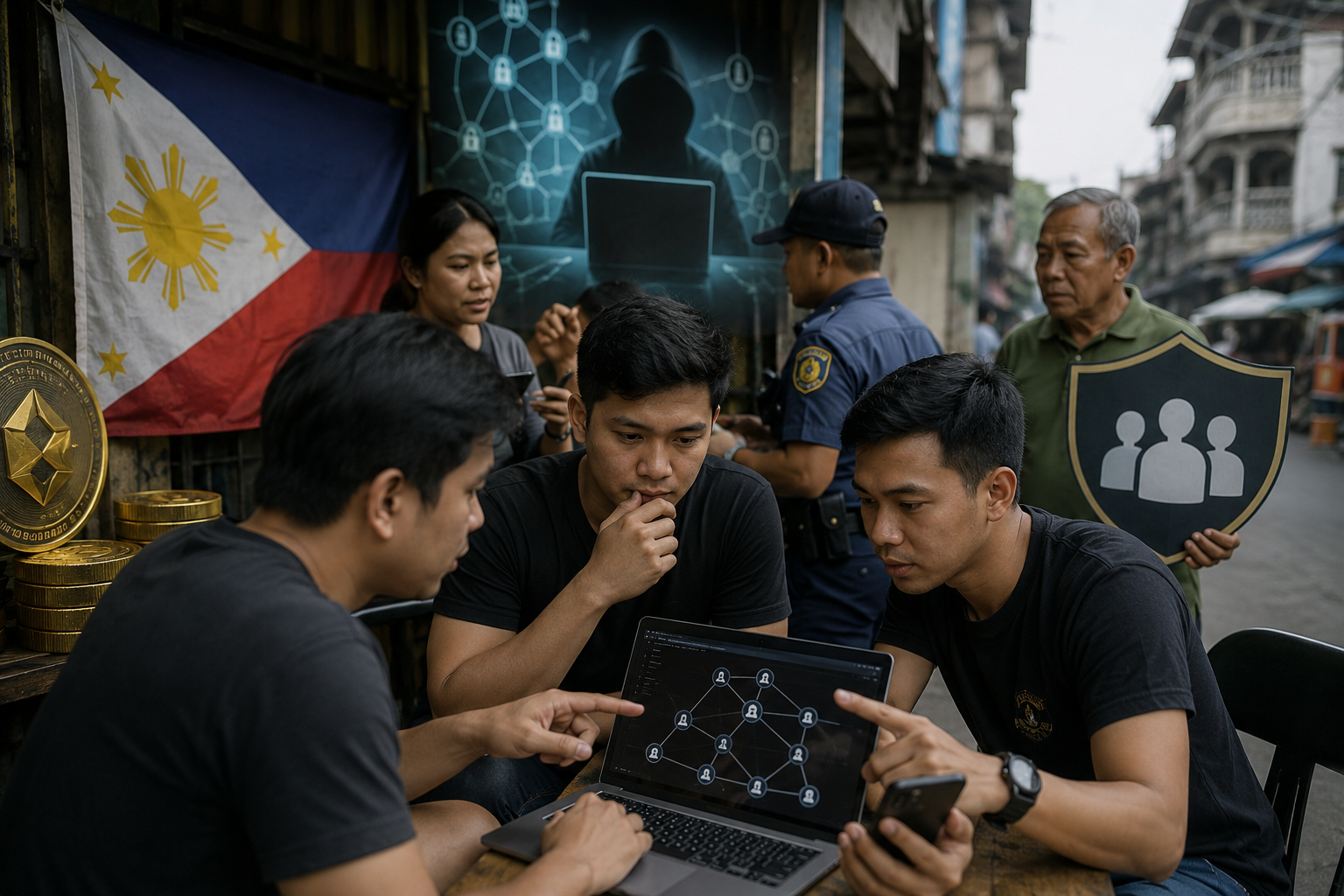
A Growing Threat: Crypto Fraud in the Philippines
The Philippines has long been a global hotspot for crypto adoption, ranking among the top ten in grassroots usage according to Chainalysis. But that popularity has a dark side. In 2026, fraudsters are using increasingly sophisticated tactics—fake investment pools, clone VASP mobile apps, romance-linked crypto traps, and P2P payment reversal schemes on platforms like GCash and Maya. The result is a rising number of ordinary Filipinos losing money before regulators can act.
According to the Bangko Sentral ng Pilipinas (BSP), complaints involving unlicensed virtual asset service providers and social media investment scams increased significantly in early 2026, forcing the central bank to tighten its public advisories and VASP monitoring (BSP official website). Yet enforcement alone is often too slow. That is where crypto communities have stepped in, transforming from discussion groups into rapid-response security networks.
Why Communities Are Faster Than Regulators
Fraud in the Philippines moves at internet speed. Scammers launch a Telegram or Facebook group, promise 2% daily returns, collect deposits in USDT, and vanish within 72 hours. By the time the SEC issues an advisory, the operators have already rebranded. Community groups, however, can flag suspicious behavior in minutes.
One prominent example is the rise of “Crypto Watch” Telegram channels and Viber communities in Metro Manila, Cebu, and Davao. These groups, often run by volunteers and former scam victims, monitor new token launches, verify VASP licenses against the BSP registry, and publish blacklists of wallet addresses linked to known scammers. Some communities have developed simple but effective standard operating procedures: if a project lacks a BSP or SEC registration, members are instructed to file a complaint and avoid any transaction.
Blockchain Forensics Goes Grassroots
A key shift in 2026 is the democratization of blockchain analysis. Previously, tracing stolen funds required expensive tools like Chainalysis or Elliptic. Today, Filipino community moderators use free explorers such as Etherscan, BscScan, and Solscan to follow transaction trails. They identify clustering behavior—multiple scam wallets funded from a single source—and share annotated screenshots publicly.
These efforts have led to real recoveries. In several documented community-led cases, pressure from social media exposure prompted scam operators to return partial funds to avoid being identified. While not a substitute for police action, the strategy works because it destroys the anonymity scammers rely on.
Collaboration with Government Agencies
In 2026, the relationship between crypto communities and Philippine authorities is becoming more structured. The BSP and SEC now host regular online consultations with crypto community moderators. The Anti-Money Laundering Council (AMLC) has also begun accepting community-compiled transaction data as supporting evidence in suspicious transaction reports.
This collaboration works both ways. Communities benefit from official guidance on how to document fraud for legal action. Regulators gain real-time ground intelligence that traditional reporting channels miss. Some community leaders have become certified “Cybercrime Watch Coordinators” under the Philippine National Police’s Anti-Cybercrime Group, a program expanded in 2026.
Turning Victims into Vigilantes
Perhaps the most powerful change is psychological. Instead of hiding in embarrassment, more Filipino scam victims now share their experiences publicly. They post wallet addresses, Telegram handles, and fake identities in community-led databases. This culture of transparency makes it harder for fraudsters to reuse the same infrastructure.
Online academies and community AMAs teach Filipinos how to spot red flags: guaranteed returns, pressure to recruit, absence of a physical office, and pushy P2P instructions. The message is consistent: in a country where crypto adoption is high but financial literacy is still uneven, community education is the first line of defense.
As 2026 progresses, the most resilient security layer for Philippine crypto may not be law enforcement or technology alone, but the thousands of ordinary Filipinos who now treat crypto safety as a shared civic duty.