
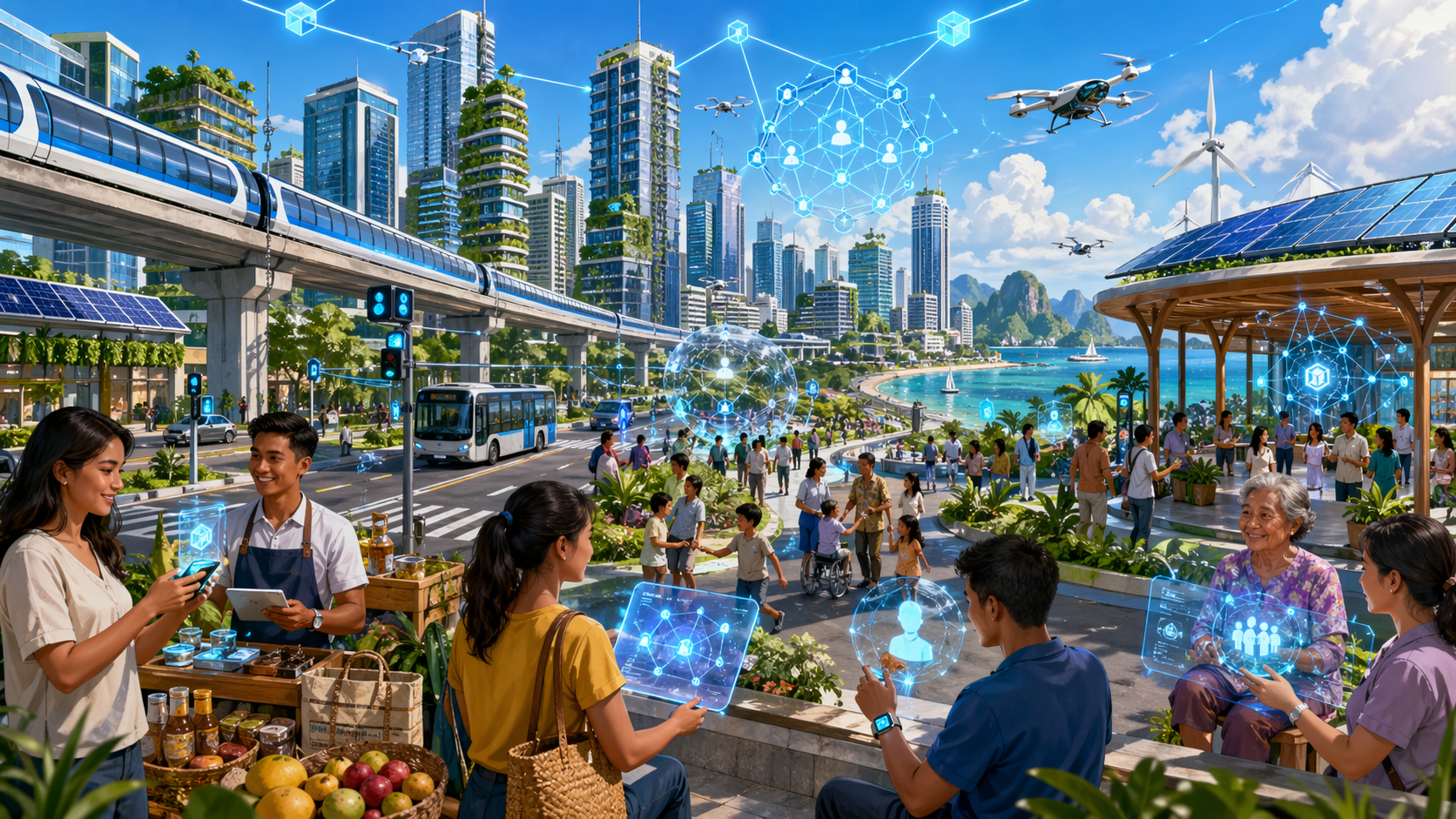
The Philippines is rapidly advancing towards embracing smart city solutions, recognizing the need for more efficient, sustainable, and tech-driven urbanization. With over 100 million people spread across thousands of islands, the Philippines faces unique challenges related to urbanization, traffic congestion, resource management, and social inequality. As the country works towards addressing these issues, the emergence of Web3 technology offers a revolutionary approach to transforming cities into smarter, more connected spaces. Web3, often associated with blockchain, decentralized applications (dApps), and cryptocurrencies, presents numerous opportunities to empower citizens, governments, and businesses in the development of smarter, more efficient cities.
Understanding Web3 Technology
Web3 refers to the next generation of the internet, which is decentralized and built on blockchain technology. Unlike Web2, where data is largely controlled by centralized entities such as social media companies or tech giants, Web3 aims to give users control over their own data and online interactions. In Web3, blockchain serves as the backbone, enabling peer-to-peer transactions and interactions without intermediaries. This decentralization fosters transparency, security, and privacy.
Key elements of Web3 include cryptocurrencies, non-fungible tokens (NFTs), decentralized finance (DeFi), and decentralized autonomous organizations (DAOs). These components enable new forms of digital ownership, governance, and financial transactions, all of which could be critical in shaping the future of smart cities.
Web3’s Potential for Smart City Development in the Philippines
- Decentralized Governance and Civic Participation
In traditional governance models, decisions are often made in centralized ways, leading to inefficiencies and potential corruption. Web3’s decentralized nature introduces new possibilities for governance in smart cities, where citizens can participate directly in decision-making processes through blockchain-based voting systems. For example, decentralized autonomous organizations (DAOs) can allow local communities to have a say in urban planning, budgeting, and resource allocation, making governance more transparent and democratic.
In the context of the Philippines, where corruption and inefficiency are often reported at various levels of government, Web3 can provide a tool for combating these issues. Through blockchain technology, all transactions and government actions can be transparently recorded, reducing the likelihood of fraud and mismanagement of public funds.
- Data Privacy and Security
One of the core tenets of Web3 is the protection of user data. In a country like the Philippines, where concerns about data security and privacy are growing, Web3 provides a way to empower citizens with control over their personal information. Instead of relying on centralized entities to store and manage data, Web3 enables individuals to own and control their own digital identities.
Smart cities powered by Web3 can implement decentralized identity systems, which allow citizens to securely access government services, health records, and other important digital resources. This reduces the risk of data breaches, identity theft, and the misuse of personal information, ensuring a safer environment for citizens.
- Enhanced Transparency and Anti-Corruption Measures
Blockchain’s immutability makes it a powerful tool for ensuring transparency in urban projects. Smart cities in the Philippines could leverage blockchain to track government spending on infrastructure projects, monitor the distribution of resources, and verify the completion of public works. This level of transparency would make it more difficult for funds to be misappropriated or siphoned off by corrupt officials.
For example, through blockchain-based platforms, Filipinos could track the progress of public housing projects, monitor the distribution of government aid, or even participate in the creation of policies. The decentralized and immutable nature of blockchain ensures that these records cannot be altered or manipulated after they are created, which provides a high level of accountability.
- Smart Contracts for Efficient Services
Web3 also enables the use of smart contracts, which are self-executing contracts with the terms of the agreement directly written into lines of code. In the context of smart cities in the Philippines, smart contracts could streamline administrative processes, automate public services, and ensure efficient delivery of services. For instance, these contracts could automate payments for utilities like electricity and water, trigger infrastructure repairs when needed, or even allow citizens to access government grants and subsidies more easily.
Smart contracts could reduce bureaucratic inefficiencies, minimize human error, and increase the speed at which services are delivered, making urban living more convenient for residents. This technology also minimizes opportunities for corruption or bribery, as the contracts operate on clear, pre-defined terms that cannot be altered without consensus.
- Decentralized Finance (DeFi) and Economic Inclusion
Web3 offers the potential to integrate decentralized finance (DeFi) into the smart city ecosystem, allowing Filipinos, particularly those in rural areas, to access financial services without the need for traditional banking systems. DeFi platforms enable users to lend, borrow, and invest in cryptocurrencies or other digital assets, making it easier for underserved populations to engage in the digital economy.
In the context of smart city development, this financial inclusion could play a key role in reducing poverty and inequality. For instance, DeFi solutions could be used to fund community-driven projects, incentivize sustainable urban practices, or support small businesses in underserved regions.
The Road Ahead for Web3 and Smart Cities in the Philippines
The integration of Web3 into the development of smart cities in the Philippines is still in its early stages, but the potential is enormous. The government, private sector, and local communities need to collaborate to build the necessary infrastructure, legal frameworks, and educational programs to harness the benefits of Web3. As Web3 technology continues to evolve, the Philippines stands at the forefront of a new wave of urban transformation, one that could offer greater efficiency, transparency, and inclusivity for all citizens.
In the coming years, the adoption of Web3 could reshape how Filipinos interact with their cities, engage with government services, and manage their personal and financial information, making smart cities not just a vision for the future but a reality for the present.