
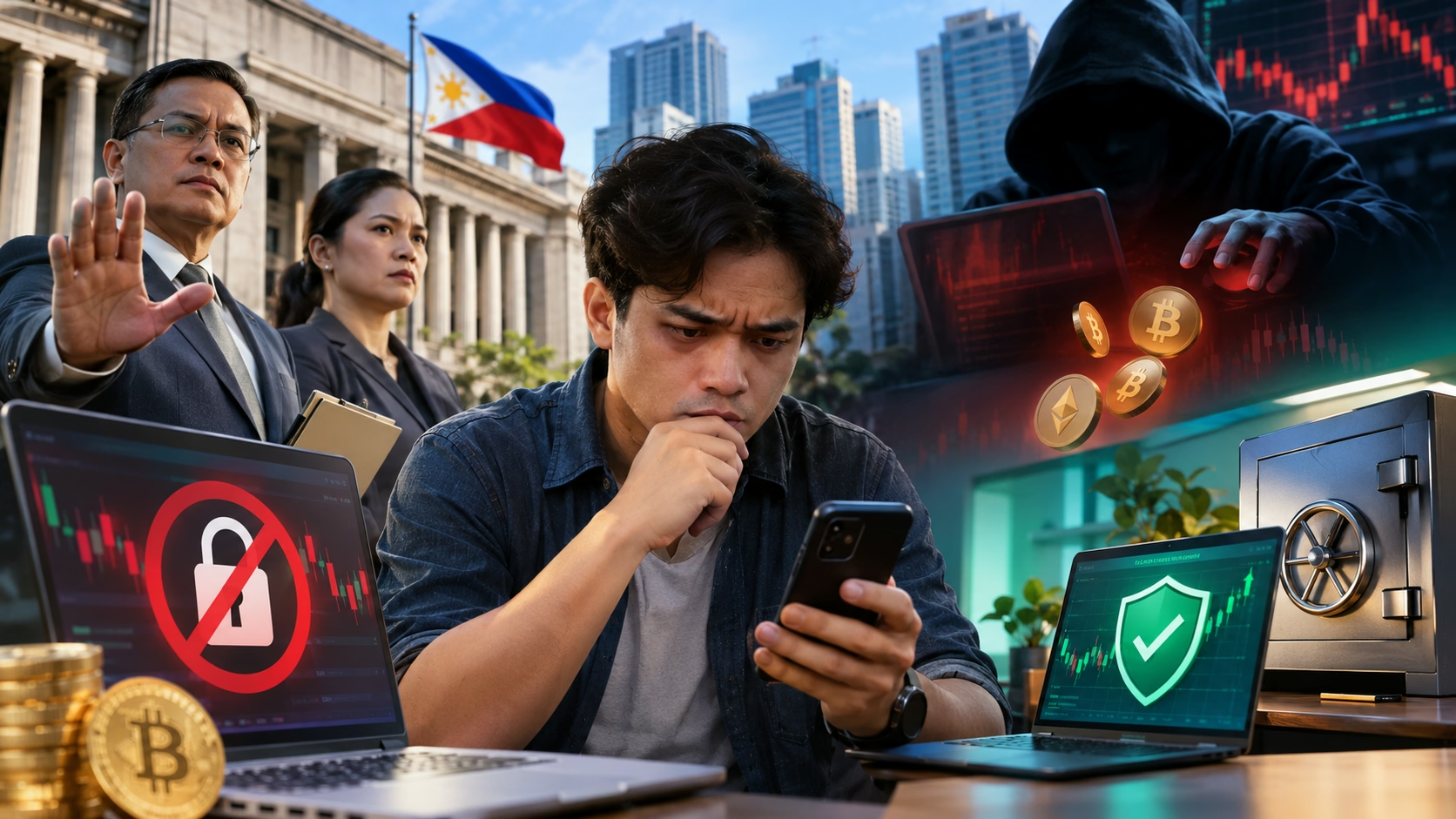
The Philippines has one of Southeast Asia’s most vibrant crypto markets, but a surge in unlicensed trading platforms is putting the funds of Filipino users—referred to here as PNA users—in serious jeopardy. In 2026, regulators are no longer just issuing warnings; they are blocking access, filing charges, and naming platforms that operate outside the law. For everyday traders, the message is clear: convenience on an unregistered exchange can cost you everything.
The Regulatory Crackdown Intensifies
BSP and SEC Warnings Target Unlicensed VASPs
In May 2026, the Bangko Sentral ng Pilipinas (BSP) issued a blunt advisory: do not deal with unauthorized virtual asset service providers (VASPs). The central bank warned that unlicensed platforms expose users to “loss of funds or assets due to fraud, scams, and operational failures,” including security breaches, cyberattacks, and even bankruptcy. The BSP also highlighted the absence of legal recourse, consumer assistance mechanisms, and proper private-key handling—gaps that leave PNA users with nowhere to turn when things go wrong.
The Securities and Exchange Commission (SEC) has escalated its own enforcement. Under the Crypto Asset Service Provider (CASP) framework implemented in July 2025, any entity offering crypto services to Filipinos must register as a stock corporation, meet a ₱100 million minimum capital requirement, and secure specific licenses. Platforms that fail to comply are being named and shamed. In April 2026, the SEC flagged dYdX, Aevo, gTrade, Pacifica, Orderly, Deriv, and Ostium as unregistered operators, warning that promoting them could lead to fines of up to ₱5 million or 21 years in prison. Earlier, in August 2025, the SEC issued similar warnings against ten exchanges, including OKX, Bybit, KuCoin, and Kraken. By December 2025, access to Coinbase and Gemini was blocked outright.
What Makes Unlicensed Exchanges Dangerous for PNA Users?
Lack of Legal Recourse and Consumer Protection
The most immediate risk is the regulatory gray zone itself. When a platform operates without a BSP or SEC license, Filipino users have no local regulator to mediate disputes over frozen funds, failed withdrawals, or unauthorized account activity. The BSP explicitly warns that unauthorized VASPs lack “legal recourse and consumer assistance mechanisms” and may engage in deceptive advertising, mishandle private keys, or suffer cyber incidents without accountability.
Fraud and Operational Failures
Unlicensed exchanges are also prime targets for fraud. The SEC’s May 2026 advisory on HNZLLQ Exchange illustrates the pattern: the platform claimed to offer AI-powered digital asset management and leveraged trading, but it was not registered as a corporation, had no CASP license, and solicited investors through online group chats and “agents” directing trades. The SEC warned that such schemes expose the public to fraud, financial losses, and illicit financial activities—risks that intensify during periods of heightened market activity.
Real Cases: From HNZLLQ to Binance’s Local Partner
The Binance-Blockshoals Loophole
Even globally recognized brands are not exempt. In June 2026, the BSP confirmed that Binance and its local partner, Blockshoals Technologies, do not hold the VASP license required to serve Filipino users. While Binance may offer crypto trading under certain SEC arrangements, neither entity is authorized to handle peso transfers or perform other BSP-regulated activities. For PNA users, this means that funds held on such platforms sit outside the central bank’s safety net, and enforcement actions could restrict access overnight.
The Blocking of 50 Exchanges
The crackdown has also gone beyond advisories. In late 2025, the National Telecommunications Commission blocked access to 50 unregistered VASPs, including Coinbase and Gemini, signaling a shift from warning letters to infrastructure-level restrictions. The BSP has vowed to continue working with the SEC and NTC to “restrict access of Filipinos to unauthorized VASP platforms” through market surveillance.
How PNA Users Can Protect Their Funds
Verifying Licenses and Practicing Cyber Hygiene
The first line of defense is verification. The BSP maintains a public directory of authorized VASPs, and users should confirm that any platform they use appears on that list before depositing funds. The SEC’s CASP registry provides an additional layer of checks. Beyond licensing, the BSP urges financial consumers to protect personal information, practice cyber hygiene, and transact only with duly licensed institutions.
Staying Informed About Enforcement Actions
Regulatory actions are moving fast in 2026. PNA users should monitor SEC and BSP advisories for newly flagged platforms, and treat “limited-time” trading schemes promoted through group chats and social media with extreme skepticism. The HNZLLQ case shows how quickly unlicensed operators can attract deposits—and how little recourse investors have once the platform is exposed.
For a market as dynamic as the Philippines’, the line between innovation and exploitation is drawn by licenses. Users who ignore that line are not just trading crypto; they are gambling with their financial security.