
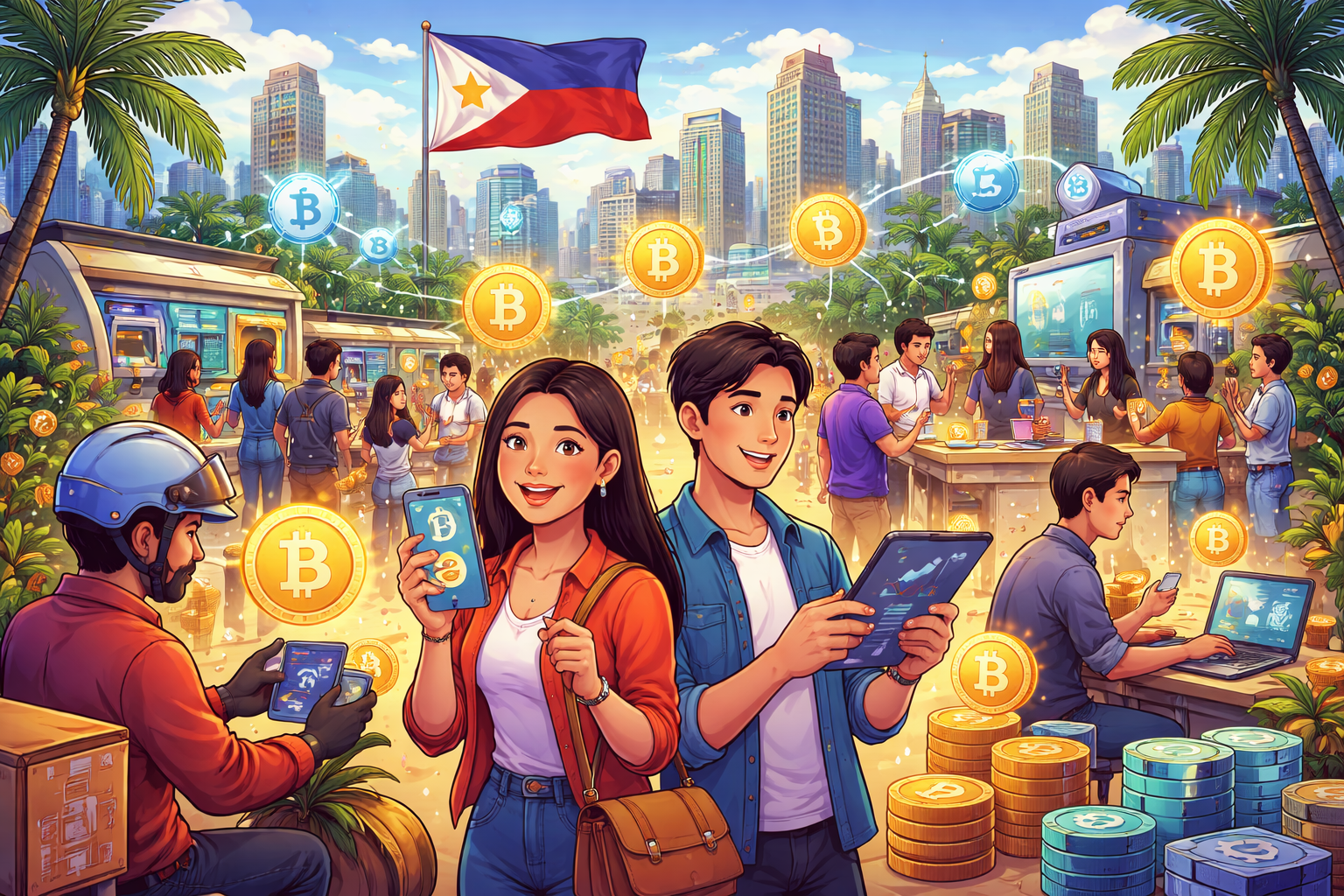
The Philippine crypto market has developed in a unique way compared with many other countries in Southeast Asia. While global crypto trends often focus on speculative trading, the Philippine market has also been shaped by practical financial needs such as remittances, digital payments, financial inclusion, and access to alternative income opportunities. At the center of these developments is blockchain technology, which provides the infrastructure that makes cryptocurrencies, decentralized applications, and token-based systems possible. Its influence goes beyond price movements, as it also affects how Filipinos use digital assets in daily life, how businesses explore innovation, and how regulators respond to the growing market.
One of the most important ways blockchain influences crypto trends in the Philippines is by improving access to financial services. A significant portion of the population has historically faced limited access to traditional banking. Blockchain-based systems allow users to store, transfer, and receive digital assets through mobile wallets without relying entirely on conventional financial institutions. This has made crypto appealing not only to traders but also to freelancers, small entrepreneurs, and overseas Filipino families who are looking for faster and cheaper ways to move funds. Because blockchain records transactions on a distributed ledger, users can verify transfers with greater transparency, which increases trust in cross-border payments and digital finance tools.
Another major trend linked to blockchain in the Philippines is the popularity of play-to-earn ecosystems and tokenized digital communities. The country became widely recognized for its strong participation in blockchain-based gaming, where users could earn digital tokens through in-game activities. This trend showed how blockchain can transform crypto from a purely investment-driven asset class into a functional digital economy. For many Filipinos, blockchain created opportunities to engage with crypto through gaming, digital ownership, and online communities rather than through traditional investment channels. This broadened market participation and introduced new groups of users to wallets, tokens, exchanges, and decentralized platforms.
Blockchain technology also supports the growth of decentralized finance, or DeFi, which has contributed to evolving market behavior in the Philippines. Through smart contracts, blockchain enables lending, staking, swapping, and yield-generating services without requiring centralized intermediaries. For users in the Philippines, this opens access to financial products that may otherwise be difficult to obtain. At the same time, DeFi has influenced local market trends by encouraging more sophisticated user behavior. Investors are no longer limited to buying and holding coins. They can participate in liquidity pools, explore stablecoin strategies, and move capital across different protocols. This adds depth to the market, although it also introduces higher levels of complexity and risk.
Regulation has become another area where blockchain’s role is highly visible. Because blockchain transactions are traceable and permanently recorded, regulators and licensed exchanges can develop stronger compliance systems around identity verification, anti-money laundering measures, and transaction monitoring. In the Philippines, this has helped shape a market environment where innovation and regulatory oversight must develop together. Blockchain’s transparency can support compliance, but its decentralized nature also challenges traditional legal frameworks. As a result, market trends are influenced not just by technology adoption, but by how effectively public institutions and private companies balance consumer protection with innovation.
Blockchain is also shaping investor sentiment by encouraging long-term interest in Web3 infrastructure. Instead of viewing crypto only as a speculative market, many participants in the Philippines now see blockchain as a foundation for digital identity, tokenized assets, payment systems, and online ownership. This shift matters because it creates a more mature market narrative. Interest expands from short-term trading opportunities to broader questions about utility, scalability, and real-world adoption. In this sense, blockchain technology is not only driving crypto activity in the Philippines but also redefining what the market represents for users, businesses, and the wider digital economy.