
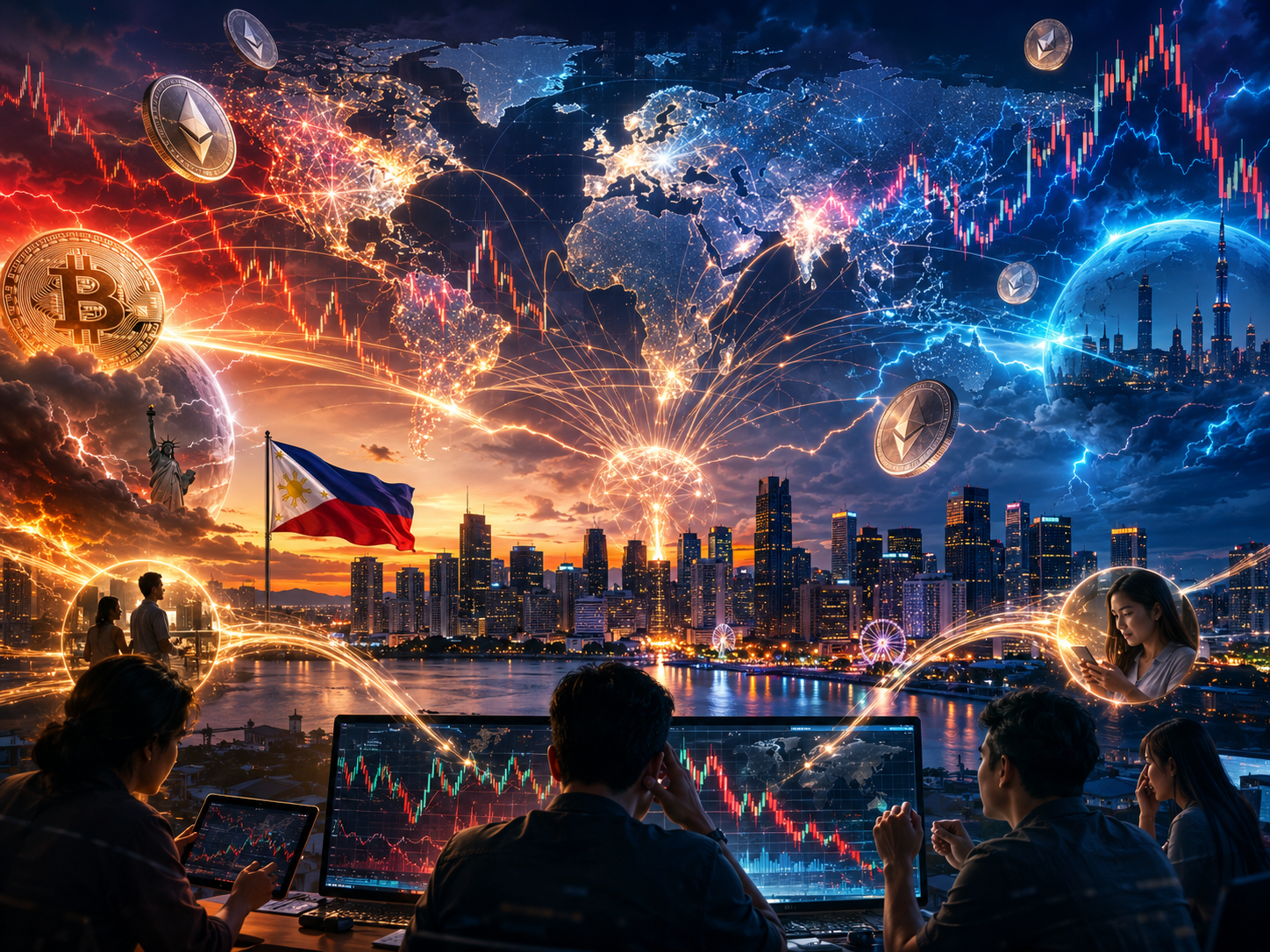
The cryptocurrency market has emerged as a dynamic and high-risk financial ecosystem, and the Philippine crypto market is no exception. As digital assets gain traction in the Philippines, they have become increasingly sensitive to fluctuations in global financial conditions. Volatility at the international level, driven by economic, political, or technological factors, can significantly affect investor behavior, regulatory responses, and overall market growth in the country.
One of the primary drivers of volatility in the crypto market is global macroeconomic uncertainty. Events such as changes in U.S. interest rates, inflation reports, or economic slowdowns in major economies like China or the European Union often trigger rapid price movements in global cryptocurrencies, including Bitcoin and Ethereum. Filipino crypto investors are not isolated from these trends. Many Philippine exchanges, such as Coins.ph and PDAX, experience sharp trading volume changes corresponding to global market fluctuations. For example, a sudden surge in U.S. Federal Reserve interest rates can lead investors to shift from high-risk assets like cryptocurrencies to traditional safe-haven assets, causing temporary dips in local crypto prices.
Geopolitical tensions also play a crucial role in shaping market sentiment. Conflicts, sanctions, or policy shifts in key economies create uncertainty that reverberates through global financial markets. The Philippine crypto market, heavily influenced by overseas remittances and investments, often reflects these international dynamics. Investors in the Philippines tend to react quickly to news from global markets, which can exacerbate local volatility. This responsiveness highlights the interconnectedness of Philippine crypto with worldwide economic and political landscapes.
Technological developments and regulatory changes in other countries further contribute to market instability. Regulatory announcements in the United States, South Korea, or Japan regarding crypto taxation, exchange operations, or central bank digital currencies can lead to rapid market adjustments. In the Philippines, the Securities and Exchange Commission (SEC) and the Bangko Sentral ng Pilipinas (BSP) have implemented frameworks for crypto trading and initial coin offerings (ICOs), but local investors often monitor global trends before making decisions. The adoption of stringent regulations abroad can sometimes spur proactive measures by Philippine authorities to maintain market stability and investor protection.
Investor behavior in the Philippines is notably reactive to global crypto volatility. Many retail traders view cryptocurrencies as speculative investments rather than long-term stores of value. This perception amplifies the effects of global market swings, as local traders may engage in panic selling or rapid accumulation depending on international trends. Additionally, the increasing presence of foreign institutional investors in Philippine crypto exchanges adds another layer of sensitivity, as their large-scale transactions can influence local market liquidity.
Remittances from overseas Filipino workers (OFWs) also intertwine with crypto market dynamics. As global volatility affects foreign exchange rates and international financial stability, OFWs may turn to cryptocurrencies for faster, cost-effective transfers. This adoption trend can bolster market activity but simultaneously introduces additional susceptibility to sudden global shocks. The cyclical interaction between remittance flows and crypto prices underscores the complex influence of international volatility on the Philippine crypto ecosystem.
Overall, the Philippine crypto market is highly interconnected with global economic, political, and technological developments. Volatility at the international level shapes investor sentiment, trading behavior, and regulatory responses, highlighting the need for informed strategies and risk management among local participants. As the crypto ecosystem continues to mature in the Philippines, understanding global market drivers becomes essential for both retail and institutional investors seeking to navigate the unpredictable yet promising landscape of digital finance.