
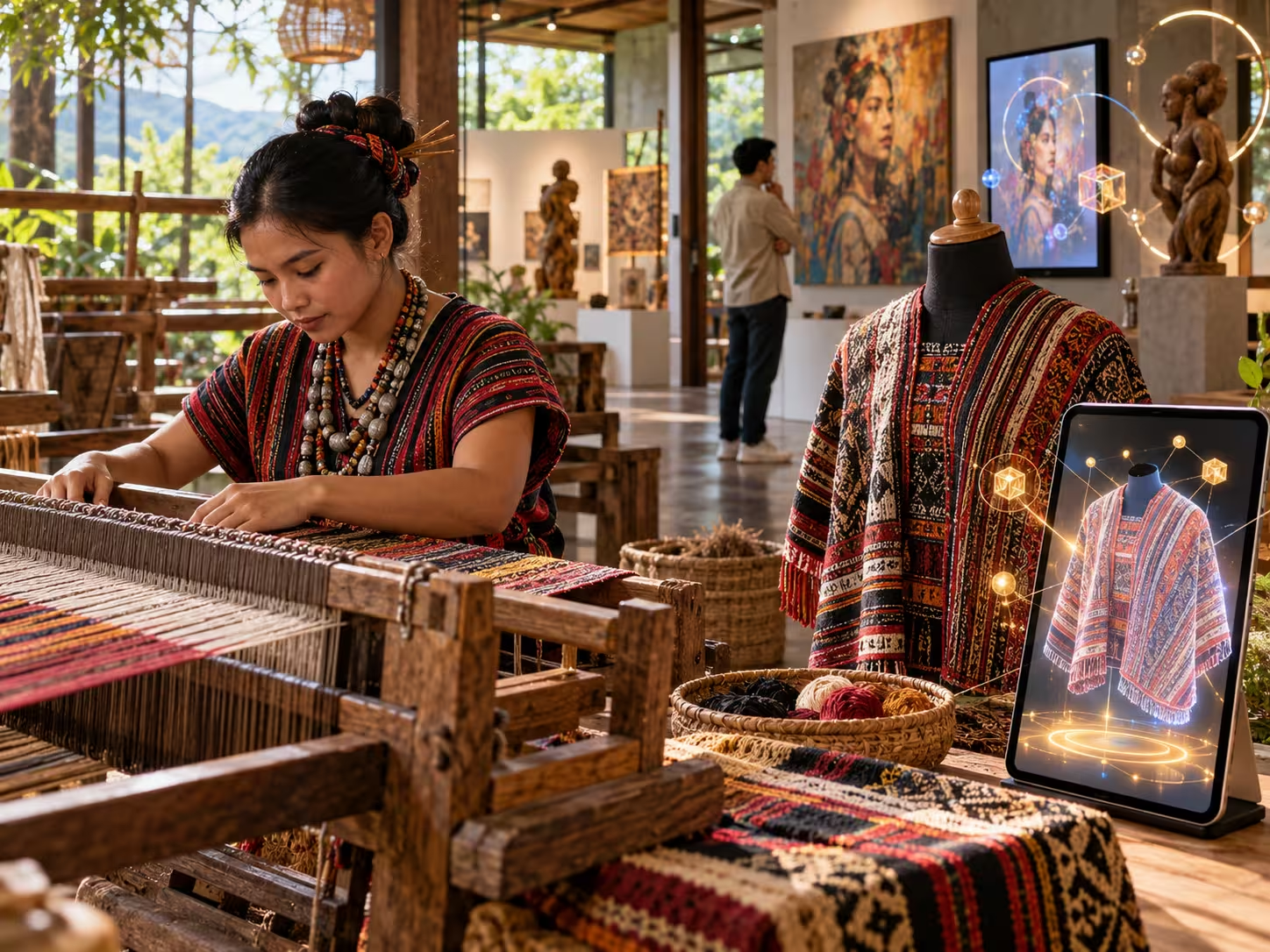
The Philippines has quietly become one of the world’s most enthusiastic adopters of non-fungible tokens, yet the most compelling story is not about speculation—it is about the deliberate fusion of digital ownership with physical artistry. This emerging model, known as “phygital” (physical + digital), is reshaping how Filipino creators distribute, authenticate, and monetize their work.
The Philippines’ NFT Advantage
The country’s appetite for digital collectibles is not anecdotal. A Finder survey covering over 28,000 respondents across 20 countries ranked the Philippines first in NFT ownership, with 32 percent of internet users holding NFTs—far outpacing the global average of 1.7 percent. Adoption is projected to climb to 41.5 percent, driven largely by play-to-earn gaming and a digitally native youth population.
This mass adoption creates a fertile ground for phygital experiments. The Philippines NFT market was estimated at USD 259 million in 2025 and is projected to reach USD 349 million by 2032, with partnerships between creators and technology companies identified as a key growth driver for 2026.
From Blockchain to Loom: Kandama’s Cultural Blueprint
Perhaps the most culturally significant phygital initiative comes from Kandama, a social enterprise based in Kiangan, Ifugao. Kandama transforms handloom-woven Ifugao garments—crafted by women weavers in the Julongan village—into NFTs that carry embedded authenticity codes.
Each Kandama NFT functions as a digital twin of a physical garment, recording its lifetime journey from raw material to design, sale, resale, and recycling. “Innovation is key to preservation,” says CEO Victor Baguilat Jr. “Web3 is the future of indigenous weaves”. The initiative demonstrates that phygital NFTs are not merely commercial products; they are cultural preservation tools that connect global collectors to marginalized artisan communities.
High-Profile Phygital Collaborations
In January 2024, Filipino-American rapper Apl.de.Ap partnered with Manila-based contemporary artist Bitto for the “Agents of Peace and Love” collection, launched through GCrypto, the NFT arm of GCash. The collection paired a 4×5-foot canvas painting with an unreleased Apl.de.Ap track, auctioned for PHP 310,000—more than double the starting bid. Limited-edition sculptures with embedded music and signed art prints were also released, with proceeds benefiting the Apl Foundation.
This collaboration illustrates a critical phygital principle: the physical object anchors emotional value, while the NFT guarantees provenance and unlocks digital experiences such as exclusive music or augmented reality content.
Infrastructure and Institutional Support
The technical backbone for phygital NFTs in the Philippines is maturing rapidly. GCrypto’s NFT Hub, launched in 2023, provides a mainstream gateway for Filipinos to explore digital art within a familiar super-app environment. Meanwhile, UBX (the fintech arm of UnionBank) and art-tech startup Unit 256 Ventures introduced Artifract, described as the Philippines’ first tokenized NFT platform, using proprietary “token factory technology” to fractionalize and authenticate physical artworks.
Educational initiatives are also gaining ground. UnionBank and CANVAS.PH have conducted webinars to help artists and collectors navigate the NFT market, signaling institutional recognition that phygital models require both technical literacy and artistic stewardship.
What Makes Philippine Phygital NFTs Distinctive
Unlike speculative NFT projects that exist purely in digital space, Philippine phygital initiatives consistently return to tangibility and community. The Minted MNL platform, led by collector Sigrid Carandang, emphasizes that “collecting is about what brings you joy”—a philosophy that prioritizes cultural heritage and emotional connection over pure financial speculation.
This ethos positions the Philippines as a potential global model for ethical, culturally grounded phygital innovation—one where blockchain serves not as an end, but as a bridge between ancestral craft and future collectors.