
MANILA — The Philippines has entered 2026 with an unprecedented regulatory offensive against cryptocurrency fraud, deploying a coordinated arsenal of central bank warnings, cease-and-desist orders, criminal prosecutions, and sweeping legislative reforms. The archipelago’s aggressive posture reflects a hard-earned lesson: as digital asset adoption surges across Southeast Asia, so too does the sophistication of scammers preying on Filipino investors.
BSP’s Preemptive Strike Against Unauthorized Platforms
The Bangko Sentral ng Pilipinas (BSP) opened the year with a blunt public advisory in May, warning Filipinos against transacting with unauthorized virtual asset service providers (VASPs). The central bank cautioned that engaging unlicensed platforms risks “loss of funds or assets due to fraud, scams and operational failures,” along with the absence of legal recourse and consumer assistance mechanisms. The BSP has since intensified collaboration with the Securities and Exchange Commission (SEC) and the National Telecommunications Commission to conduct market surveillance and restrict access to unauthorized VASP platforms.
SEC’s Enforcement Blitz: From Riscoin to dYdX
The SEC’s Enforcement and Investor Protection Department has emerged as the frontline enforcer. In May and June, the commission issued cease-and-desist orders against Riscoin and BG Wealth Sharing Ltd., two entities operating crypto copy-trading schemes that promised “unusually high and guaranteed daily returns”. The SEC found that Riscoin was unregistered and lacked the requisite secondary license to sell securities or operate as a crypto-asset service provider, declaring its conduct “a fraud to the public”. BG Wealth, which targeted overseas Filipino workers with promises of 1.3 percent daily returns, was similarly ordered to halt operations.
The crackdown extended to international platforms in April, when the SEC flagged dYdX and six other crypto trading platforms as unauthorized, warning that promoters could face up to 21 years imprisonment. This followed the December 2025 blocking of Coinbase and Gemini for failing to secure necessary licenses.
BSP Memorandum 23-2026: Banning Privacy Coins, Mandating Delisting
In June, the BSP escalated its regulatory architecture with Memorandum No. 23-2026, which prohibits VASPs from listing or supporting anonymity-enhancing virtual assets, commonly known as privacy coins. The memorandum mandates continuous monitoring of listed tokens and establishes six assessment pillars covering issuer background, market maturity, use cases, transparency, liquidity, and legal compliance. Crucially, VASPs must immediately suspend or delist tokens involved in scams, flagged by regulators, or exhibiting abnormal price movements — a mechanism designed to shield consumers from further asset losses.
AMLC Expansion and Criminal Prosecutions
The Anti-Money Laundering Council is pushing to include VASPs among covered persons under the Anti-Money Laundering Act, requiring them to report covered and suspicious transactions. This legislative push aims to keep the Philippines off the Financial Action Task Force’s gray list ahead of its 2027 assessment.
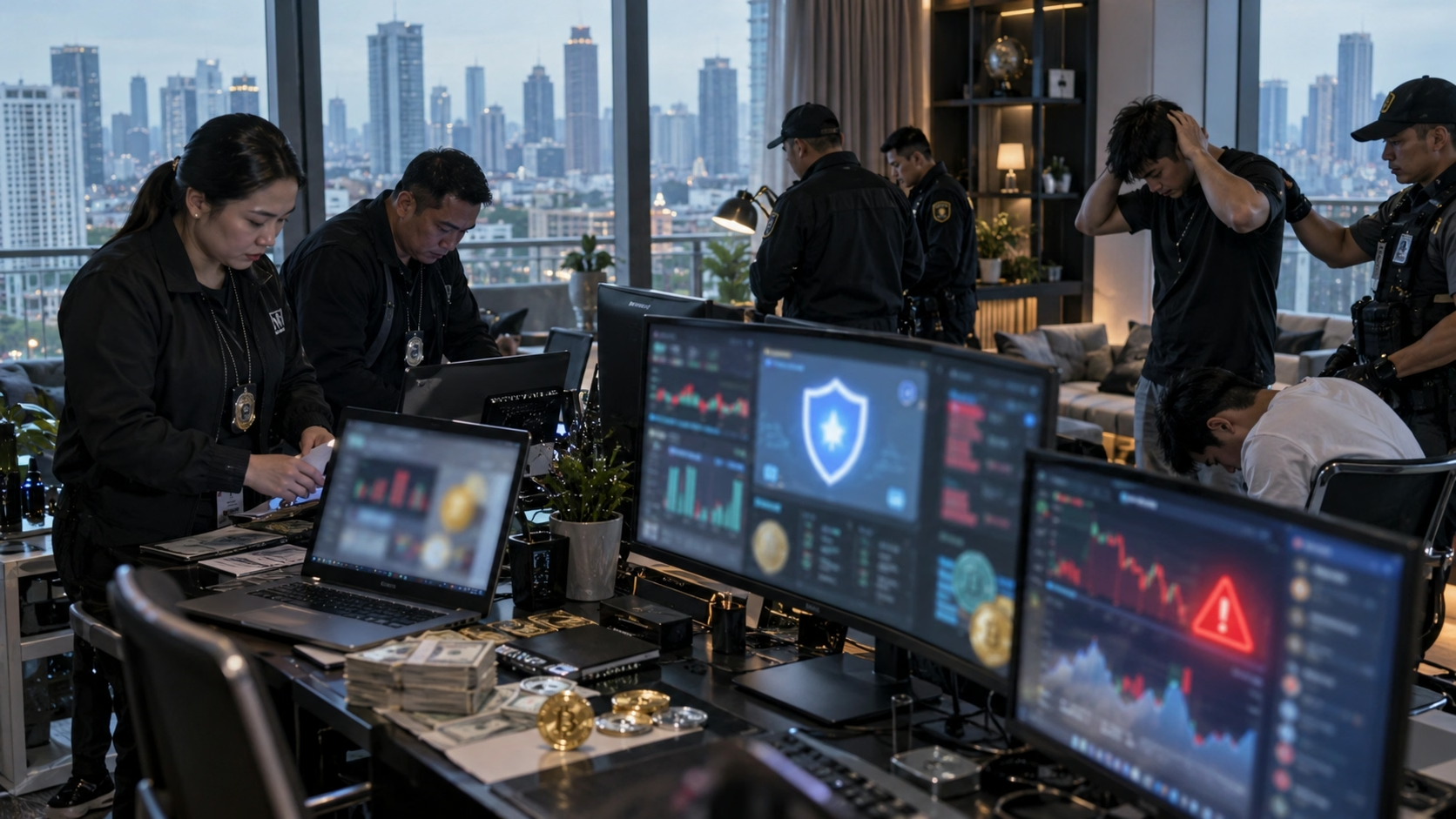
Meanwhile, the National Bureau of Investigation has translated regulatory rhetoric into arrests. In May, NBI agents raided a Mandaluyong City condominium, arresting fifteen individuals — including Chinese and Malaysian nationals — for operating a spoofed website that solicited cryptocurrency investments. Thirteen of the accused pleaded guilty in June under the Cybercrime Prevention Act. In August, a separate Pasay City operation netted twenty suspects involved in love scams, crypto investment fraud, and “pig butchering” schemes.
The Road Ahead: 12-Month Freeze and Structural Reform
By September, the BSP had drafted a circular proposing a 12-month freeze on new payment operator registrations, requiring financial institutions to establish direct contractual relationships with regulated VASPs rather than routing through intermediaries. The proposal also mandates a national QR merchant database and 24-hour fraud reporting requirements.
For Filipino investors, the message is unambiguous: the government is no longer merely advising caution — it is actively dismantling the infrastructure of crypto fraud. The coming year will test whether these layered defenses can outpace the scammers’ evolving playbook.