
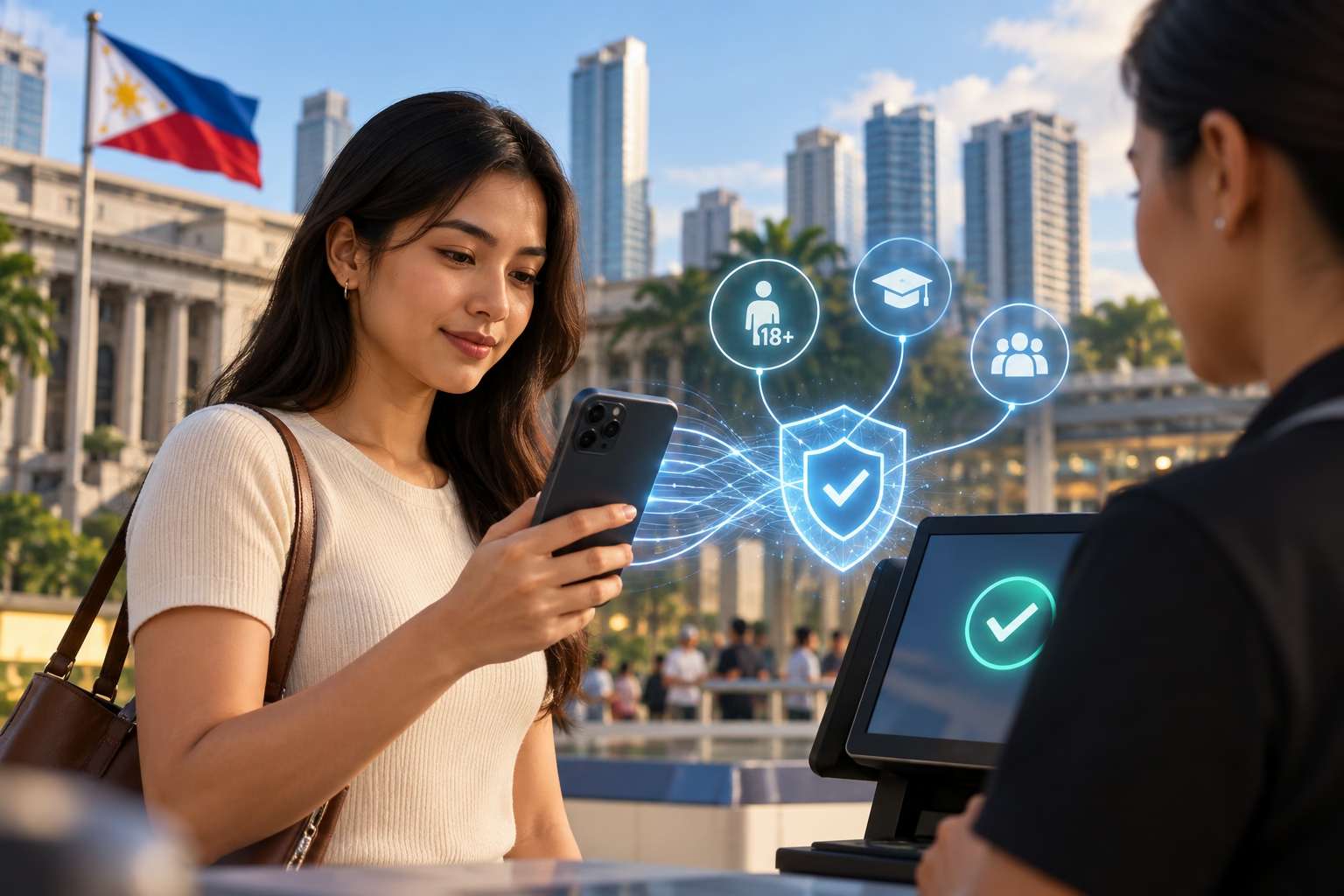
A government-backed overhaul of the Philippines’ national identity infrastructure is raising a question for the country’s Web3 economy: can users prove they qualify for a service without exposing their full identities? Zero-knowledge proofs (ZKPs), a cryptographic technology increasingly discussed in decentralized applications, offer one potential answer.
A ₱2.48 Billion Identity Upgrade Creates a New Opening
In September 2026, the Investment Coordination Committee-Cabinet Committee approved the ₱2.48 billion Philippine Digital National Identity (PDNI) project for a competitive procurement process. The planned public-private partnership covers registration, ID production, authentication services and private-sector integration, under a proposed 20-year concession. The Philippine Statistics Authority detailed the decision in its September 21, 2026 official announcement. Philippine Statistics Authority
The initiative is not an announced rollout of zero-knowledge technology. Instead, it highlights a timely architectural question: as banks, payment providers and government agencies increasingly verify people digitally, how much personal information must each organization receive?
The existing National ID eVerify framework supports identity authentication, while PhilSys uses digital signatures and identity records to establish authenticity. Neither capability should automatically be confused with ZKP-based selective disclosure.
How Zero-Knowledge Proofs Actually Work
A ZKP allows a person, known as the prover, to convince a verifier that a statement is true without disclosing the underlying secret. Consider a Filipino using a Web3 service restricted to adults. Rather than uploading an ID containing their name, address and birth date, a compatible digital wallet could generate a cryptographic proof confirming the user meets the age threshold.
The service would validate the proof and obtain the qualifying answer, not the underlying birth date. This requires a trustworthy credential issuer, secure wallet software and a properly designed proof system. ZKPs do not independently establish whether the original identity data was accurate.
Applications Beyond Cryptocurrency
For Philippine fintech platforms, privacy-preserving credentials could support age checks, membership eligibility or certain identity attributes without repeatedly distributing document scans. Decentralized applications could also use proofs of uniqueness to limit bots and duplicate claims, although preventing repeat participation requires carefully designed mechanisms such as application-specific nullifiers.
Overseas Filipino workers might eventually benefit from portable verified credentials when accessing cross-border services. Yet legally required know-your-customer checks, anti-money-laundering obligations and regulated identity disclosure would still apply. A ZKP cannot simply replace information that a financial institution must legally collect.
The World App Case Shows Why Privacy Design Matters
The debate has a concrete Philippine precedent. In October 2025, the National Privacy Commission ordered Tools for Humanity to stop personal-data processing connected to World App and its Orb biometric verification system. The regulator cited concerns including consent obtained through monetary incentives, insufficient transparency and excessive biometric collection. National Privacy Commission
World ID describes using zero-knowledge proofs to verify personhood without exposing identity to participating applications. But the Philippine enforcement action illustrates a critical distinction: privacy at the point of verification does not automatically resolve legal and ethical problems during initial biometric collection. World
What Responsible Adoption Would Require in 2026
Developers would need explicit consent, data-minimization policies, independent security testing and protections against credential tracking or proof replay. Any blockchain integration should generally keep sensitive personal information off-chain, because publicly recorded data can be difficult to erase.
Standards-based verifiable credentials, accessible recovery methods and options for users without newer smartphones would also matter. The W3C’s July 2026 Verifiable Credentials overview describes a framework for machine-verifiable, privacy-respecting digital credentials. W3C
The opportunity for the Philippines is not anonymity without accountability. It is a verification infrastructure in which people reveal only what a legitimate transaction actually requires.