
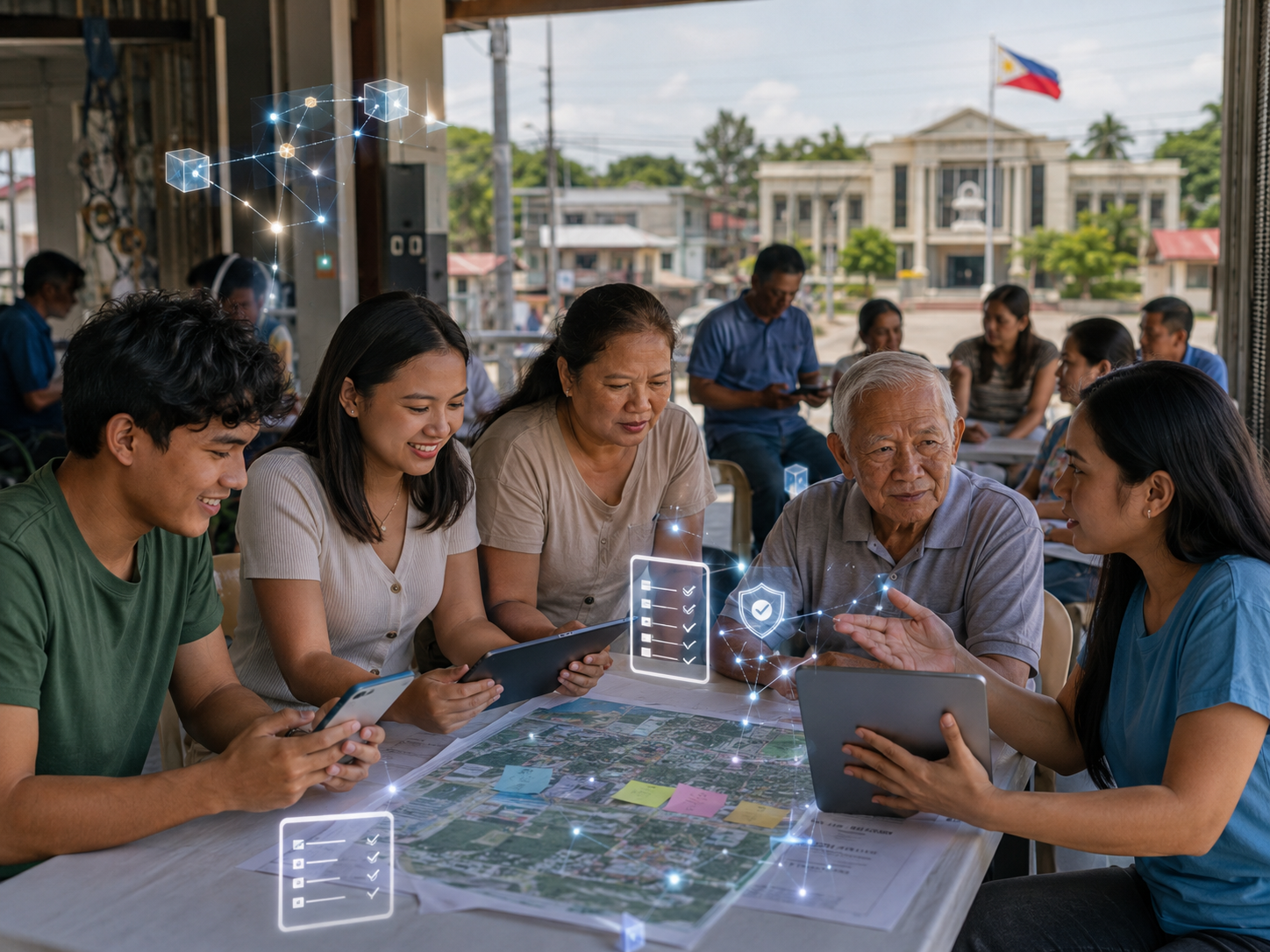
The Philippines is one of Southeast Asia’s most politically active digital societies. Election debates, government controversies, and policy discussions regularly unfold across Facebook, YouTube, TikTok, and messaging platforms. Yet high online activity does not always translate into meaningful influence over public policy.
Web3 technologies could help narrow this gap by giving citizens verifiable, transparent, and potentially tamper-resistant ways to participate in political decision-making. Rather than replacing elections or government institutions, Web3 could strengthen public consultations, participatory budgeting, petition systems, and community-level governance.
The Participation Gap in Philippine Democracy
Most citizens participate in formal politics primarily during elections. Between election cycles, opportunities to influence legislation, local budgets, or development priorities are often limited to public hearings, surveys, consultations, and social media campaigns.
These mechanisms can be difficult to audit. Citizens may not know whether their submissions were recorded, how responses were evaluated, or why officials rejected certain proposals. Online consultations can also be vulnerable to duplicate submissions, automated accounts, and coordinated manipulation.
A blockchain-based participation platform could create a permanent, publicly auditable record of citizen input without exposing sensitive personal information. Each verified participant could submit a proposal, vote on a local priority, or comment on draft legislation while retaining proof that the contribution was officially recorded.
The 2025 Overseas Voting Experience as a Digital Turning Point
The Philippines’ introduction of internet-based voting for qualified overseas Filipinos during the 2025 midterm election demonstrated the growing role of digital systems in political participation. Official election information and updates are available through the Commission on Elections.
Although internet voting is not automatically a Web3 application, the initiative provides an important real-world reference. It shows that Philippine institutions are beginning to consider digital access as part of electoral inclusion, particularly for citizens facing geographic barriers.
It also highlights critical concerns that any Web3 system must address: cybersecurity, identity verification, voter privacy, public confidence, and independent auditing. Technology alone cannot create trust. Trust emerges when citizens can understand how a system works and verify that its results have not been altered.
Where Web3 Could Deliver Practical Value
Verifiable Public Consultations
Government agencies could publish consultation questions and policy proposals on a blockchain-backed platform. Citizens would receive a cryptographic receipt confirming that their feedback was submitted. Agencies could then release transparent summaries showing how public input influenced the final policy.
Decentralized Civic Identity
A privacy-preserving digital identity could confirm that a participant is a real resident of a city, municipality, or legislative district without revealing unnecessary personal data. This could reduce fake accounts and duplicate voting while protecting citizens from surveillance or political profiling.
Such credentials should be non-transferable and must never become financial tokens. Political influence should remain based on equal citizenship, not wealth or cryptocurrency ownership.
Participatory Budgeting
Local government units could use DAO-inspired governance models to let communities propose and rank projects such as health centers, drainage systems, school repairs, or disaster-response facilities. Blockchain records could track each project from proposal and approval to procurement and completion.
Risks That Cannot Be Ignored
The Philippines still faces unequal internet access, limited digital literacy, cybersecurity threats, and misinformation. A Web3-based system could exclude rural communities, senior citizens, and low-income households when participation depends entirely on smartphones or digital wallets.
Political tokens could also create vote-buying markets if they were transferable. Smart contracts may contain coding errors, while anonymous participation could protect whistleblowers but also enable coordinated manipulation.
For these reasons, Web3 participation should begin with limited local pilots. Systems need independent security audits, paper or in-person alternatives, clear data-protection rules, open-source software, and oversight involving civil society, universities, election experts, and community representatives.
Web3’s strongest contribution to Philippine democracy may not be cryptocurrency or fully decentralized government. Its real value lies in making political participation more traceable, inclusive, and difficult to manipulate—while giving citizens visible evidence that their voices entered the decision-making process.