
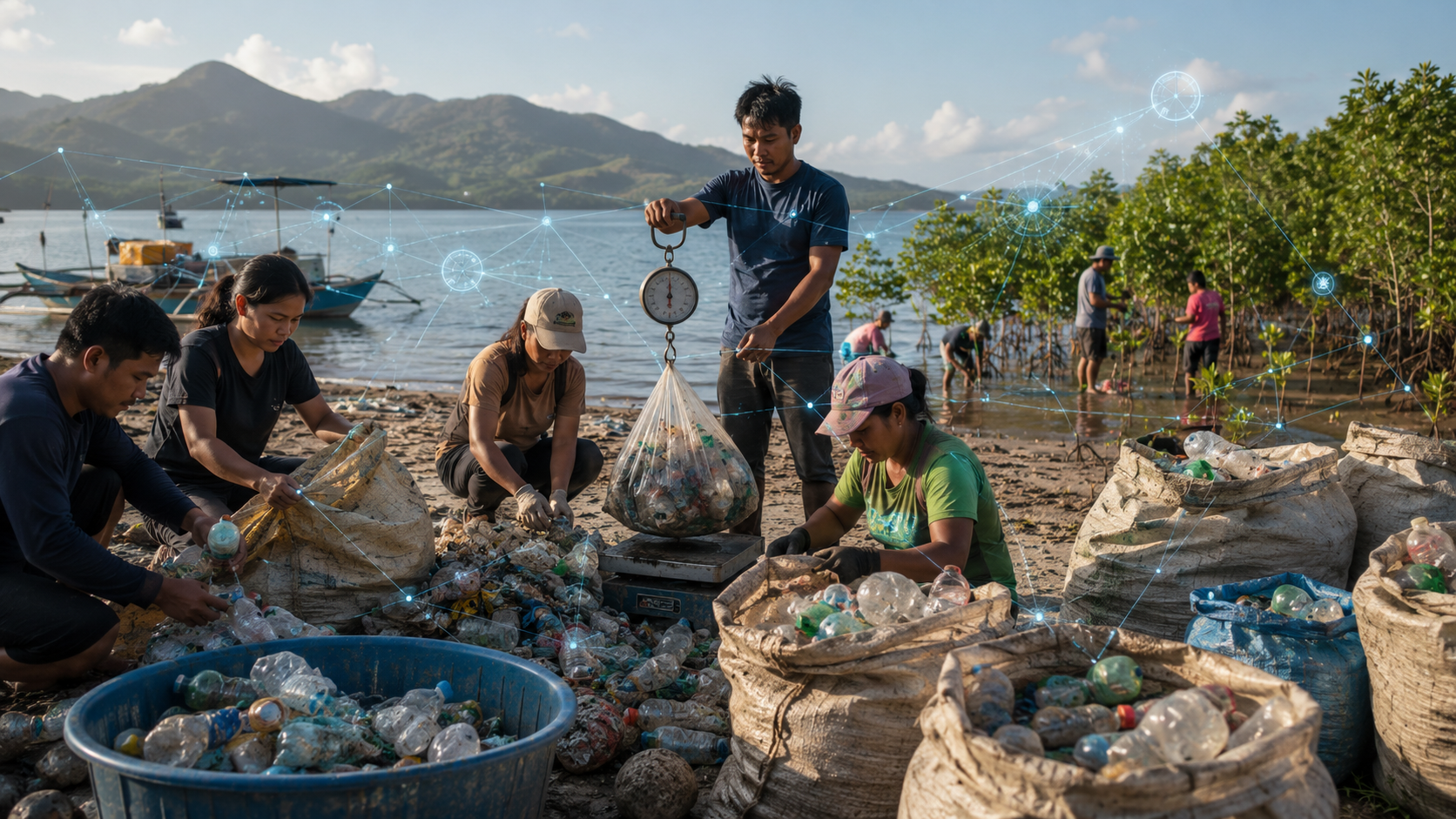
The Philippines is becoming an important testing ground for environmental technologies that combine blockchain, digital tokens, community participation, and climate finance. However, the country’s most promising Web3 applications are unlikely to succeed through speculative “green tokens” alone.
Their real value lies in solving practical problems: verifying plastic recovery, tracing environmental claims, paying coastal communities more efficiently, and preventing the same carbon or plastic credit from being sold multiple times.
This opportunity is particularly relevant in 2026, when large companies covered by the Philippines’ Extended Producer Responsibility framework are expected to recover or offset 60 percent of their plastic packaging footprint. The target comes from the implementation schedule established under Republic Act No. 11898, which gradually increases the recovery requirement to 80 percent by 2028.
Plastic Recovery Is the Most Immediate Web3 Opportunity
The Extended Producer Responsibility law creates measurable demand for verified plastic recovery. Companies must demonstrate that discarded packaging has been collected, recycled, reused, or otherwise diverted from the environment.
A blockchain-based system could record each stage of that process. Collection organizations could upload time-stamped and geotagged evidence, recyclers could confirm material weights, and auditors could approve verified recovery before a digital credit is issued.
Projects inspired by plastic-credit marketplaces, including models developed by Philippines-founded PCX Markets, show why transparent environmental accounting matters. Yet a digital marketplace should not automatically be described as Web3. A credible Web3 system requires more than placing certificates on a blockchain; it needs reliable data collection, independent auditing, and clear rules governing who can issue or retire credits.
Blockchain Cannot Verify What Happened Offline
This is known as the “oracle problem.” Blockchain records may be difficult to alter, but the original information can still be inaccurate.
For example, a collector could report 10 tons of recovered plastic even if only seven tons reached a legitimate processing facility. Recording the claim on-chain would make the inaccurate figure permanent rather than truthful.
Effective Philippine projects therefore need digital weighing systems, facility receipts, satellite or photographic evidence, third-party inspections, and public methodologies. Blockchain should function as the accountability layer, not as a substitute for field verification.
Mangrove Projects Could Connect Communities With Climate Finance
The Philippines also has strong potential for Web3-supported mangrove restoration. Mangroves protect coastlines, support fisheries, and store significant amounts of carbon, making them attractive for climate-finance projects.
A Web3 platform could create transparent records showing where mangroves were planted, who maintains them, how survival rates are measured, and how revenue is distributed. Smart contracts could automatically allocate part of the proceeds to fisherfolk associations, Indigenous communities, local governments, and long-term monitoring funds.
However, tokenized mangrove credits carry serious risks. Projects must prove additionality, meaning restoration would not have happened without the financing. They must also address permanence, land tenure, storm damage, biodiversity impacts, and possible conflicts over community rights.
The Strongest Model Is “Web3 Behind the Scenes”
Environmental Web3 projects in the Philippines are more likely to gain public trust when blockchain operates quietly as infrastructure rather than as the main product.
Users should not need cryptocurrency wallets simply to participate in a coastal cleanup or receive payment. Mobile applications can hide technical complexity while still using blockchain for traceability, automated payments, and public reporting.
The strongest projects will combine on-chain transparency with government regulation, independent scientific validation, and direct community benefits. Those that focus mainly on token prices, vague sustainability promises, or unverifiable environmental impact may attract attention—but they are unlikely to deliver lasting value.