
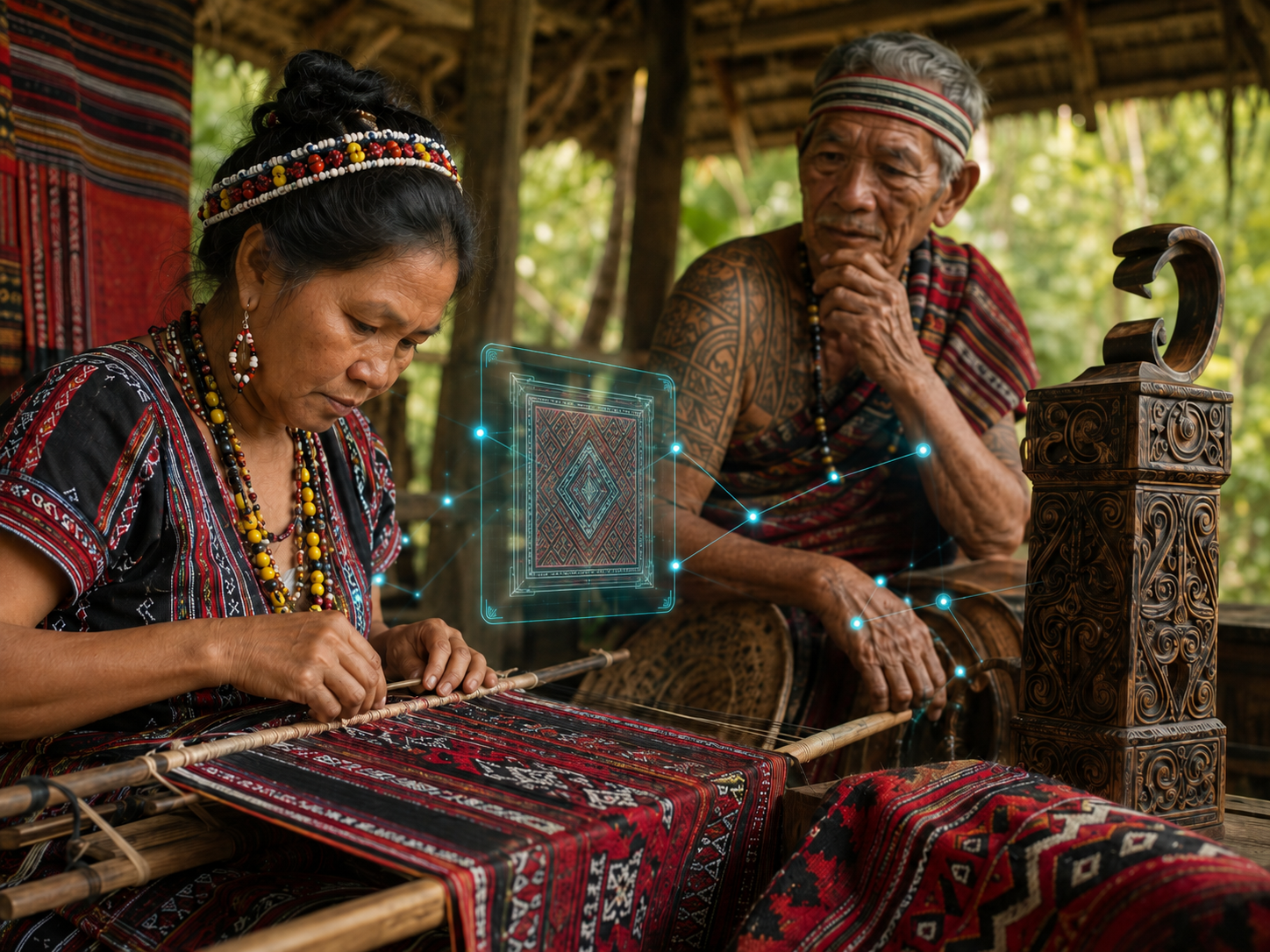
Traditional Filipino art is increasingly visible on global fashion platforms, online marketplaces, and social media. From T’boli T’nalak weaving and Ifugao textiles to Kalinga tattoo traditions and Maranao okir carving, these practices carry histories that cannot be reduced to decorative patterns.
Non-fungible tokens, or NFTs, offer communities a possible way to document provenance, reach international collectors, and generate new income. Yet the same technology can also accelerate cultural appropriation when sacred designs are digitized and sold without meaningful consent.
The debate is especially relevant after the international recognition of Apo Whang-Od, the Kalinga tattoo artist who appeared on the cover of Vogue Philippines in 2023. Her global visibility celebrated Filipino indigenous culture, but it also renewed questions about who may reproduce traditional motifs and profit from them.
NFTs as Digital Certificates of Cultural Provenance
An NFT can function as a blockchain-based certificate connected to a digital image, video, audio recording, or physical artwork. For traditional artisans, this system could record the creator’s identity, community of origin, materials, production method, and cultural meaning.
A T’nalak textile, for example, could be paired with a digital certificate documenting the weaver, the pattern’s authorized use, and the community where it was produced. Buyers would receive more than an object; they would gain verifiable information about its origin.
This model may help distinguish authentic community-made works from mass-produced imitations. It could also support museums, collectors, and cultural institutions seeking clearer provenance records.
Creating Revenue Beyond the First Sale
Smart contracts may allow creators to receive royalties when an NFT is resold. In theory, this gives artisans continuing participation in the commercial value of their work rather than limiting their income to a single transaction.
Communities could also sell limited digital editions, virtual exhibitions, or NFT-backed access to workshops. Revenue could fund weaving schools, cultural archives, language preservation, or apprenticeships for younger artists.
However, royalty payments are not guaranteed across every NFT marketplace. Platform rules, technical standards, cryptocurrency volatility, and transaction fees can reduce the expected financial benefit.
The Risk of Turning Heritage Into a Commodity
Blockchain technology cannot determine whether a seller has the cultural authority to tokenize a design. A person may create an NFT using an indigenous motif without consulting the community that traditionally owns or safeguards it.
This creates a serious gap between technical ownership and cultural legitimacy. Purchasing an NFT does not automatically grant copyright, reproduction rights, or permission to commercialize sacred knowledge.
Some designs may be connected to rituals, social status, ancestry, or spiritual beliefs. Selling them as speculative digital assets could remove them from their cultural setting and encourage buyers to treat heritage as a trend.
Community Consent Must Come Before Technology
A responsible NFT project should begin with free, prior, and informed consent. Community representatives must understand how the artwork will be stored, marketed, priced, licensed, and resold.
Governance should also be collective. Multisignature digital wallets, transparent revenue-sharing agreements, and community-controlled licensing terms can reduce the risk of one individual controlling the project.
The broader legal debate is reflected in the World Intellectual Property Organization’s work on traditional knowledge and traditional cultural expressions. In May 2024, WIPO members adopted a treaty addressing intellectual property, genetic resources, and associated traditional knowledge, demonstrating growing international attention to indigenous rights.
A Better Model: NFTs as Cultural Stewardship
The strongest Filipino heritage NFT projects would not merely sell digital images. They would explain cultural context, name the tradition bearers, restrict unauthorized commercial use, and direct measurable benefits to the originating community.
NFTs may become useful tools for documentation, education, and ethical trade. Their value, however, depends less on blockchain technology than on consent, cultural respect, transparent governance, and the ability of Filipino communities to control how their heritage enters the digital economy.