
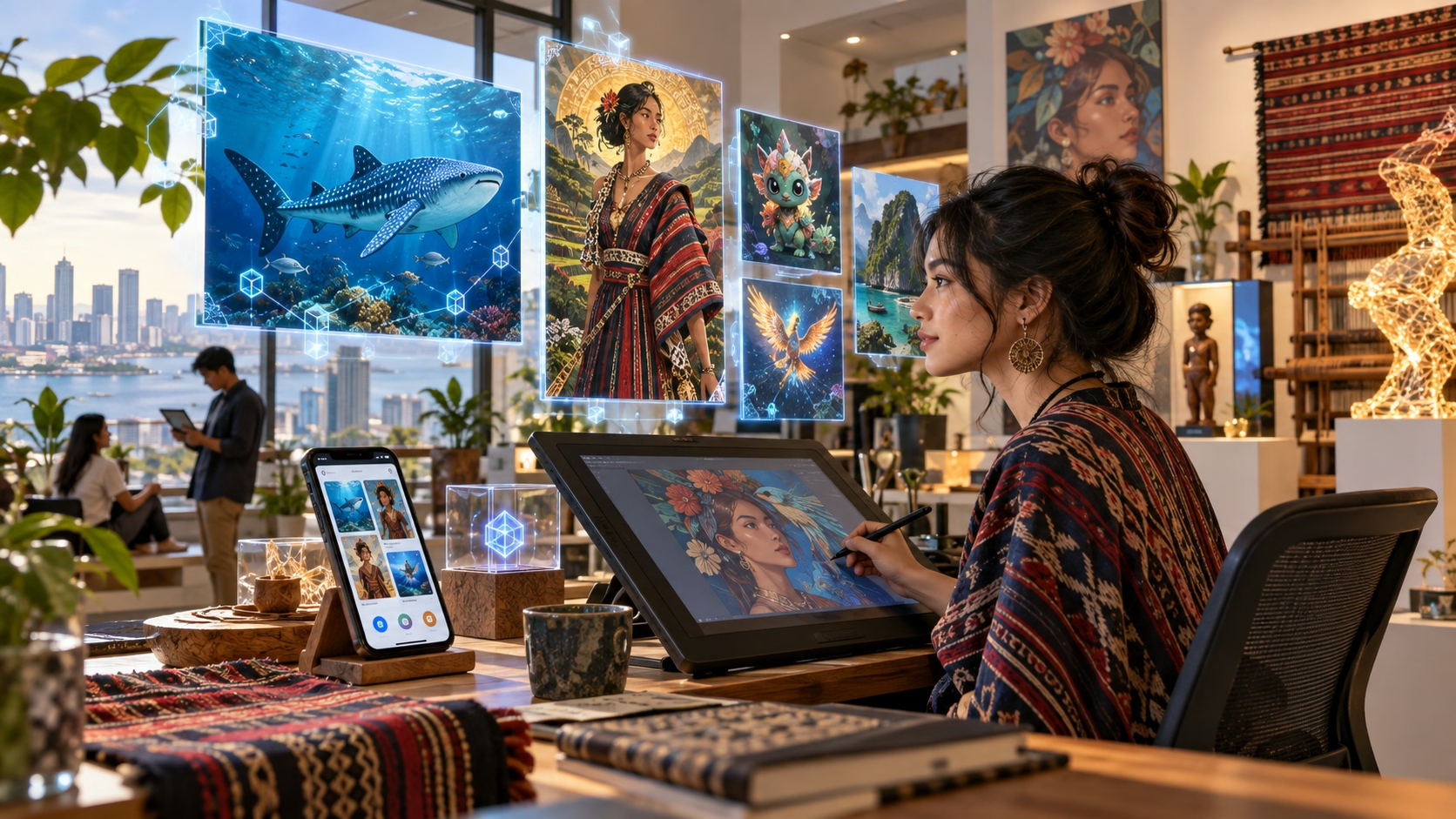
The Rise of Homegrown NFT Infrastructure
The Philippines has quietly become one of the world’s most enthusiastic NFT markets. According to a Finder survey, 32% of Filipino internet users own NFTs—the highest rate among 20 countries surveyed—with adoption potentially reaching 41.5%. This extraordinary adoption rate has fueled the growth of local platforms designed specifically for Filipino creators, eliminating the friction that once kept artists dependent on foreign marketplaces.
Likha: Blockchain-Powered Authenticity for Filipino Artists
Likha, operated by blockchain venture BayaniChain, has positioned itself as the Philippines’ premier NFT marketplace. The platform allows Filipino artists and brands to mint, market, and manage NFTs while ensuring each piece carries verified authenticity—a critical feature in a market where provenance matters.
Beyond commerce, Likha has demonstrated how NFTs can drive social impact. Its “Save Our Sharks” campaign, an art-meets-advocacy initiative, generated approximately ₱1.5 million worth of digital collectibles while raising awareness about marine conservation. The campaign earned a Webby People’s Voice Award, proving that Filipino NFT projects can achieve both commercial and cultural resonance.
Mintoo and PDAX: Mainstreaming Digital Collectibles
Mintoo, accessible through the PDAX mobile app, has removed one of the biggest barriers for Filipino artists and collectors: the need for decentralized wallets. Users can trade digital collectibles directly in Philippine pesos, making NFT participation as simple as using an e-wallet. Mintoo’s “Artist Series: New Horizons” collection featured ten established and emerging Filipino NFT artists, including Alchemyst, Marv del Mundo, and Shelly Soneja, giving them a curated platform within a regulated financial ecosystem.
Vention: Bridging Celebrity and Artist Economies
Vention has carved a distinct niche by positioning itself as “Philippines’ first NFT marketplace for artists and celebrities”. The platform enables both emerging digital artists and established personalities to tokenize their creative output. This hybrid model creates a pipeline where celebrity-driven visibility can introduce mainstream Filipino audiences to NFT art, benefiting the broader creator ecosystem.
Cultural Preservation Through Digital Ownership
Perhaps the most compelling development is how NFT platforms are being used to preserve Filipino cultural heritage. Kandama, a social enterprise working with Ifugao weavers, partnered with blockchain firm Tetrix to create NFTs representing indigenous fashion pieces. Each Kandama NFT contains a unique code verifying the authenticity of the physical garment and tracing its journey from raw material to finished design. As CEO Victor Baguilat Jr. stated, “Innovation is key to preservation”.
The Road Ahead for Filipino Digital Artists
The convergence of high NFT adoption, peso-friendly platforms, and cultural preservation initiatives has created a uniquely Filipino NFT ecosystem. With venues like the Venom Foundation’s Oasis Gallery now inviting Filipino creators to join regional programs—offering up to 50 artist slots with stablecoin payouts and global exposure—the international pathways for Filipino digital artists are expanding rapidly. The question is no longer whether Filipino artists can compete globally, but how quickly local platforms can scale to meet the demand their own success has generated.