
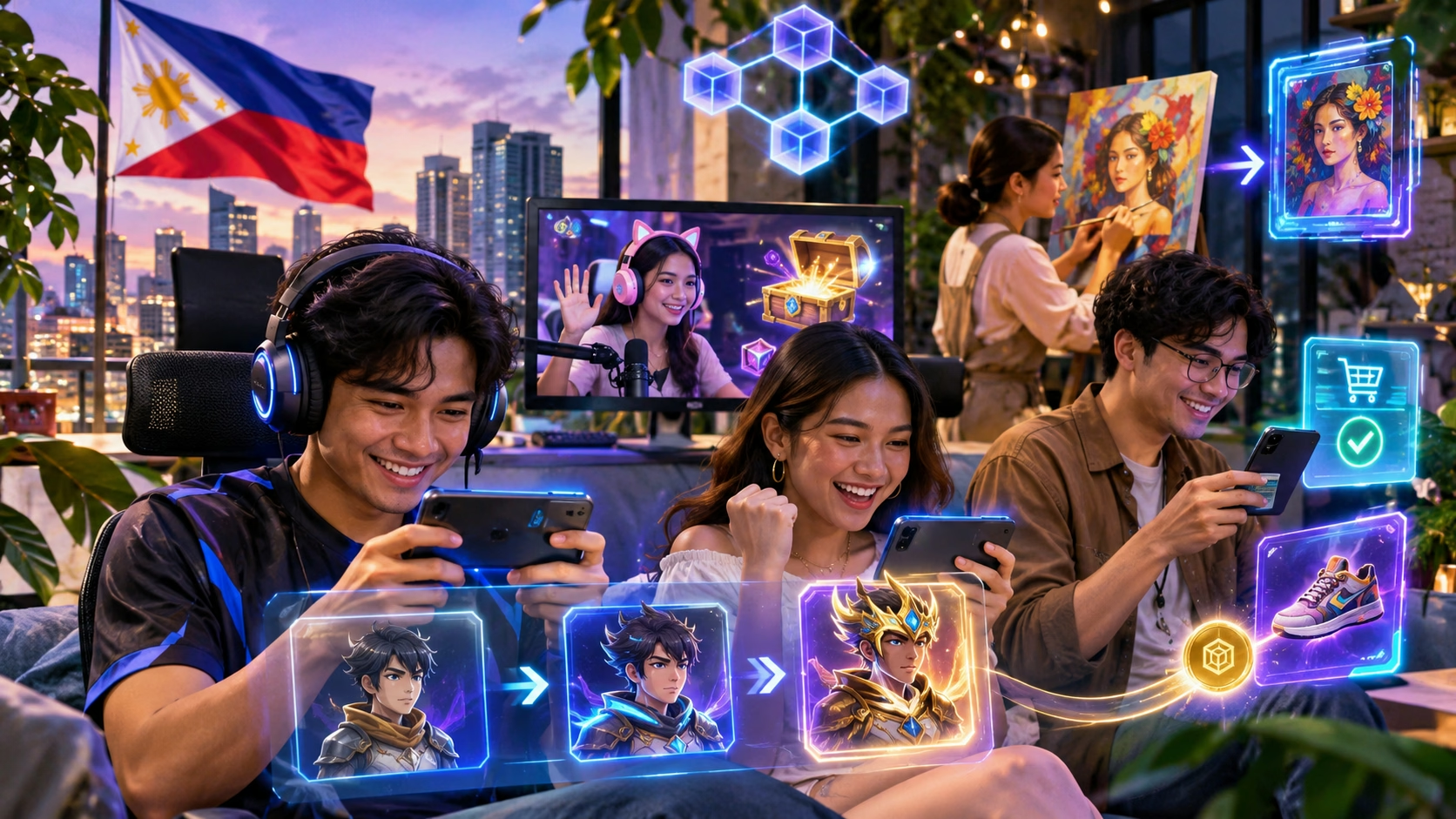
The Philippines’ Unlikely Love Affair with NFTs
The Philippines has quietly become one of the world’s most NFT-obsessed nations. An independent survey by Finder found that 32 percent of Filipino internet users own NFTs—the highest rate among 20 countries surveyed, far outpacing the global average of 1.7 percent and even surpassing markets like the United States and Japan. The same research projects that NFT adoption in the country could climb to 41.5 percent, driven largely by play-to-earn gaming and a young, mobile-first population.
That statistic matters because it sets the stage for the next phase of the country’s digital asset journey: dynamic NFTs (dNFTs). Unlike the static profile pictures and collectible art that defined the 2021 NFT boom, dynamic NFTs are programmed to change their metadata, artwork, or utility based on external triggers—including the owner’s on-chain activity. In a market already fluent in blockchain gaming and digital collectibles, dNFTs are finding fertile ground.
What Makes a Dynamic NFT Different?
A conventional NFT is minted with fixed metadata. Its image, traits, and rarity remain frozen forever. A dynamic NFT, by contrast, carries smart-contract logic that allows it to evolve. The token itself stays unique on-chain, but what it points to—stats, visuals, access rights, or rewards—can update in response to real-world data, game progress, or user behavior.
For Filipino collectors, this shift is significant. It transforms an NFT from a passive digital trophy into an active relationship. The more the owner plays, stakes, spends, or participates, the more the NFT reflects that history. Ownership becomes a living record rather than a one-time transaction.
Gaming and Loyalty: The First Real Testing Ground
The most immediate use case is already visible in the Philippines’ gaming and creator economy. In December 2025, Manila-based platform LootBX launched with a model that rewards viewers for attention and loyalty during live streams. Creators drop real-time loot on screen; viewers tap, claim, and climb leaderboards, earning points and random drops tied to their engagement. While LootBX is not exclusively an NFT project, its architecture points directly toward dynamic ownership: the more a user participates, the more their on-chain profile and rewards evolve.
A more explicit example comes from SyFu, a GameFi infrastructure play that connects everyday payment data from the Philippines into Web3 through a partnership with open-banking provider Finverse. Users link their regular bank cards and earn EVT tokens and NFTs as their daily spending flows into the GameFi experience. The system is designed to support loyalty programs, NFT-based proof of purchase, and “soulbound” credibility scores that tie Web3 assets to real-world activity. In practice, this is dynamic NFT logic applied to financial behavior: the collectible is not just owned—it is earned and updated through lived activity.
Creative Industries and the Government Push
The Philippine government is also moving in this direction. The Department of Trade and Industry has identified the creative sector as a priority for blockchain integration, with DTI Director Jo-Dann Darong noting that paintings, sketches, and visual arts are already being transformed into NFTs and that blockchain can help Filipino creators compete globally. A dynamic NFT framework could allow artists to attach royalty streams, access tiers, or evolving artworks to collectors’ ongoing engagement—turning a one-off sale into a long-term creative relationship.
The Road Ahead: Challenges and Opportunities
Dynamic NFTs are not without friction. They require reliable oracles, clear user interfaces, and consumer education—areas where the Philippines is still building capacity. But the country’s combination of high NFT ownership, deep gaming culture, and a government willing to experiment makes it one of the most practical markets in Southeast Asia for dNFT experimentation. The question is no longer whether Filipino collectors will embrace NFTs that change; it is how quickly the infrastructure will catch up to the behavior already happening on the ground.