
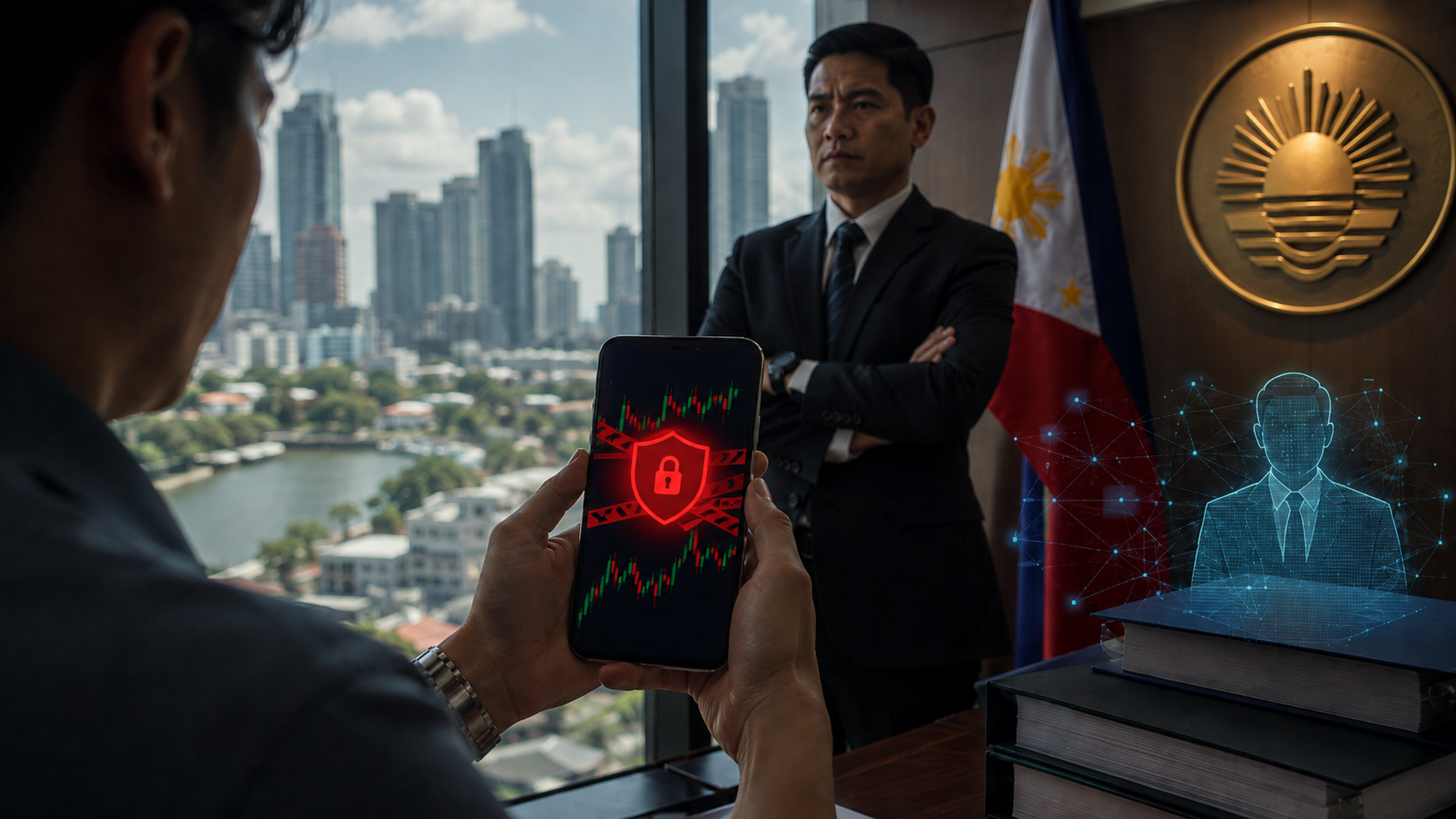
Manila has become one of Southeast Asia’s most aggressive crypto enforcement laboratories. While other jurisdictions are still debating classification, Philippine regulators are already blocking URLs, removing apps from stores, and demanding formal licenses before platforms can legally serve local users. The two main oversight bodies—the Securities and Exchange Commission of the Philippines and the Bangko Sentral ng Pilipinas—have built a system where one compliance misstep can push an exchange out of the market entirely.
The Twin-Regulator Structure: SEC and BSP
The Philippines divides crypto oversight by function. The BSP supervises virtual asset service providers that handle fiat-to-crypto conversion, custody, and remittance. The SEC, by contrast, treats many crypto tokens and exchange products as securities when they meet the investment-contract test under the Securities Regulation Code and the Financial Products and Services Consumer Protection Act.
At the center of BSP oversight is Circular No. 1108, which requires VASPs to obtain a Certificate of Authority before operating. It also imposes minimum capital, IT risk management, anti-money laundering, and consumer protection obligations. The circular remains the governing licensing framework for Philippine VASPs in 2026. Read BSP Circular No. 1108 here.
SEC’s Enforcement Mandate and Binance Ban
The SEC’s most visible enforcement action remains its crackdown on Binance. In November 2023, the SEC issued a public advisory stating that Binance was not authorized to offer or sell securities in the Philippines. In 2024, the SEC formally asked the National Telecommunications Commission to block Binance’s website and related platforms. Google and Apple were also requested to remove Binance apps from local app stores.
This was not a symbolic warning. The access ban moved enforcement into the real world: Philippine users reported difficulty accessing the platform without VPNs, and the SEC warned that continued participation in Binance’s P2P marketplace could expose users to unregistered-securities risk.
BSP’s VASP Licensing and Consumer Protection
On the BSP side, the focus is narrower but equally strict. Licensed VASPs must comply with transaction monitoring, suspicious activity reporting to the Anti-Money Laundering Council, and capital adequacy rules. The BSP has kept the number of licensed VASPs deliberately limited, favoring a controlled rollout over rapid expansion. That means many global exchanges that are legal in other countries cannot legally operate in the Philippines unless they partner with or acquire a BSP-registered entity.
From Warning Letters to Website Blocks: Real Enforcement Actions
The enforcement ladder in the Philippines now follows a clear pattern: first an SEC advisory, then app-store removal requests, then NTC blocking, and potentially criminal referral for fraud or unregistered securities violations.
The Binance Access Ban and P2P Gray Area
The Binance case exposed a regulatory gray zone. Although the main exchange website was blocked, peer-to-peer trading remained technically accessible. The SEC responded by clarifying that P2P activity on an unlicensed platform does not fall under BSP-regulated remittance and may still violate securities laws. This pushed some traders toward licensed platforms, but it also fueled offshore groups using VPNs and messaging apps—a challenge Philippine regulators are still trying to solve in 2026.
Draft CASP Rules and the Shift Toward Full Registration
Beyond individual enforcement actions, the SEC has been consulting on a broader framework for Crypto Asset Service Providers. The draft rules would require registration, minimum capital, disclosure documents, marketing restrictions, client asset segregation, and a local presence. They would also create direct accountability for consumer harm under the Financial Products and Services Consumer Protection Act. For exchanges, this means the days of serving Philippine customers from an offshore entity without local registration are narrowing quickly.
What the Philippine Model Means for Investors and Exchanges in 2026
For investors, a platform’s regulatory status is no longer a background detail—it is the first risk filter. Unlicensed exchanges may be blocked, their apps removed, and their local partners exposed to enforcement. Licensed BSP VASPs offer a formal complaint and redress channel; offshore platforms do not.
For exchanges, the market signal is clear: a Southeast Asian license is not a substitute for Philippine registration. The Philippines is building a compliance-only market, and the Binance ban is the template for what happens to platforms that ignore it.