
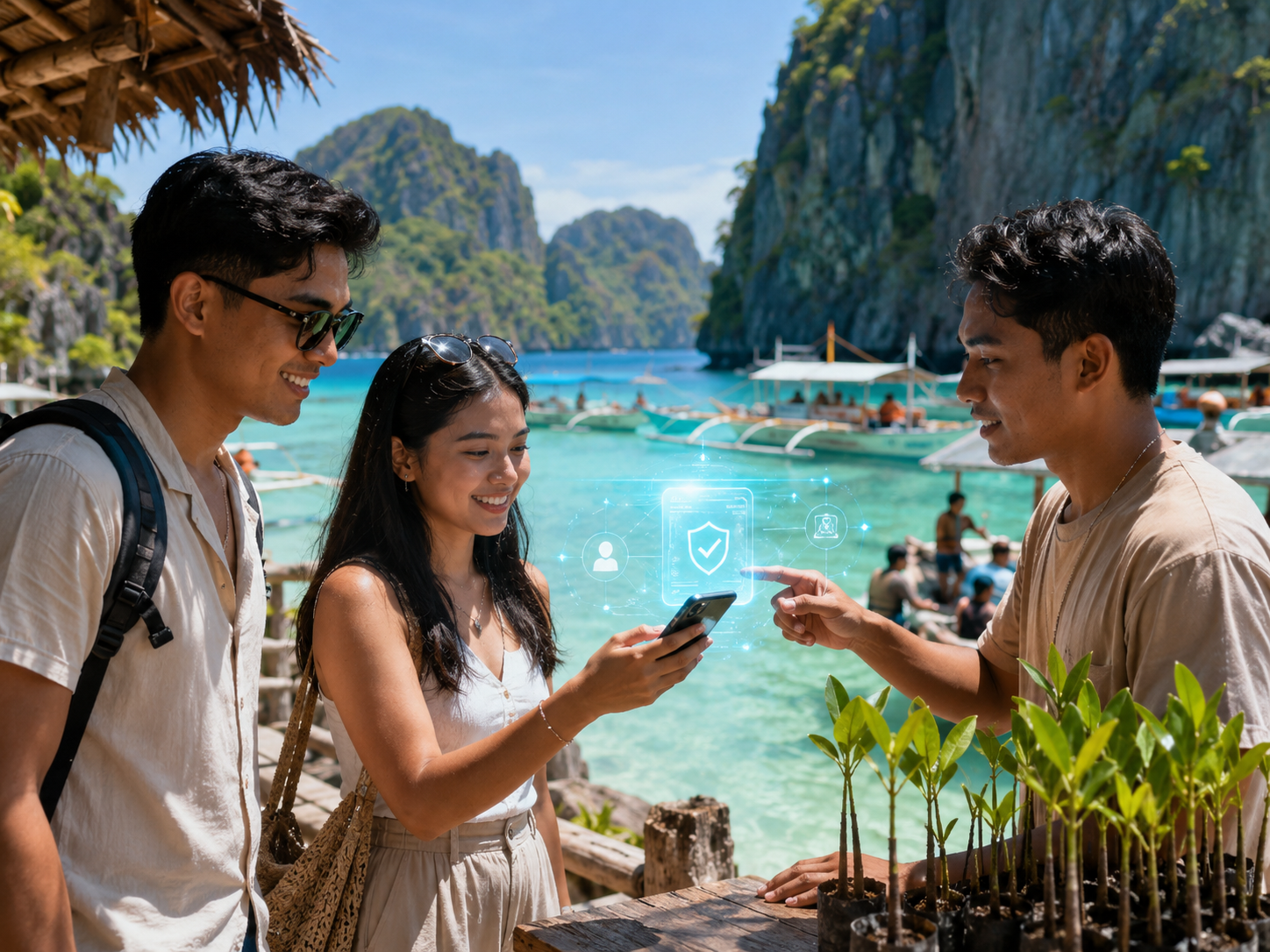
The Philippines welcomed over 5.4 million international visitors in 2025, according to the Department of Tourism’s year‑end report, and the country is already on track to surpass that figure in 2026. Yet the real story unfolding this year is not just about visitor numbers — it is about how Web3 technologies are quietly rewriting the architecture of the tourism experience. From blockchain‑anchored digital identities to NFT‑based eco‑passes, the archipelago is emerging as a living laboratory for decentralized travel innovation.
The Philippines’ Web3 Landscape: A Fertile Ground for Tourism Disruption
A young, tech‑savvy population, widespread smartphone penetration, and one of the world’s highest rates of crypto adoption have created a unique appetite for Web3 experimentation. The country ranked sixth globally in the 2025 Chainalysis Global Crypto Adoption Index, and local game‑finance titles like Axie Infinity have already accustomed millions to blockchain‑based digital ownership. That familiarity is now spilling over into tourism, a sector that contributes around 8.6 percent of gross domestic product and employs millions of Filipinos.
A Government Pushing for Digital Transformation
The Philippine government has accelerated this shift. After the success of the national ID system (PhilSys), authorities began exploring how distributed ledger technology could solve persistent challenges in travel verification, payment fragmentation, and community‑driven tourism governance. In March 2026, the Department of Tourism (DOT) officially launched a pilot program that turns the PhilID into a self‑sovereign digital credential, enabling travelers to verify their identity without surrendering sensitive personal data to hotels, airlines, or tour operators.
Blockchain‑Powered Digital Identity for Travelers
The DOT’s “PhilID Travel Pass” pilot, first reported by the Philippine News Agency on 15 April 2026, integrates W3C‑compliant decentralized identifiers with the existing PhilSys infrastructure. Travelers download a mobile wallet that holds verifiable credentials — passport hashes, health certifications, and even loyalty records — on a permissioned blockchain co‑developed with UnionBank and a local Web3 studio. When checking in at an accredited resort, the guest simply scans a QR code, and the property receives cryptographically verified confirmation of identity and booking status without ever accessing the raw data.
How the PhilID Travel Pass Works in Practice
In El Nido, a popular Palawan destination, early adopters report cutting airport‑to‑resort processing time by nearly 40 percent. Because the credential sits on a decentralized network, a traveler who books a diving package in Coron can seamlessly prove certification status without carrying plastic cards or emailing PDFs. The system also creates an immutable audit trail, dramatically reducing over‑tourism fraud — a persistent problem in Siargao, where unregistered operators were siphoning revenue from protected sites.
NFT Tourism: Unlocking Exclusive Local Experiences
Beyond identity, non‑fungible tokens are reshaping how travelers access and fund local attractions. In Bohol, the Chocolate Hills Adventure Park issued 500 geo‑locked NFTs in February 2026 that grant holders one‑year unlimited entry, discounts with partner restaurants, and a vote on future trail development via a mini‑DAO. The drop sold out in 12 minutes and raised ₱4.2 million, 70 percent of which went directly to the community cooperative managing the site.
A Case from El Nido: NFT‑Based Eco‑Adventure Pass
The most ambitious project to date is the El Nido Green Pass, a dynamic NFT launched by a consortium of island‑hopping operators and the local government. Each pass is minted with carbon‑offset credits attached; every time a holder joins a tour, a small fraction of the fee goes toward mangrove reforestation verified on‑chain. Visitors can resell or lend their passes on secondary markets, creating a liquid layer of sustainable funding. Data from the project’s public dashboard shows that 3,200 NFTs have funded the planting of 18,000 mangrove seedlings since January 2026.
Decentralized Booking and DAOs for Community‑Led Tourism
Decentralized autonomous organizations are beginning to give residents a direct say in how tourism revenue is spent. In Boracay, a pilot DAO called “BoraCare” pools 5 percent of participating hotel bookings and allocates funds through community voting — residents of the barangays that host the island’s stations decide whether to fix drainage, build a health center, or subsidize school supplies. The smart contract, audited by a local blockchain security firm, publicly records every peso disbursed, addressing long‑standing distrust over how tourism taxes were managed.
The Boracay DAO Experiment
By June 2026, BoraCare had disbursed over ₱11 million to 22 community‑proposed projects. Hoteliers report stronger local support because residents see direct, transparent economic benefits. “Before, we just saw tricycles full of tourists pass by, but nothing changed in our alleyways. Now we vote, and the money actually arrives,” said Rosita Gale, a vendor at Station 2.
Overcoming Challenges: Regulation and Digital Literacy
For all the momentum, hurdles remain. The Bangko Sentral ng Pilipinas is still refining its regulatory sandbox for tokenized tourism assets, and many small operators lack the digital literacy to manage NFT‑based ticketing. Moreover, the DOT must ensure that Web3 tools do not inadvertently exclude the unbanked vendors and guides who are the backbone of Filipino hospitality. In response, several local government units are running free “Tourism 3.0” workshops, teaching communities how to create and manage digital wallets safely.
The Philippine Web3 tourism experiment does not promise a perfect, fully decentralized utopia overnight. But the convergence of government backing, high crypto literacy, and a tourism sector hungry for post‑pandemic reinvention is producing a blueprint that other tropical destinations are already watching closely. As more travelers demand authentic, transparent, and community‑friendly experiences, the islands are betting that blockchain can deliver not just a record of transactions, but a new social contract between visitors and hosts.