
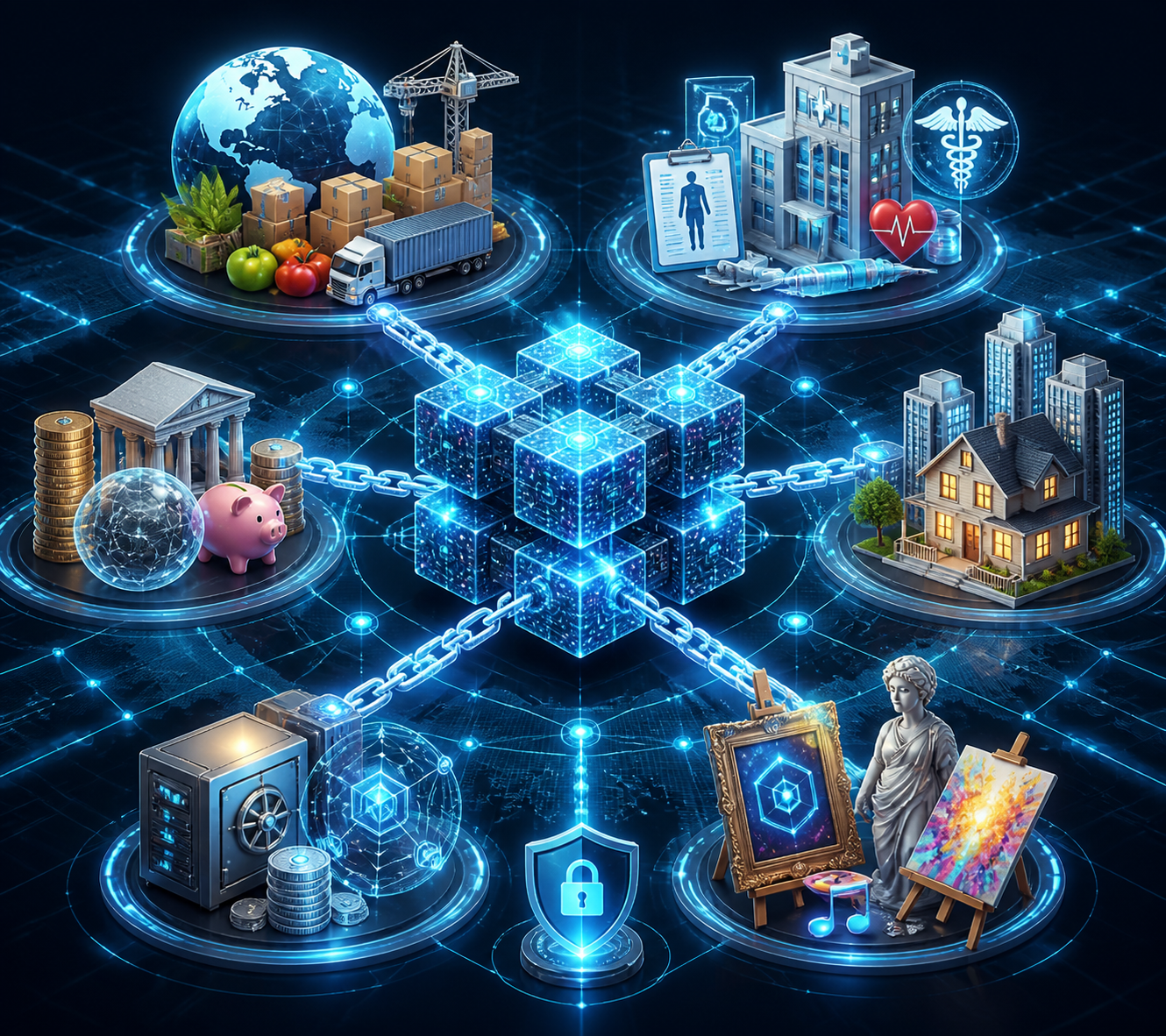
Blockchain technology, originally designed as the underlying structure for cryptocurrencies like Bitcoin, has evolved far beyond its initial use. While cryptocurrencies remain a key application of blockchain, the technology itself holds vast potential to revolutionize a wide array of industries. With its decentralized, transparent, and secure nature, blockchain is poised to disrupt sectors such as finance, supply chain management, healthcare, real estate, and even the arts.
What is Blockchain Technology?
At its core, blockchain is a distributed ledger technology that allows data to be stored across a network of computers in a way that is immutable and secure. Each block in the chain contains a batch of transactions, and once a block is added to the chain, it cannot be altered. This creates a permanent and transparent record of all transactions. The decentralized nature of blockchain eliminates the need for a central authority, ensuring that no single entity has control over the data, which is a significant feature that appeals to many industries.
Blockchain in Supply Chain Management
One of the most promising applications of blockchain outside of cryptocurrency is in supply chain management. Traditional supply chains often involve multiple intermediaries, which can lead to inefficiencies, delays, and lack of transparency. Blockchain can solve many of these issues by providing a single, transparent platform where every transaction, from production to delivery, is recorded.
For example, companies like IBM and Walmart are leveraging blockchain to track the provenance of goods. In the food industry, this means that every step in the journey of a product, such as produce or meat, can be traced back to its origin. If an issue arises, such as a foodborne illness outbreak, blockchain can quickly provide the exact point of contamination, allowing for faster and more accurate recalls.
In addition, blockchain ensures the authenticity of goods, especially in industries such as luxury goods, pharmaceuticals, and electronics, where counterfeiting is a major concern. By using blockchain, manufacturers and consumers alike can verify the origin and authenticity of products, minimizing fraud.
Blockchain in Healthcare
Blockchain also has a transformative potential in healthcare, an industry plagued by data silos, security issues, and inefficiencies. Patient health records are often fragmented across different providers, leading to errors in diagnosis and treatment, as well as privacy concerns. Blockchain can help by providing a secure and decentralized platform for storing medical records, allowing them to be shared across healthcare providers while ensuring privacy and data integrity.
With blockchain, patients can have complete control over their medical data, granting access to doctors and specialists only when needed, and revoking access when no longer required. This reduces the risks of unauthorized access and data breaches, which are common problems in the healthcare industry.
In addition to health records, blockchain can also streamline the pharmaceutical supply chain. By providing an immutable ledger of drug transactions, blockchain can help prevent counterfeit drugs from entering the market, ensuring that patients receive safe and legitimate medications.
Blockchain in Real Estate
The real estate industry is another sector that can greatly benefit from blockchain technology. The process of buying, selling, and transferring property often involves significant paperwork, legal fees, and multiple intermediaries. Blockchain can simplify these processes by enabling smart contracts and tokenization of real estate assets.
Smart contracts, which are self-executing contracts with the terms of the agreement written directly into code, can automate property transactions, reducing the need for intermediaries such as lawyers and notaries. These contracts are transparent and tamper-proof, ensuring that all parties fulfill their obligations before the contract is executed.
Tokenization is another innovation that blockchain enables. By breaking down a real estate asset into tradable digital tokens, blockchain allows for fractional ownership of property. This makes real estate investment more accessible to individuals who may not have the capital to invest in entire properties. Tokenization also enhances liquidity, as these tokens can be traded on blockchain-based platforms.
Blockchain in Financial Services
While blockchain is primarily known for enabling cryptocurrencies like Bitcoin and Ethereum, its applications in traditional finance are vast and continue to expand. The decentralized and transparent nature of blockchain makes it particularly attractive for financial services, where security, transparency, and efficiency are critical.
Blockchain can streamline payment processing by eliminating intermediaries such as banks, reducing transaction fees, and speeding up cross-border payments. Financial institutions like JP Morgan and Santander are already exploring blockchain technology for faster and cheaper international money transfers. For businesses, blockchain can also facilitate secure, transparent transactions with customers, suppliers, and other stakeholders.
Moreover, blockchain is reshaping areas like decentralized finance (DeFi), which seeks to recreate traditional financial systems (such as lending, borrowing, and trading) using blockchain. DeFi platforms operate without centralized intermediaries, giving users more control over their assets and eliminating the need for traditional banks or brokers.
Blockchain in the Arts and Intellectual Property
Blockchain’s potential extends to the world of arts and intellectual property, where it can address issues related to ownership, copyright, and royalty distribution. Digital artists, musicians, and creators often face challenges in protecting their intellectual property and ensuring they are fairly compensated for their work. Blockchain can provide a solution by allowing creators to register and track their work on a decentralized platform.
Through the use of non-fungible tokens (NFTs), digital art and collectibles can be authenticated and sold in a secure, transparent environment. NFTs represent ownership of unique digital assets, such as artwork, music, or videos, and can be bought, sold, and traded on blockchain platforms. By leveraging blockchain, artists can ensure they retain ownership of their work, while consumers can verify the authenticity of digital art and avoid counterfeit versions.
Additionally, blockchain can simplify the distribution of royalties. Smart contracts can automatically distribute payments to the rightful owners and creators based on pre-agreed terms, ensuring transparency and reducing the need for intermediaries that take a cut of the proceeds.
The Challenges and Future of Blockchain
Despite its many potential benefits, blockchain technology is still in its early stages and faces several challenges. Scalability, energy consumption, regulatory issues, and the integration of blockchain with existing systems are some of the hurdles that need to be addressed. Additionally, the decentralized nature of blockchain can raise legal and governance concerns, especially in industries that require clear accountability.
As blockchain continues to mature, we can expect more industries to explore its potential. With advancements in technology and the increasing adoption of blockchain solutions, it is likely that blockchain will play a central role in shaping the future of a wide range of industries, driving efficiency, transparency, and trust in ways that were previously unimaginable.
In summary, blockchain is much more than just the foundation of cryptocurrencies. Its ability to provide secure, transparent, and decentralized solutions makes it an invaluable tool for transforming industries such as supply chain management, healthcare, real estate, finance, and the arts. As the technology evolves and overcomes its current limitations, the full potential of blockchain will continue to unfold, leading to innovations that can change the way we do business and interact with the world around us.