
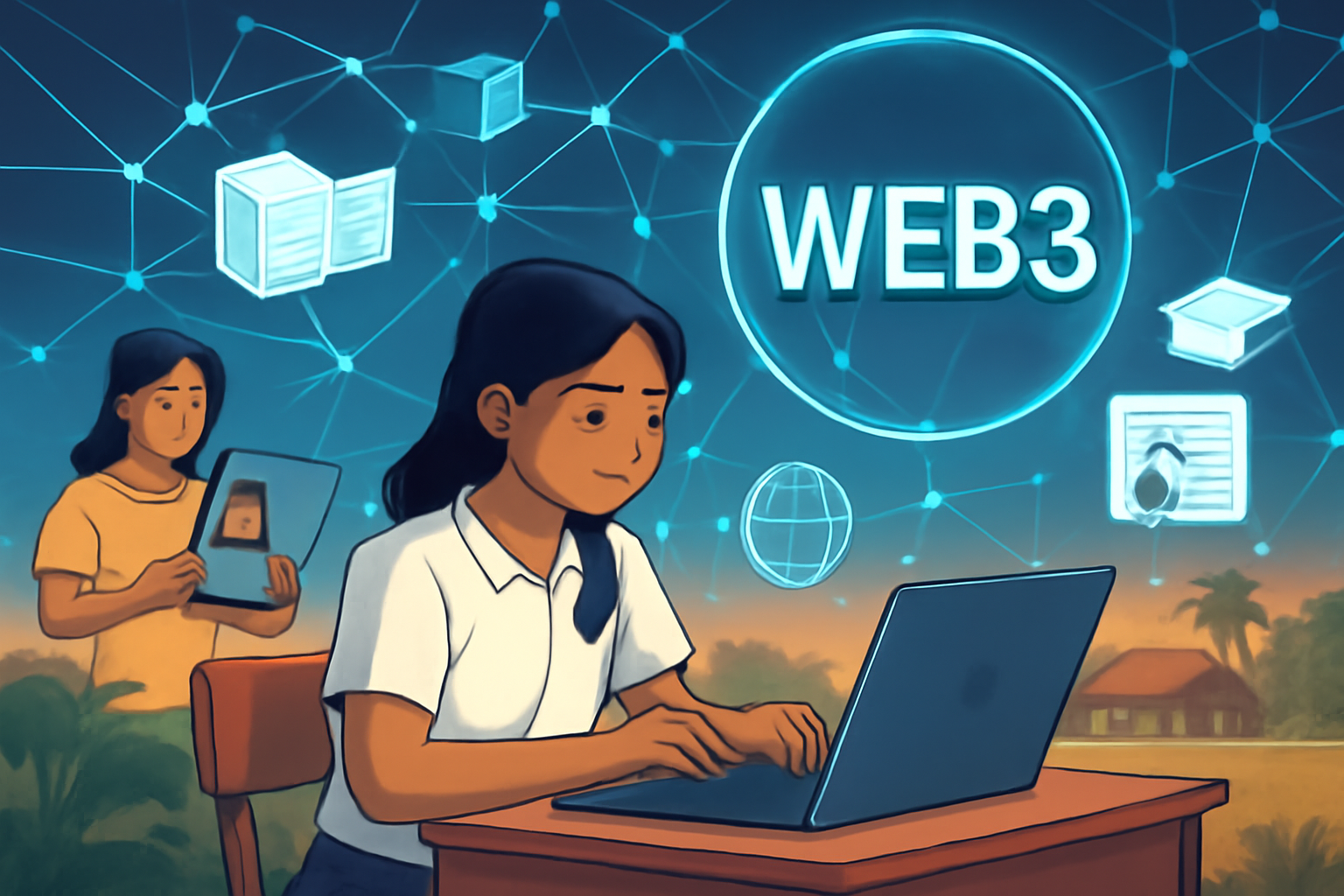
In recent years, the Philippine education system has undergone significant transformation, partly driven by the increasing adoption of digital tools for learning. However, despite the shift to online platforms, several challenges continue to persist, such as limited access to educational resources, inequality in technology infrastructure, and centralized control over educational content. In this context, the advent of Web3 technologies offers promising solutions that could reshape the future of education in the country, addressing these challenges by promoting decentralized, secure, and transparent learning environments.
What is Web3 and How Does It Work?
Web3, often referred to as the decentralized web, represents a new generation of the internet based on blockchain technology. Unlike Web2, where information is primarily stored and controlled by centralized platforms (e.g., Google, Facebook, or Amazon), Web3 is designed to decentralize control, allowing users to own and control their own data and digital identities.
Blockchain, the underlying technology behind Web3, allows for peer-to-peer transactions, smart contracts, and immutable record-keeping without the need for intermediaries. This means that in Web3 environments, content creation, data sharing, and educational resources could be democratized, providing students and educators with greater autonomy and control over their learning and teaching processes.
Addressing Education Inequality in the Philippines
The Philippines, like many other developing countries, faces significant educational inequality. Students in remote or rural areas often have limited access to quality education and digital resources, exacerbating the digital divide. According to a 2020 report by the World Bank, only about 2.5 million students in the Philippines had access to online education during the COVID-19 pandemic, leaving millions more without educational opportunities.
Web3 could address these challenges by decentralizing educational resources and providing equal access to learning materials, regardless of geographic location. Through blockchain, educational content can be securely stored and distributed without relying on central servers. This would allow students in rural or underserved areas to access the same quality of education as those in more urbanized regions, bridging the digital divide.
Moreover, Web3’s decentralized nature ensures that education is not monopolized by large corporations or centralized institutions. This could lead to the emergence of more open-source educational platforms where content creators, such as teachers or institutions, can freely share their knowledge and students can access it without the barriers created by financial or geographical limitations.
Empowering Educators with Decentralized Content Creation
In the Web3 ecosystem, educators can take on a more active role in content creation and curriculum design. Unlike traditional educational models where the curriculum is often determined by centralized bodies or government policies, Web3 enables teachers to create, share, and monetize their own educational content through smart contracts and tokens.
For example, teachers could create digital textbooks, videos, or interactive modules and sell them directly to students or institutions. These transactions could be powered by cryptocurrencies or NFTs (non-fungible tokens), ensuring transparency, security, and fairness in compensation. Additionally, because of the decentralized nature of Web3, educators would have greater freedom in designing their teaching methods and content without the constraints often imposed by traditional educational systems.
Ensuring Transparency and Security in Digital Learning
One of the major concerns surrounding digital education is the security and privacy of students’ data. Traditional education platforms collect vast amounts of personal information, which can be vulnerable to hacking or misuse. In Web3-based platforms, however, the use of blockchain technology can significantly reduce the risks of data breaches. Blockchain’s encrypted and immutable ledger ensures that student data is stored securely and cannot be tampered with, providing a higher level of protection for users.
Furthermore, Web3 could enable greater transparency in educational assessments. Grades, certifications, and transcripts could be stored on a blockchain, creating a transparent and verifiable record that cannot be altered. This would reduce the chances of fraud and ensure the integrity of academic achievements, allowing employers and institutions to easily verify the qualifications of graduates.
The Future of Web3 in Philippine Education
As the Philippines continues to develop its digital infrastructure, Web3 technologies could play a pivotal role in shaping the future of education. The government and educational institutions will need to collaborate with tech innovators to build decentralized platforms that cater to the unique needs of Filipino students and educators. Investments in blockchain education and infrastructure will be critical to making this shift a reality.
Moreover, the integration of Web3 in education will require a cultural shift toward more open and collaborative learning environments. For educators, it means embracing new teaching methods and technologies that may initially seem daunting, while for students, it provides an opportunity to engage with learning materials in ways that were previously unimaginable.
By leveraging Web3’s decentralized nature, the Philippines could create a more equitable and efficient educational system, one that is better equipped to meet the needs of its diverse population and ensure that every Filipino student has access to high-quality, secure, and transparent digital education.