
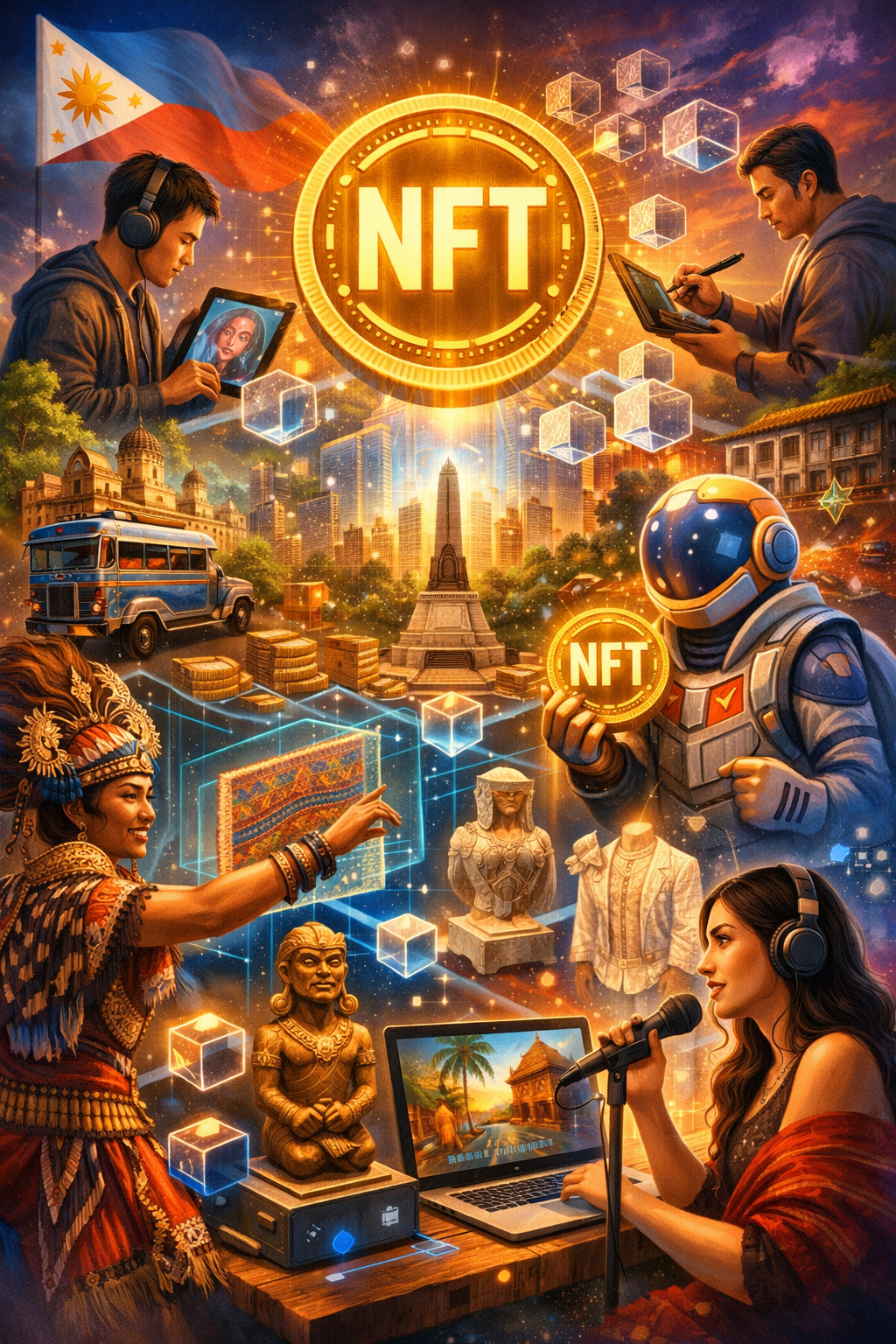
In recent years, Non-Fungible Tokens (NFTs) have become a significant part of the global digital landscape, offering a new way to buy, sell, and trade digital assets. In the Philippines, a country known for its rich creative culture, NFTs are gaining increasing attention as a tool to protect the authenticity and ownership of creative works. As artists, musicians, writers, and other creators continue to embrace digital platforms, NFTs provide a solution to long-standing issues related to copyright, piracy, and fair compensation. By leveraging blockchain technology, NFTs are helping to revolutionize how creative works are valued and protected in the Philippines.
Understanding NFTs and Blockchain Technology
At their core, NFTs are unique digital tokens that exist on a blockchain, a decentralized and immutable ledger that records transactions across a network. Each NFT represents ownership of a specific digital asset, such as an artwork, music file, or video. Unlike cryptocurrencies like Bitcoin, which are interchangeable, NFTs are one-of-a-kind and cannot be replicated, making them perfect for verifying ownership and authenticity in the world of creative works.
The Philippines has seen an increasing number of artists and creators tapping into the potential of NFTs, thanks to the transparent and secure nature of blockchain technology. The blockchain serves as a digital record of ownership, ensuring that each time an NFT changes hands, a public ledger is updated, making it easy to trace the origin and ownership history of an asset. This has significant implications for the protection of intellectual property in a country where piracy has historically been a challenge.
NFTs as a Solution to Piracy and Copyright Infringement
One of the major issues faced by Filipino artists is the widespread piracy of their digital works. From visual art to music and even literature, creative content is often copied and distributed without permission, depriving creators of their rightful earnings. In the past, it has been difficult for artists to control or monetize their work effectively, as digital files can be easily reproduced and shared without authorization.
NFTs offer a way to combat this problem by establishing clear and verifiable ownership. When a creator mints an NFT, the digital asset is linked to their identity through the blockchain. This process guarantees that the creator’s rights to the work are acknowledged and protected. Any transaction involving the NFT can be traced back to the original creator, allowing them to maintain control over their work and even receive royalties from secondary sales. For instance, an artist can set up their NFT to automatically pay a percentage of each subsequent sale back to them, ensuring that they continue to benefit from their work long after the initial sale.
For Filipino artists, this technology provides a powerful means to combat the rampant issue of art theft. Instead of relying on traditional copyright systems, which can be slow and costly, NFTs offer an immediate and secure way to prove ownership and protect against unauthorized use.
Empowering Filipino Creators with Financial Opportunities
The rise of NFTs in the Philippines is also creating new economic opportunities for local artists. In a country where many artists face challenges in monetizing their work, NFTs provide a new avenue to directly engage with their audience. By selling NFTs, creators can bypass traditional intermediaries, such as galleries or music labels, and retain a larger portion of the revenue generated by their work.
Moreover, NFTs allow creators to engage with a global market, as they are not confined by geographical boundaries. Through platforms such as OpenSea, Rarible, or Mintable, Filipino artists can showcase their work to a worldwide audience, increasing their exposure and potential sales. This is especially important in a country where the creative industry often struggles with limited access to international markets.
Another key benefit of NFTs is their ability to enable creators to earn passive income. Through smart contracts, artists can ensure they receive a percentage of the resale price whenever their NFTs change hands. This is a significant departure from traditional art sales, where once the artwork is sold, the artist typically has no claim to future profits. For Filipino creators, this presents an opportunity to earn ongoing revenue from their work as it gains value over time.
Preserving Cultural Heritage through NFTs
In addition to providing a platform for contemporary artists, NFTs are also being used to preserve and promote Filipino cultural heritage. Some artists and cultural organizations are using NFTs to digitize traditional Filipino art forms, such as indigenous textiles, sculptures, and historical artifacts, ensuring that these important works are not only preserved for future generations but also shared with a global audience.
This digital approach also helps raise awareness of Filipino culture on the global stage, offering an opportunity for international collectors and art enthusiasts to learn more about the Philippines’ rich artistic traditions. By tokenizing these works, NFTs can create a new form of cultural exchange and appreciation, allowing Filipinos to showcase their heritage in a modern, digital format.
The Future of NFTs in the Filipino Creative Industry
While NFTs have already had a significant impact on the Filipino creative industry, their potential is still largely untapped. As the technology continues to evolve and gain wider acceptance, it is likely that NFTs will play an even more prominent role in the protection and promotion of Filipino creative works. The Philippine government and industry stakeholders may also need to adapt existing legal frameworks to fully integrate NFTs into the creative sector, ensuring that artists are protected and supported in this new digital landscape.
In the coming years, NFTs could revolutionize not just the way Filipino artists create and monetize their work but also how intellectual property is managed, ensuring that creativity is respected, valued, and protected in an increasingly digital world.