
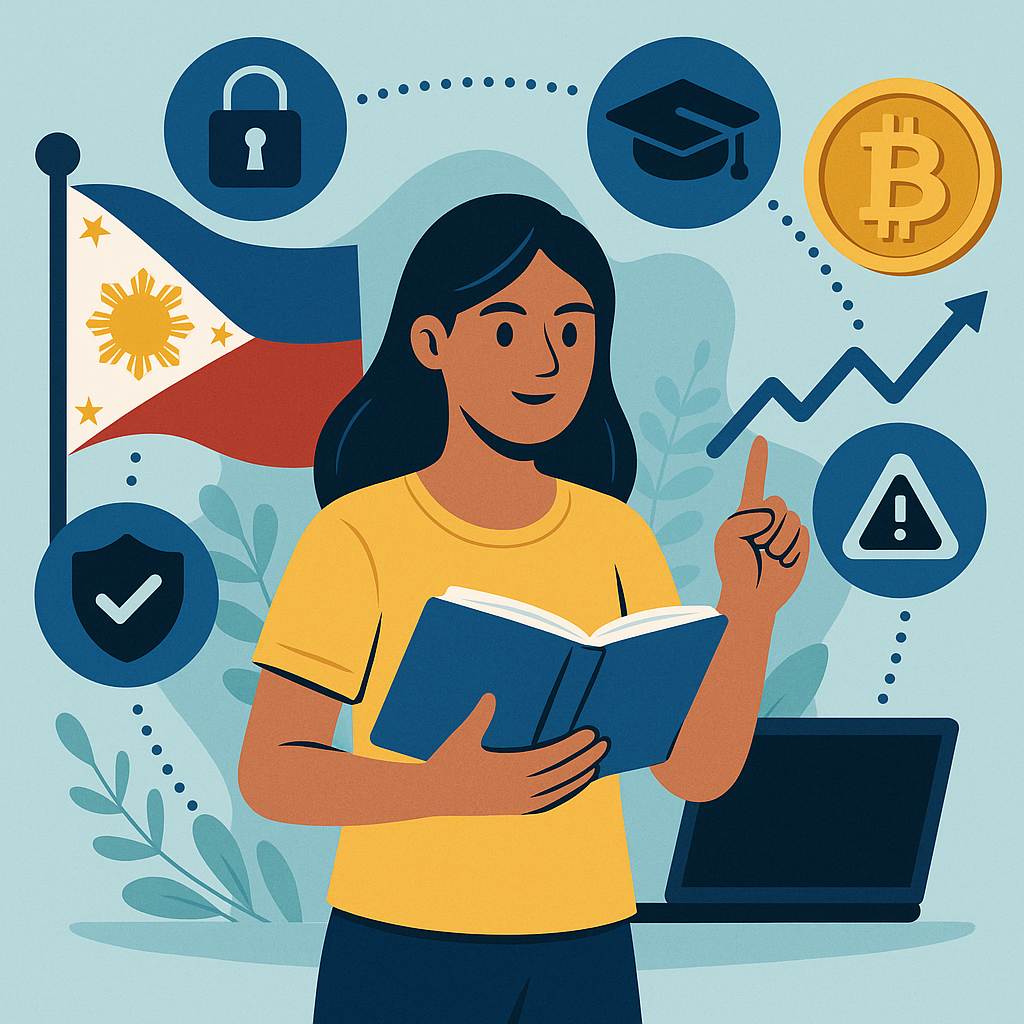
The Philippines has become one of Southeast Asia’s most active crypto markets. From play-to-earn gaming to digital remittances for overseas Filipino workers (OFWs), cryptocurrencies are increasingly woven into everyday financial life. However, rapid adoption has also attracted scams, hacks, and fraud. In this context, education is not just a nice-to-have, but a critical pillar of crypto security in the country.
Why Education Matters More Than Just Regulation
Regulators like the Bangko Sentral ng Pilipinas (BSP) and the Securities and Exchange Commission (SEC) can issue rules, but they cannot fully protect users who do not understand the basics of how crypto works. Many Filipino users first encounter crypto through friends, social media groups, or unregulated investment schemes. Without proper knowledge, they are vulnerable to phishing attacks, fake exchanges, rug-pull tokens, and Ponzi-style “high return” promises.
Education fills this gap by empowering users to recognize red flags, manage their own wallets safely, and make informed decisions. Rather than treating people as passive consumers who must be “protected,” education treats them as active participants in a new digital economy.
Integrating Crypto Security into Formal Education
One of the most sustainable ways to improve crypto security in the Philippines is to embed it into formal education systems:
- Universities and colleges can offer courses on blockchain fundamentals, digital asset management, and cybersecurity. These programs do not only create future developers and fintech professionals, but also produce more informed citizens who can help guide family and community decisions about crypto.
- Technical and vocational schools can introduce short modules on secure wallet usage, multi-factor authentication (MFA), and safe trading practices, especially for students preparing for careers in IT or finance.
- Professional development for law enforcement, regulators, and financial officers helps them investigate crypto-related crimes, understand blockchain analytics, and respond effectively to emerging threats.
By treating crypto and cybersecurity as serious academic and professional topics, the Philippines can reduce the knowledge gap between users and malicious actors.
Public Awareness Campaigns and Government Initiatives
Government agencies already conduct financial literacy programs, especially related to savings, budgeting, and avoiding loan sharks. Expanding these to include crypto awareness is a logical next step.
Key messages could include:
- The difference between licensed virtual asset service providers (VASPs) and unregistered platforms
- How to verify if an exchange or wallet is regulated by BSP
- The risks of sending money to “account managers” or “gurus” promising guaranteed profits
- How to spot phishing links, fake websites, and impersonated social media pages
Simple, multilingual campaigns using Tagalog and regional languages can reach communities that might not read technical English materials. Radio programs, barangay seminars, and collaborations with churches or community leaders can extend the reach beyond urban centers.
Industry-Led Training and Community Programs
Crypto exchanges, fintech startups, and blockchain projects operating in the Philippines also play a vital role in education. Many already organize webinars, workshops, and social media content explaining key topics like:
- How to securely store seed phrases and private keys
- Why you should not share one-time passwords (OTPs)
- How to use hardware wallets and non-custodial wallets
- The importance of diversification and never investing money you cannot afford to lose
When these educational efforts are transparent and not purely promotional, they help build trust and create a more resilient user base.
Building a Culture of Critical Thinking and Digital Skepticism
Ultimately, crypto security education is about more than teaching people how to use an app. It is about nurturing a mindset of healthy skepticism and critical thinking. In a country where scams often spread virally through messaging apps and social media, users must learn to:
- Ask who benefits from a particular offer
- Check sources before believing testimonials or screenshots of profits
- Confirm information with official government or licensed platforms
- Recognize emotional manipulation, such as pressure to “invest now or miss out”
This culture of questioning dramatically reduces the success rate of fraudsters.
The Path Forward for the Philippines
As crypto continues to evolve in the Philippines, education must evolve with it. Collaborative efforts between government, schools, industry, and communities can create a layered defense system: stronger regulations, better technology, and, most importantly, smarter users.
By putting education at the center of crypto adoption, the Philippines can enjoy the benefits of digital assets—faster remittances, financial inclusion, new job opportunities—while reducing the risks that currently threaten many first-time users. In the long run, an informed population is the strongest security system any country can have.