
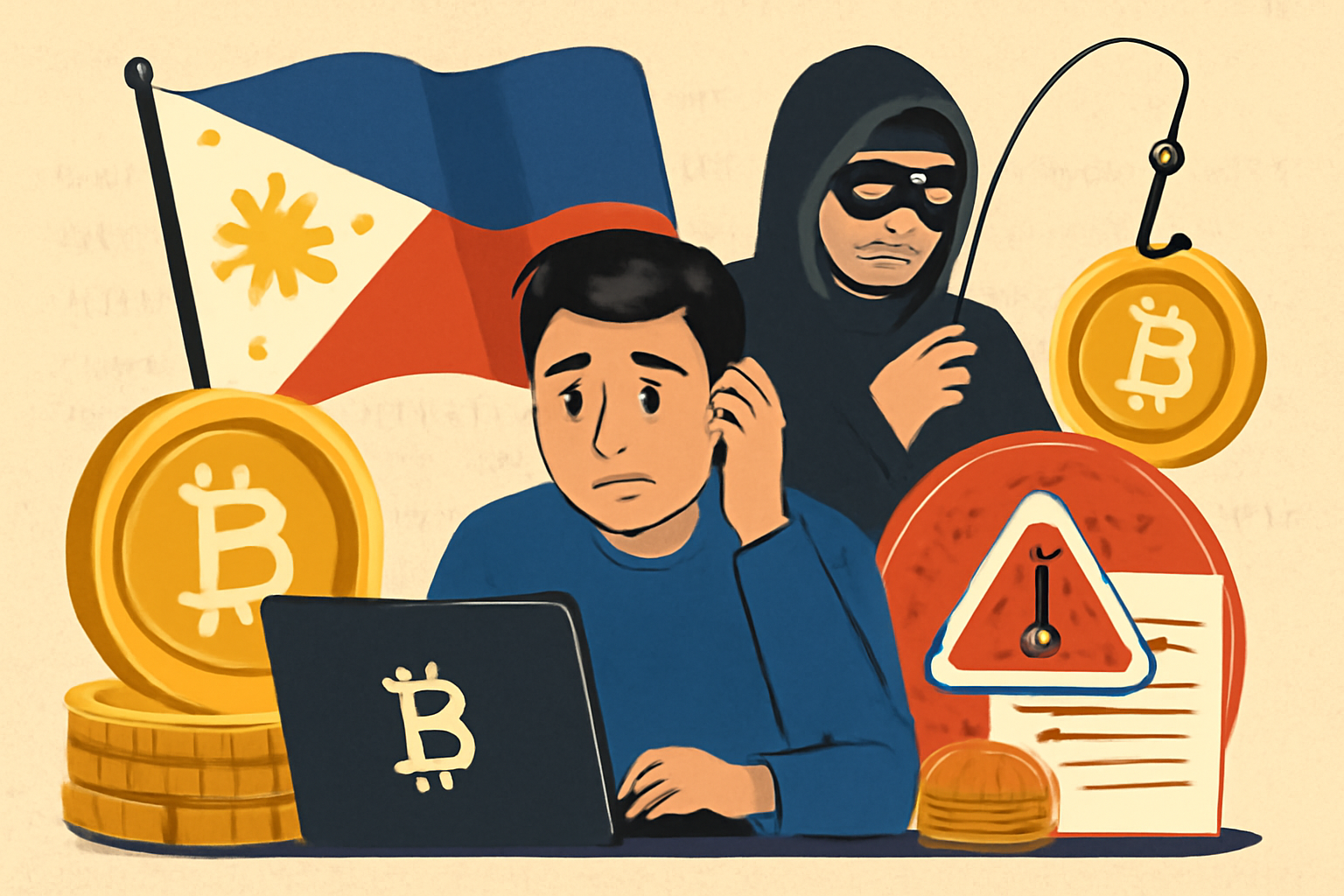
Over the past few years, the Philippines has emerged as a significant hub for cryptocurrency adoption in Southeast Asia. With a growing number of Filipinos turning to digital currencies as a potential investment avenue, the country’s crypto market has seen remarkable growth. However, this rise in crypto popularity has also given rise to a disturbing trend: an increase in cryptocurrency-related fraud. As a result, investors must stay informed about the evolving landscape of crypto fraud in the Philippines and take proactive measures to protect their investments.
Understanding Crypto Fraud in the Philippines
Crypto fraud encompasses a wide range of deceptive practices involving digital currencies, from Ponzi schemes and phishing attacks to fake ICOs (Initial Coin Offerings) and fraudulent trading platforms. The Philippines, with its growing crypto market and relatively under-regulated space, has become a target for bad actors looking to exploit unsuspecting investors.
One of the key drivers of crypto fraud in the Philippines is the lack of financial literacy and regulatory oversight. Many individuals who enter the crypto market are often unfamiliar with the technology and investment strategies, making them more vulnerable to fraudulent schemes. Additionally, the rapid development of the industry means that regulatory frameworks have struggled to keep up, leaving room for scams to flourish.
Common Types of Crypto Fraud in the Philippines
1. Ponzi Schemes and High-Yield Investment Scams
One of the most common forms of crypto fraud in the Philippines involves Ponzi schemes, where scammers promise investors high returns in exchange for their investment in a cryptocurrency project. These schemes typically attract a large number of people with promises of unrealistically high yields, and the scammers use new investments to pay returns to earlier investors, creating the illusion of profitability.
However, once the flow of new investments slows down, the scheme collapses, and investors are left with significant losses. Ponzi schemes are particularly attractive to those unfamiliar with the risks of crypto investing, as they often mimic legitimate investment opportunities.
2. Fake Cryptocurrency Exchanges
Another prevalent form of crypto fraud in the Philippines involves fake cryptocurrency exchanges. Fraudsters create websites that look similar to legitimate trading platforms, where investors can deposit their funds to trade or invest in cryptocurrencies. These fake exchanges often lure victims with the promise of low fees or exclusive coins, but once investors deposit their funds, the scammers disappear with the money.
In some cases, these fraudulent exchanges even feature fake testimonials and reviews to make them appear credible. Without proper research, investors may fall for these scams, believing they are using a legitimate platform.
3. Phishing and Social Engineering Attacks
Phishing scams targeting cryptocurrency investors have been on the rise in the Philippines. Scammers use emails, text messages, or fake social media accounts to impersonate well-known crypto platforms, enticing individuals to click on links or provide sensitive information. These scams often involve offers of free tokens or promotions, urging victims to input their private keys or personal information.
Once scammers gain access to an investor’s wallet or exchange account, they can quickly steal their funds. Social engineering attacks, such as fake job offers or investment opportunities, are also commonly used to lure victims into revealing confidential information.
4. Fake Initial Coin Offerings (ICOs)
An ICO is a fundraising mechanism used by cryptocurrency projects to raise capital by selling their own token or coin. However, fraudulent actors often exploit this method by launching fake ICOs to steal money from investors. In the Philippines, fake ICOs are frequently promoted on social media platforms and cryptocurrency forums, promising lucrative returns on investments.
Many of these fraudulent ICOs feature impressive-sounding whitepapers and websites, but they lack any real substance or development. Investors who fall for these scams are left with worthless tokens and significant financial losses.
Regulatory Challenges and Government Response
While the Philippines has made strides in regulating cryptocurrency activities, the country still faces significant challenges in creating an environment that fully protects investors. The Bangko Sentral ng Pilipinas (BSP) and the Securities and Exchange Commission (SEC) have implemented some regulatory frameworks to monitor cryptocurrency exchanges and initial coin offerings, but enforcement remains a challenge.
Moreover, the decentralized nature of cryptocurrencies makes it difficult for authorities to track transactions and trace fraudulent activities. As a result, investors are often left with limited recourse when they fall victim to scams.
The government has also ramped up its efforts to raise awareness about crypto fraud through public advisories and educational campaigns. The BSP has consistently warned the public about the risks associated with unregulated digital currencies and the potential for fraud in the market.
Protecting Yourself from Crypto Fraud
For investors looking to navigate the Philippine cryptocurrency market, there are several key precautions to take to avoid falling victim to fraud.
- Do Your Research
Always thoroughly research any cryptocurrency platform or project before investing. Verify that the platform is registered with the appropriate regulatory bodies, such as the BSP or SEC. Look for reviews and feedback from other users, and be cautious of platforms that promise unrealistically high returns with minimal risk. - Secure Your Private Keys
Your private key is essentially the password to your cryptocurrency wallet. Never share it with anyone, and store it securely offline using hardware wallets or other secure methods. - Beware of Too-Good-To-Be-True Offers
If an investment opportunity promises extraordinarily high returns with little to no risk, it is likely a scam. Be wary of unsolicited offers, especially those coming through social media or email. - Use Reputable Exchanges
Stick to well-established and reputable cryptocurrency exchanges with a track record of secure transactions and customer support. Popular exchanges often have additional security measures, such as two-factor authentication (2FA), to protect users. - Stay Informed
Stay updated on the latest developments in the cryptocurrency industry, especially regarding fraud and security threats. Join online communities, follow industry news, and engage with trusted sources to stay ahead of potential scams.
By taking these precautions and remaining vigilant, investors in the Philippines can reduce their exposure to cryptocurrency fraud and make more informed decisions in this rapidly evolving market.