
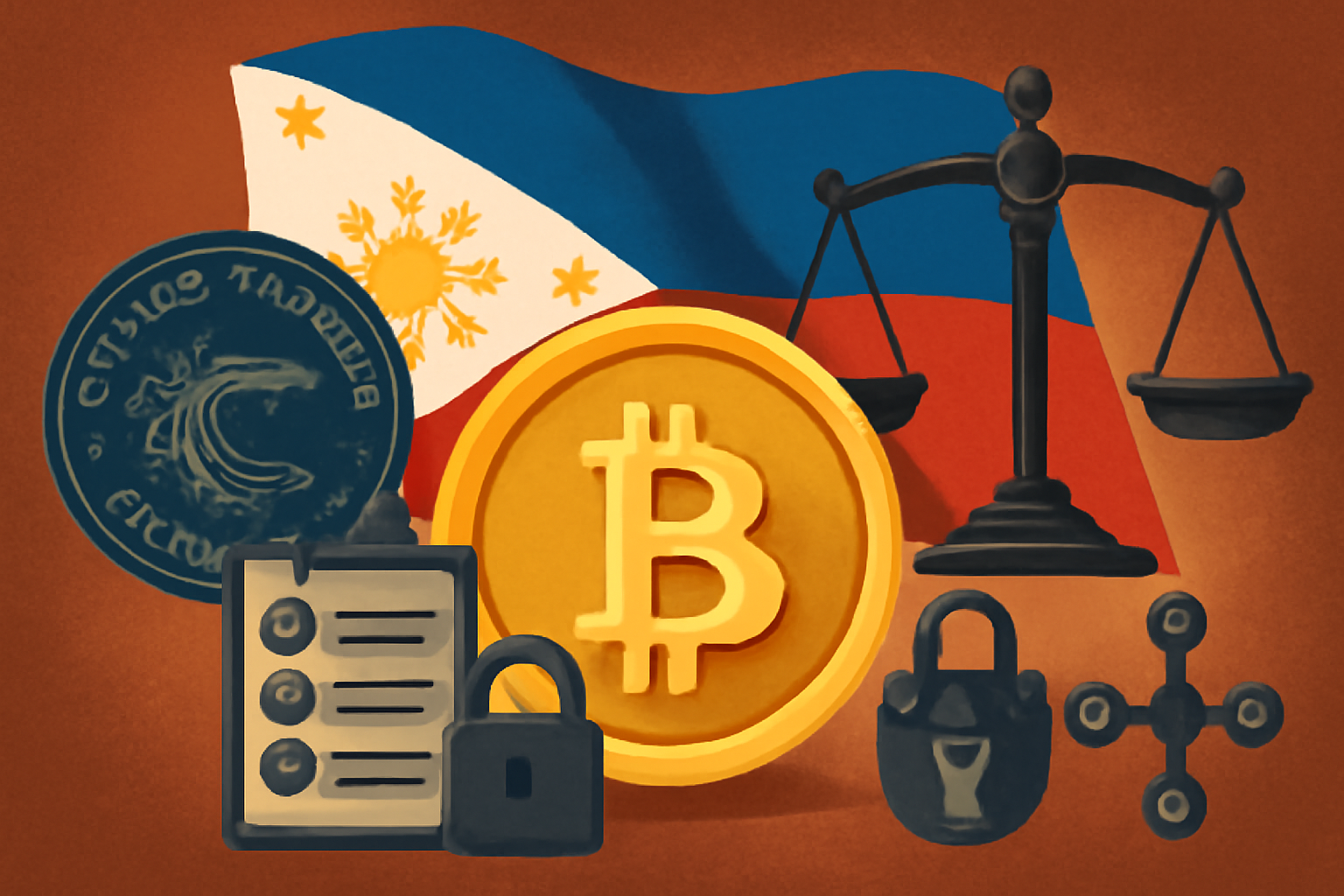
The global rise of cryptocurrencies has triggered regulatory responses from governments and financial authorities around the world. In the Philippines, a country that has become increasingly involved in the digital currency ecosystem, the government’s financial authority has adopted a proactive yet cautious approach towards the regulation of cryptocurrencies. The country’s regulatory framework has evolved over the years, emphasizing a balance between fostering innovation and ensuring investor protection, financial stability, and compliance with anti-money laundering (AML) and countering the financing of terrorism (CFT) regulations.
Early Steps and the Role of the Bangko Sentral ng Pilipinas (BSP)
The Philippine government’s engagement with cryptocurrency regulation began in earnest in 2017, when the Bangko Sentral ng Pilipinas (BSP), the country’s central bank, began issuing guidelines for virtual currencies. The BSP took a notably forward-thinking approach, recognizing the potential of blockchain technology and virtual assets while ensuring that cryptocurrencies were being used in a manner that did not undermine the financial system.
The BSP issued Circular No. 944 in 2017, which provided comprehensive guidelines for businesses operating in the cryptocurrency space. These guidelines focused on the registration of virtual currency exchanges and other cryptocurrency-related activities. The objective was clear: to prevent the use of cryptocurrencies for illegal activities like money laundering, fraud, and terrorism financing, while providing a legitimate environment for the development of the industry.
According to BSP’s guidelines, cryptocurrency exchanges and wallet providers must register with the BSP as remittance and transfer companies (RTCs), comply with AML/CFT regulations, and implement Know-Your-Customer (KYC) procedures. This registration process ensures that cryptocurrency businesses operate within the bounds of the law and adhere to financial regulations designed to protect consumers and the financial system.
BSP’s Stance on Cryptocurrencies
BSP’s cautious yet open approach is evident in its stance on cryptocurrencies as legal tender. The BSP has repeatedly clarified that while cryptocurrencies are not recognized as legal tender in the Philippines, they are viewed as a commodity. This means that cryptocurrencies can be freely traded in the country, but they are not authorized to be used as a means of payment for goods and services within the traditional financial system.
In recent years, the BSP has taken further steps to ensure that the country’s financial system remains secure. In 2020, the BSP issued Circular No. 1129, which updated the regulatory framework for virtual asset services. The new regulations, among other things, expanded the scope of activities covered by the regulations, including the provision of services related to virtual asset custody, exchange, and transfer.
In 2023, the BSP also began recognizing the importance of establishing a regulatory framework for decentralized finance (DeFi) platforms. As DeFi protocols grew in popularity, the BSP issued guidelines to regulate activities such as lending, borrowing, and staking, ensuring that these operations met the same regulatory requirements as traditional financial institutions.
Philippine SEC and the Regulation of Initial Coin Offerings (ICOs)
The Philippine Securities and Exchange Commission (SEC) plays an important role in the regulation of cryptocurrencies, particularly with regard to Initial Coin Offerings (ICOs). In 2017, the SEC issued a memorandum circular that provided guidance on the regulation of digital asset offerings. The SEC’s involvement became particularly relevant as ICOs began to raise large amounts of capital, sometimes with limited or misleading disclosures, creating concerns over investor protection.
The SEC’s guidelines for ICOs emphasize the need for transparency, proper registration, and the protection of investors. In particular, the SEC requires that any digital asset offering that involves the sale of tokens to the public be registered and comply with existing securities laws. If the offering is deemed to be a security, it must comply with the Securities Regulation Code, which includes the need to file a registration statement, disclose risks, and provide investors with all relevant information.
The Role of the Cagayan Economic Zone Authority (CEZA)
In addition to the BSP and SEC, the Cagayan Economic Zone Authority (CEZA) plays a unique role in the regulation of crypto-related businesses. The CEZA is a government agency that oversees the development of special economic zones, including the Cagayan Special Economic Zone and Freeport (CSEZFP), which has become a hub for crypto businesses in the Philippines.
In 2018, the CEZA established a cryptocurrency regulatory framework to attract blockchain and crypto companies to the region. Through this initiative, the CEZA offers licenses to international cryptocurrency exchanges and blockchain businesses, providing them with a more favorable business environment within the CSEZFP. The CEZA’s approach is more business-friendly compared to other regulatory bodies, offering tax incentives and a more lenient regulatory environment. However, businesses operating under CEZA’s jurisdiction must still comply with AML/CFT laws and cooperate with BSP and SEC regulations.
Future Outlook and Potential Challenges
Looking ahead, the Philippine government is expected to continue refining its regulatory framework for cryptocurrencies. The BSP, SEC, and CEZA are likely to work together to ensure that new developments in the crypto space, such as central bank digital currencies (CBDCs) and tokenized assets, are properly regulated. The rise of DeFi platforms, NFTs, and other decentralized applications may also present new regulatory challenges, necessitating ongoing dialogue between regulators and industry stakeholders.
However, despite the government’s proactive stance, challenges remain in ensuring that all crypto-related activities, particularly cross-border transactions and decentralized operations, comply with the law. The growing sophistication of cybercrime and the use of cryptocurrencies for illicit activities may put pressure on the regulators to adopt even stricter controls.
In conclusion, the Philippines’ approach to cryptocurrency regulation is characterized by a careful balance between fostering innovation and safeguarding financial integrity. While regulators have created an environment that allows for the growth of the crypto industry, they have also put measures in place to ensure consumer protection and financial system stability. As the crypto space evolves, it is likely that the Philippine regulatory landscape will continue to adapt to keep pace with new trends and technologies, ensuring that the country remains a competitive and secure environment for cryptocurrency businesses and users alike.