
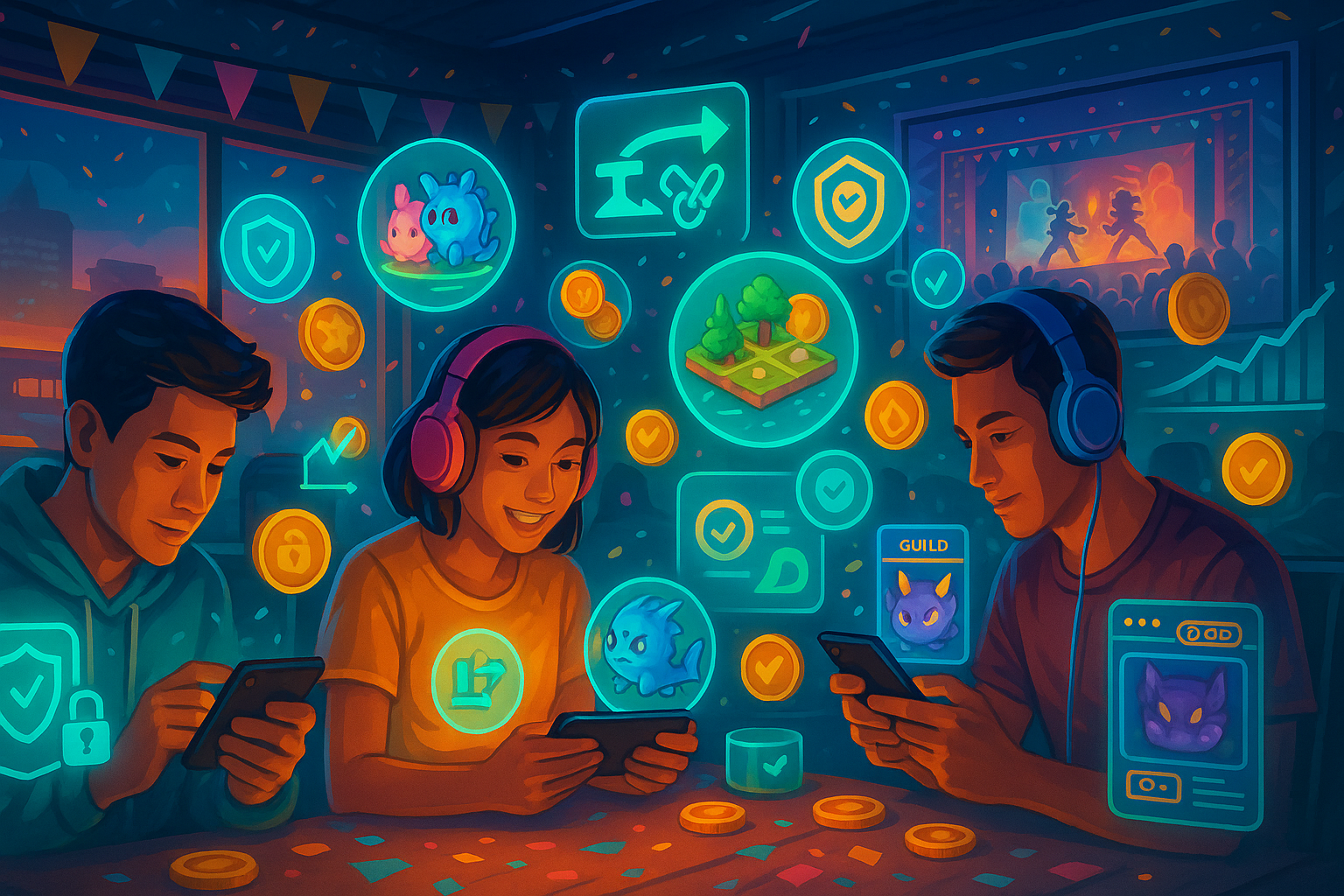
The Philippines has been one of the most visible testbeds for NFT-enabled games, shaped by a mobile-first culture, strong social gaming communities, and easy access to e-wallets. The Axie Infinity boom in 2021–2022 put the country on the global map: at its peak, play-to-earn (P2E) became a side hustle—and for some, a primary income stream. As token prices cooled, the market matured. What remains is a clearer picture of what NFTs actually contribute to player experience and developer strategy in a fast-evolving ecosystem.
How players experienced NFT games: hope, hustle, and hard lessons
For many Filipino players, NFT games began as an economic experiment. Scholarship models—popularized by homegrown guilds such as Yield Guild Games—lowered entry barriers by lending starter NFTs in exchange for revenue share. Players learned wallet security, gas fees, and exchange mechanics alongside gameplay. The upside was real: transferable, saleable assets offered a sense of ownership far beyond typical free-to-play titles.
But the volatility was exhausting. Earnings fluctuated with token prices and patch cycles; when rewards trended down, many reported burnout from “grind jobs” that felt more like microwork than play. Scams and phishing targeted newcomers, while high on-chain transaction costs sometimes made small trades irrational. By late 2022, the most satisfied players tended to be those who valued cosmetic ownership, trading, and community identity more than cash flow, signaling a shift from P2E to play-and-own.
What developers learned: five recurring challenges
- Onboarding and custody. The average Philippine gamer uses low-cost Android devices and local e-wallets (e.g., GCash, Maya). Smooth, custodial or semi-custodial wallets and social logins dramatically improved conversion compared to seed-phrase-only flows.
- Chain choice and fees. Sidechains and L2s reduced friction, but fragmentation complicated liquidity and marketplace exposure. Some teams went hybrid: off-chain for rapid gameplay loops, on-chain for asset settlement.
- Tokenomics vs. fun. Rewards that outpace demand attract speculators, then collapse. Teams found better retention with sinks (crafting, upgrades), capped emissions, and rewards tied to skill or social contribution instead of pure time-on-task.
- Compliance and trust. Projects had to consider local tax treatment, consumer protection, and exchange KYC. Clear communication, reversible off-chain actions, and auditable on-chain records built credibility after high-profile hacks and exploits shook confidence.
- Live ops and community. Filipino communities organize on Facebook, Discord, and TikTok. Transparent roadmaps, Filipino-language mods, and fair event calendars mattered as much as code. When tokens dipped, honest dev diaries and iterative balance patches kept core fans engaged.
Design patterns that resonated locally
- Cosmetic-first NFTs. Skins, avatars, and land décor minimized pay-to-win and encouraged identity building.
- Free-to-try, earn-to-upgrade. Letting players start off-chain and “mint later” reduced risk and taught Web3 slowly.
- Guild-native features. Built-in scholarship tooling, multi-account management, and automated revenue splits acknowledged how Filipinos actually organize and play.
- Interoperable marketplaces. Listings visible across multiple markets increased liquidity without forcing players to learn new interfaces.
- Event economics. Time-limited mints tied to tournaments or local holidays (e.g., community fiestas) drove participation without long-term inflation.
Risks, safeguards, and the road ahead
Players increasingly demand safety rails: two-factor approvals for expensive actions, allowlists for trusted contracts, human-readable transaction prompts, and session keys for mobile play. Developers are investing in economic telemetry—tracking sinks, velocity, and cohort health—to prevent runaway inflation. Education remains pivotal: in-app tutorials about wallets, private keys, and phishing prevention reduce losses that sour communities.
The Philippine market still offers unique advantages: dense social graphs, guild culture, and widespread digital payments make discovery and retention efficient. Yet sustainability depends on game-first design where NFTs enhance ownership, modding, and community status rather than serving as payout machines. Teams that treat tokens as a byproduct of a great game—not the product itself—are finding steadier traction with Filipino players who now know exactly what they want from Web3: real ownership, fair economies, and fun that survives the market cycle.