
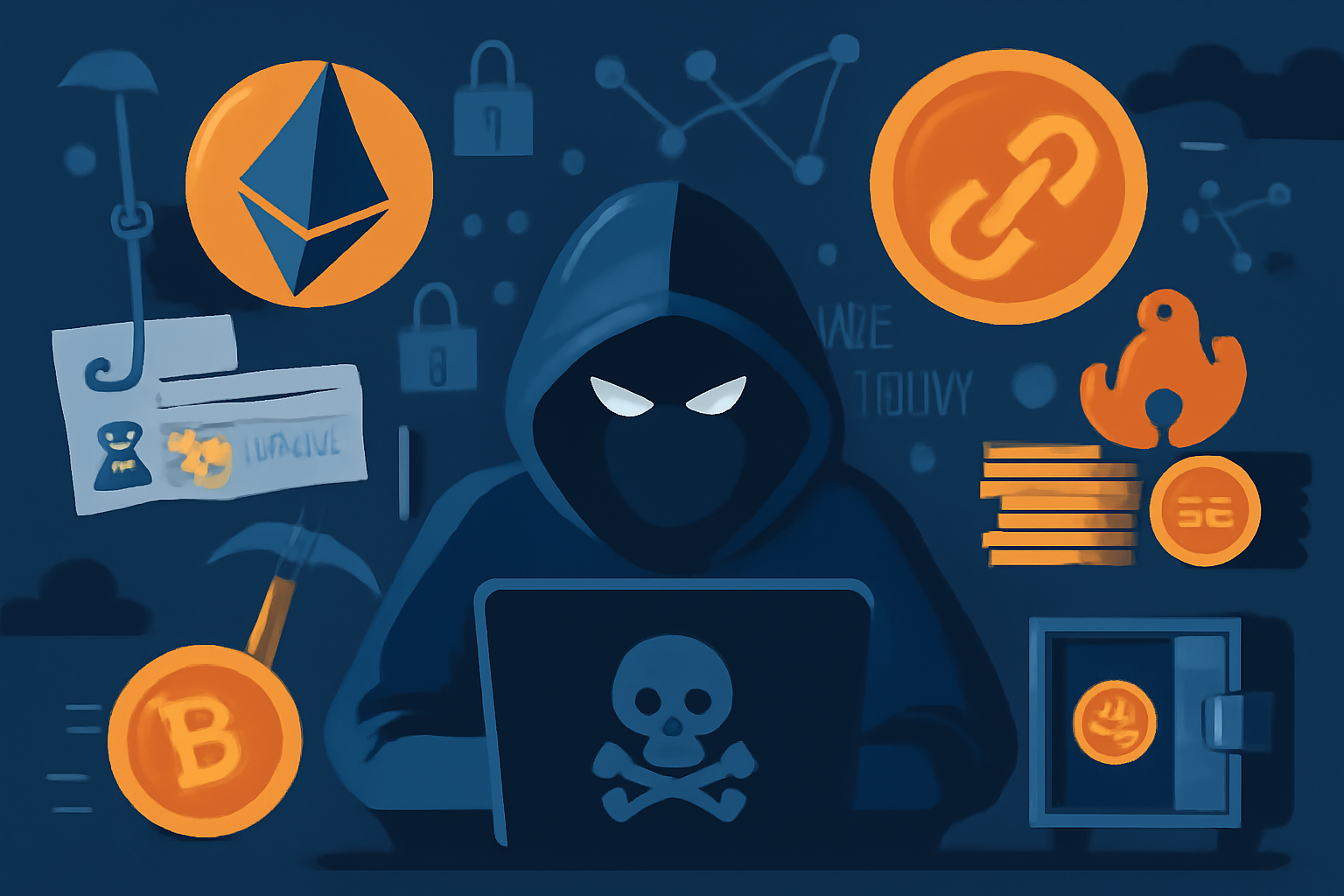
In recent years, the world of cryptocurrency and blockchain technology has evolved into a complex, decentralized ecosystem that promises transparency, security, and efficiency. However, despite its potential, it has become a target for cybercriminals who exploit various vulnerabilities in these systems. From wallet hacks to blockchain protocol flaws, understanding how malicious actors operate in this space is crucial for users and developers alike. This article delves into the methods by which cybercriminals exploit weaknesses in cryptocurrency and blockchain technologies, offering a detailed overview of the key attack vectors.
1. Exploiting Smart Contract Vulnerabilities
One of the primary targets of cybercriminals in the blockchain space is smart contracts. These self-executing contracts, built on blockchain platforms like Ethereum, automate and enforce agreements between parties. However, the coding of smart contracts is often complex, and small mistakes or vulnerabilities can be exploited by attackers.
For example, flaws such as reentrancy attacks have been used in high-profile hacks like the DAO hack in 2016. In a reentrancy attack, an attacker can repeatedly call a function before the previous execution is completed, leading to unintended consequences, like draining funds from a contract.
Similarly, integer overflow/underflow vulnerabilities can be exploited by cybercriminals to manipulate contract variables, potentially leading to massive financial losses. A careful and thorough review of smart contract code, alongside the use of automated tools for vulnerability detection, can help mitigate these risks.
2. Phishing and Social Engineering Attacks
Phishing attacks remain one of the most effective ways for cybercriminals to target cryptocurrency users. Instead of attacking the blockchain or the cryptocurrency directly, hackers target the human element of the system. This includes tactics like fake websites, emails, or social media profiles impersonating legitimate cryptocurrency exchanges or wallet services.
For instance, attackers may craft a fake exchange site that looks identical to a popular platform. Unsuspecting users who log in with their private keys or seed phrases end up giving away their credentials. Once obtained, the attacker can drain the user’s wallet or access their funds.
Additionally, social engineering plays a major role in phishing. Cybercriminals may create fake support messages or scam users through direct messaging platforms, convincing them to reveal their private keys or transfer funds to fraudulent addresses.
3. 51% Attacks
A 51% attack occurs when a single miner or group of miners control more than 50% of a blockchain network’s mining power, particularly in proof-of-work (PoW) blockchains like Bitcoin or Ethereum Classic. This kind of attack allows the malicious actor to manipulate the blockchain’s consensus mechanism by reversing transactions, double-spending coins, or halting new transactions from being confirmed.
Although blockchain networks like Bitcoin are highly secure due to their sheer computational power, smaller networks are more vulnerable to this kind of attack. A successful 51% attack could allow a hacker to alter the blockchain’s transaction history, thus undermining trust in the network.
4. Wallet and Exchange Hacks
Another common avenue for cybercriminals to exploit is cryptocurrency exchanges and wallets. These platforms, which serve as the primary gateways for buying, selling, and storing crypto assets, can be lucrative targets for hackers.
Cybercriminals often use SQL injection and cross-site scripting (XSS) attacks to exploit vulnerabilities in exchange websites. These attacks can lead to unauthorized access to users’ accounts, enabling attackers to steal funds or manipulate transaction records. Large-scale exchange hacks like the Mt. Gox incident in 2014, where 850,000 bitcoins were stolen, highlight the risk.
Similarly, wallet hacks are a significant threat. Many users store their private keys on online platforms or on exchanges, making them susceptible to remote hacking attempts. Hardware wallets are often considered safer, but they are not immune to physical theft or sophisticated attacks like man-in-the-middle attacks during the wallet setup process.
5. Rug Pulls and Exit Scams in Decentralized Finance (DeFi)
Decentralized Finance (DeFi) has grown tremendously in recent years, but it has also become a breeding ground for scams, particularly in the form of rug pulls. A rug pull occurs when the developers of a DeFi project suddenly withdraw all liquidity from a liquidity pool, leaving investors with worthless tokens.
DeFi protocols often rely on unaudited code and anonymous developers, creating a perfect environment for malicious actors. Since the decentralized nature of DeFi platforms means there is no central authority to oversee transactions, cybercriminals can create fake or deceptive projects to attract investors, only to disappear with their funds.
6. Exploitation of Privacy Coin Weaknesses
Privacy coins, such as Monero, Zcash, and Dash, promise enhanced anonymity for users. However, while these coins offer privacy features, they can also be exploited by cybercriminals. The primary issue here is that privacy coins can be used to launder funds or carry out illegal transactions without the traceability that traditional cryptocurrencies like Bitcoin offer.
For example, hackers may steal cryptocurrency and then convert it into privacy coins to obfuscate the origin of the funds. While the anonymity provided by these coins can benefit legitimate users, it also makes it more difficult for law enforcement to track illicit activities, which in turn encourages malicious behavior.
Conclusion
The growing sophistication of cybercriminals in the cryptocurrency and blockchain space underscores the importance of security measures for users, developers, and platforms. From smart contract vulnerabilities to social engineering, 51% attacks, and decentralized finance scams, these threats present significant risks to the integrity of the entire ecosystem.
To mitigate these dangers, developers must prioritize robust security practices, including code audits, bug bounty programs, and continuous monitoring of blockchain networks. Users, on the other hand, should adopt secure habits like using hardware wallets, verifying the legitimacy of exchanges, and being cautious about phishing attempts.
As the world of blockchain continues to evolve, staying informed about potential threats and continuously updating security protocols will be essential in preventing cybercriminals from exploiting its vulnerabilities.