
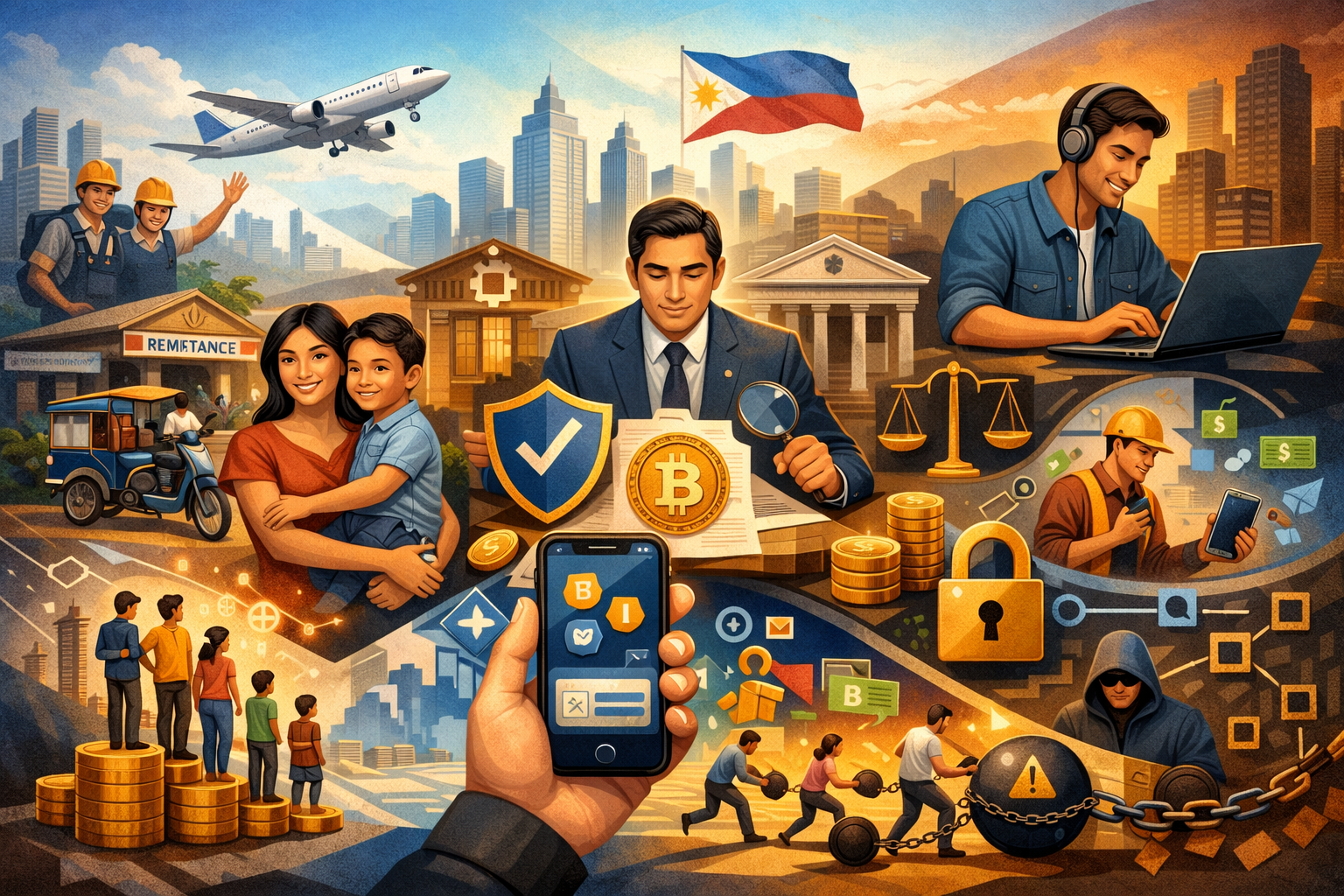
In the Philippines, crypto regulation has become more than a debate about technology or investment. It is increasingly tied to financial access, especially in a country where many people have historically relied on cash, informal lending, remittance centers, and mobile wallets rather than traditional bank branches. Because crypto services can move money quickly, lower transfer friction, and expand digital financial tools, regulation plays a direct role in deciding who can use these services, how safely they can use them, and whether innovation reaches ordinary households instead of staying limited to traders and large firms.
The Philippines has often been seen as one of Southeast Asia’s more open digital finance environments. This matters because the country already had a strong base for digital adoption through e-wallets, online payments, and remittances. In that setting, crypto entered public awareness not only as a speculative asset but also as a possible tool for cross-border transfers, online work payments, and alternative savings channels. Regulation therefore affects access in two competing ways: it can widen inclusion by making services legal and supervised, but it can also narrow access when compliance becomes too expensive or restrictive for smaller users and startups.
One major positive effect of regulation is legitimacy. When the state defines licensing rules, anti-money laundering standards, consumer protection expectations, and reporting obligations, people become more willing to use crypto-related financial services. For many Filipinos, trust is one of the biggest barriers to entering new financial platforms. A regulated environment signals that exchanges and service providers are not operating entirely in the shadows. That can encourage first-time users, especially freelancers, overseas worker families, and younger mobile-first consumers, to explore digital financial tools connected to crypto rails.
Regulation also helps protect low-income users from common harms. In fast-growing crypto markets, scams, misleading token promotions, and platform failures can destroy confidence and wipe out savings. Clear rules on custody, advertising, disclosures, and operational standards can reduce these risks. This is particularly important in the Philippines, where financial vulnerability makes many households more exposed to promises of quick returns. Good regulation can shift crypto from a high-risk gambling image toward a more controlled financial service layer.
At the same time, stricter regulation can unintentionally limit access. Compliance costs often favor large exchanges and well-funded firms, while smaller local platforms may struggle with licensing, reporting systems, legal requirements, and cybersecurity obligations. When only a few players survive, users may face fewer choices, higher fees, and weaker competition. This matters for inclusion because affordability is a core part of access. A service that is technically legal but too expensive is not meaningfully inclusive.
Identity verification rules create another tension. Know-your-customer requirements are essential for preventing money laundering and fraud, but they can exclude people with limited formal documentation, unstable addresses, or weak digital literacy. In a country where some communities remain underbanked or informally employed, this is a serious issue. If crypto platforms must apply bank-like onboarding standards without flexible alternatives, the very people who might benefit most from digital financial access can be pushed out.
There is also the issue of policy messaging. When regulators emphasize risk without clearly distinguishing between illegal schemes and licensed services, the public may treat all crypto activity as dangerous. But when authorities communicate balanced guidance, they help people understand that regulation is not simply a crackdown; it is a framework for safer participation. That distinction shapes adoption.
The Philippine case shows that crypto regulation is not just about controlling a new asset class. It is about deciding whether digital finance can become more inclusive. The strongest regulatory approach is neither total permissiveness nor blanket restriction. It is a model that protects users, allows responsible innovation, and recognizes that financial access depends not only on legality, but also on cost, trust, usability, and fairness.