
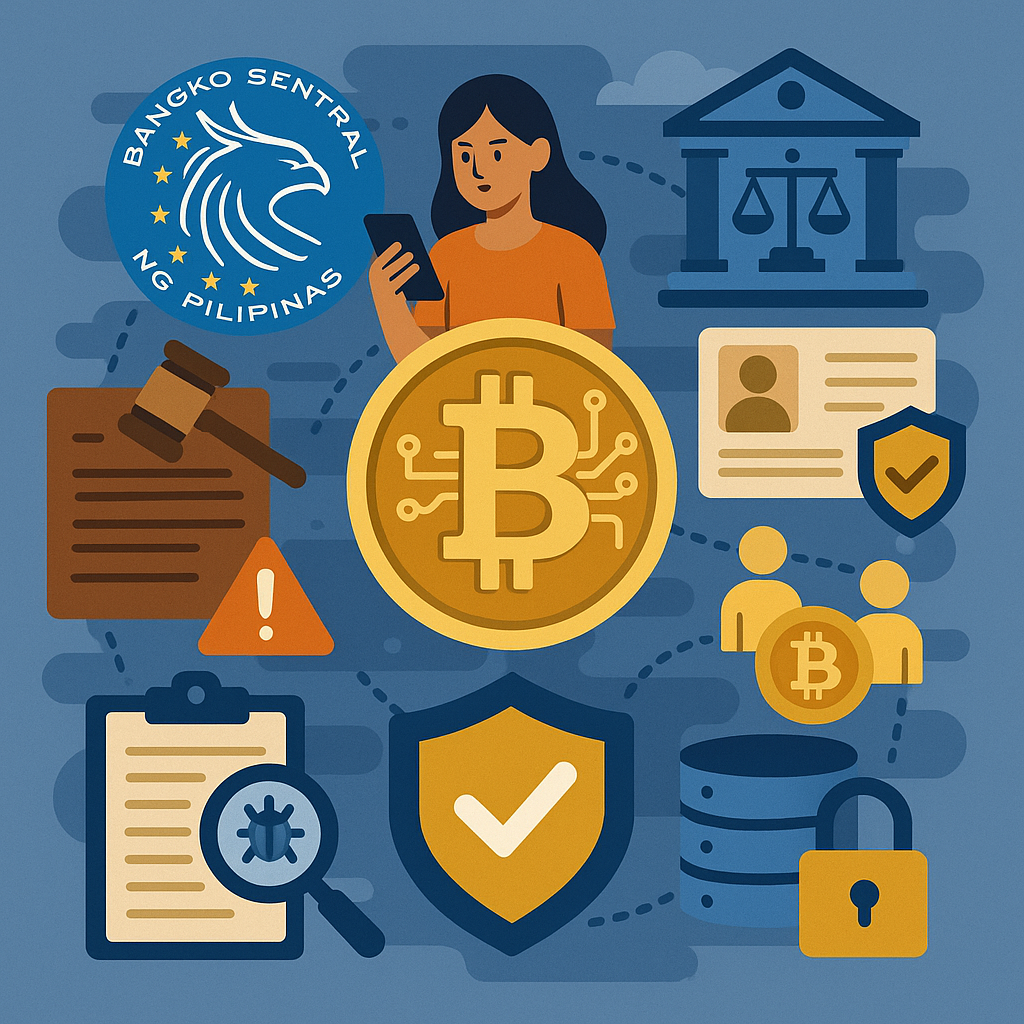
The Bangko Sentral ng Pilipinas (BSP) was one of the first regulators in Southeast Asia to issue rules on crypto. Initially, it focused only on companies that converted crypto to fiat (like PHP) and acted as remittance or payment channels. These were called Virtual Currency Exchanges (VCEs) under BSP Circular No. 944 (2017).
Over time, as trading volumes and scams increased, BSP expanded the framework through Circular No. 1108 (2021), shifting from “virtual currency” to “virtual asset” and formally introducing the term Virtual Asset Service Provider (VASP).
Key changes that affect consumers include:
- Mandatory licensing: Only BSP-licensed VASPs can legally operate and offer exchange or custodial services to Philippine residents.
- Stricter KYC/AML rules: VASPs must verify customer identity, monitor transactions, and report suspicious activity, in line with Anti-Money Laundering Act (AMLA) requirements.
- Travel Rule compliance: For larger transfers, VASPs must share originator and beneficiary information with other institutions, providing a clearer audit trail for law enforcement.
- Capital and risk requirements: Minimum capital, cybersecurity standards, and operational risk controls are designed to reduce the risk of collapse or major breaches.
For users, this means that if a platform is licensed by BSP, it must meet specific financial, security, and governance standards, offering a safer environment than purely offshore exchanges.
2. SEC, token offerings, and investment protection
While BSP supervises crypto as a financial service, the Securities and Exchange Commission (SEC) looks at crypto as investments. If a token, coin, or crypto-based scheme looks like a security (for example, it raises money from the public with a promise of profit), it can fall under the Securities Regulation Code.
Changes and trends on this side include:
- Stricter stance on ICOs and token sales: Many initial coin offerings targeting Filipinos have been flagged or warned against by the SEC if they are unregistered or misleading.
- Crackdown on unregistered platforms: The SEC has regularly issued advisories against unlicensed exchanges, lending apps, and crypto “investment programs” that promise guaranteed returns.
- Advertising and solicitation rules: Companies cannot freely promote crypto-based investments to the public without proper registration and disclosure.
This SEC activity aims to protect consumers from Ponzi schemes, high-yield scams, and fraudulent token projects that often use crypto jargon to appear legitimate.
3. New consumer protection layer in financial services
A major development in recent years is the Financial Products and Services Consumer Protection Act (often referred to as the FCPA). This law strengthens the powers of regulators like BSP and SEC to:
- Set conduct standards for financial service providers, including those dealing with crypto.
- Require fair, clear, and non-misleading disclosures about risks, fees, and terms.
- Investigate complaints, order refunds or restitution, and impose penalties for abusive practices.
Alongside this, general laws such as the Data Privacy Act apply to crypto firms that collect personal data. Breaches, misuse of customer information, or failure to secure data can trigger enforcement.
4. What has practically changed for consumers?
Compared with the early days of Bitcoin use in the Philippines, several practical shifts are visible:
- Easier to identify safer platforms: Users can now check if a crypto exchange is a BSP-licensed VASP or covered by SEC rules. This is not a guarantee of profit, but it does offer a baseline of oversight.
- Better disclosure and risk warnings: Regulated platforms are expected to highlight volatility, potential loss of capital, and the absence of deposit insurance for crypto holdings.
- More avenues for complaints: Consumers can bring issues not only to the company itself, but also to BSP, SEC, or other relevant agencies if they believe their rights have been violated.
- Stronger AML checks: Onboarding may feel more burdensome—ID verification, source-of-funds questions, transaction monitoring—but these measures aim to reduce illicit use and protect the reputation of the ecosystem.
5. Remaining gaps and what to watch
Despite progress, crypto in the Philippines still carries significant risk. Regulation does not cover every type of token or decentralized protocol, and many Filipinos continue to use offshore exchanges or peer-to-peer channels with minimal protection. Market volatility, smart contract bugs, and rug pulls remain real dangers.
Going forward, key areas to watch include:
- Possible refinement of SEC rules on token classification and digital asset exchanges.
- Further integration of international standards (for example, from the Financial Action Task Force) into local rules.
- How courts interpret consumer protection and liability when crypto platforms fail or get hacked.
Overall, the regulatory environment in the Philippines has evolved from a light-touch, experimental approach to a more structured framework that tries to balance innovation with consumer safety. For users, the safest strategy is to favor licensed platforms, stay informed about advisories from BSP and SEC, and treat any “guaranteed” crypto profit offers with extreme caution.