
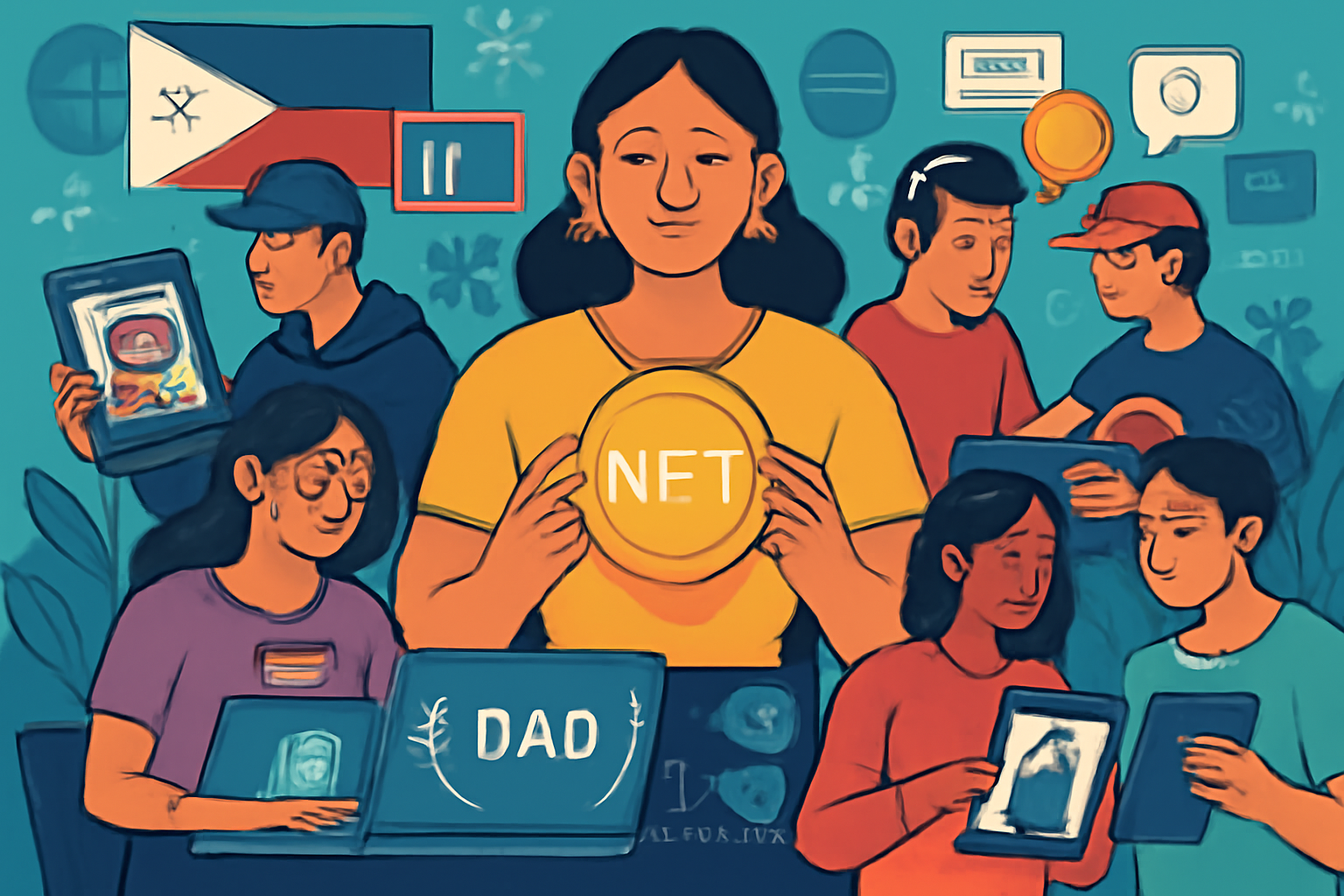
The Philippines has emerged as one of Southeast Asia’s most dynamic hubs for blockchain culture, and community-based NFT projects sit at the center of that momentum. Blending grassroots art movements, digital entrepreneurship, and collaborative storytelling, these initiatives are reshaping how creators organize, fund, and distribute their work. What distinguishes the Philippine scene is its community-first ethos: NFTs are not simply speculative assets, but passes to shared creative spaces, co-owned narratives, and sustainable micro-economies.
At the heart of these projects is the community DAO model—lightweight, transparent governance that lets holders propose, vote, and execute initiatives. In practical terms, that means local artists, musicians, and indie game developers can pool resources for exhibitions, zines, virtual galleries, and live events. Many communities use tiered tokens: a base membership NFT to unlock Discord channels and learning tracks, plus specialized tokens for curatorial committees, music drops, or game-testing cohorts. This layered architecture encourages participation without locking newcomers out.
Education is another defining pillar. Workshops on wallet safety, minting strategies, royalty splits, and on-chain IP licensing give practical value to holders. In the Philippines—where creative talent is abundant but traditional gateways can be limited—NFT communities function like open academies. Veteran creators mentor first-time minters; developers teach smart contract basics; curators share playbooks for long-term collection stewardship. The emphasis on upskilling sets a more durable foundation than hype-driven drops.
Philippine projects also excel at transmedia collaboration. Visual artists partner with poets and beat-makers to create evolving NFTs that unlock stages of a story, each chapter curated by the community. Some experiment with “story bibles” published on-chain, where token holders vote on plot branches, character arcs, or soundtrack commissions. Others integrate with indie game prototypes, granting holders early access, in-game cosmetics, or revenue-sharing tied to marketplace sales. This approach turns passive fandom into co-authorship and gives creators diversified income streams.
Local cultural grounding matters, too. Community-based collections often draw on regional folklore, languages, and street art aesthetics. By anchoring drops in place-based narratives—fiestas, maritime myths, urban jeepney culture—projects differentiate themselves from global clones and attract diaspora supporters who value cultural continuity. Partnerships with physical venues—art cafés, maker spaces, university clubs—extend the digital community into offline meetups, pop-up shows, and merch collaborations, strengthening trust and discovery.
Sustainability is a recurring theme. Many communities adopt chains or L2s with lower transaction fees and emissions, then publish environmental impact notes alongside mint pages. Treasury playbooks are increasingly transparent: a clear split across creator royalties, community funds, grants, and emergency reserves; quarterly reports; multi-sig wallets with rotating signers. This level of openness reduces rug-pull risk and invites responsible stewardship.
Regulatory awareness is improving. While NFTs typically fall outside payments licensing frameworks, adjacent activities—fiat on-ramps, marketplace operations, and revenue-sharing mechanics—often intersect with virtual asset service provider (VASP) considerations and consumer protection norms. Best practice includes plain-language disclosures, KYC for treasury signers, and IP clarity via open-source or custom licenses that spell out commercial rights, derivatives, and attribution.
For media and distribution, community projects gain leverage through syndicated announcements, press kits with on-chain proofs, and analytics that track wallet diversity, secondary-market health, and participation rates in votes or workshops. Data storytelling—beyond floor prices—helps stakeholders evaluate real community vitality: retention, creator churn, event attendance, and grant outcomes.
The next frontier is interoperability. Philippine communities are experimenting with token-gated access that travels across platforms, reputation scores tied to on-chain contributions, and cross-collection quests where completing creative challenges mints soulbound badges. If executed thoughtfully, these mechanics will weave disparate groups into a broader creative commons—one where artists, builders, and fans co-own the infrastructure of culture and share in its upside.