
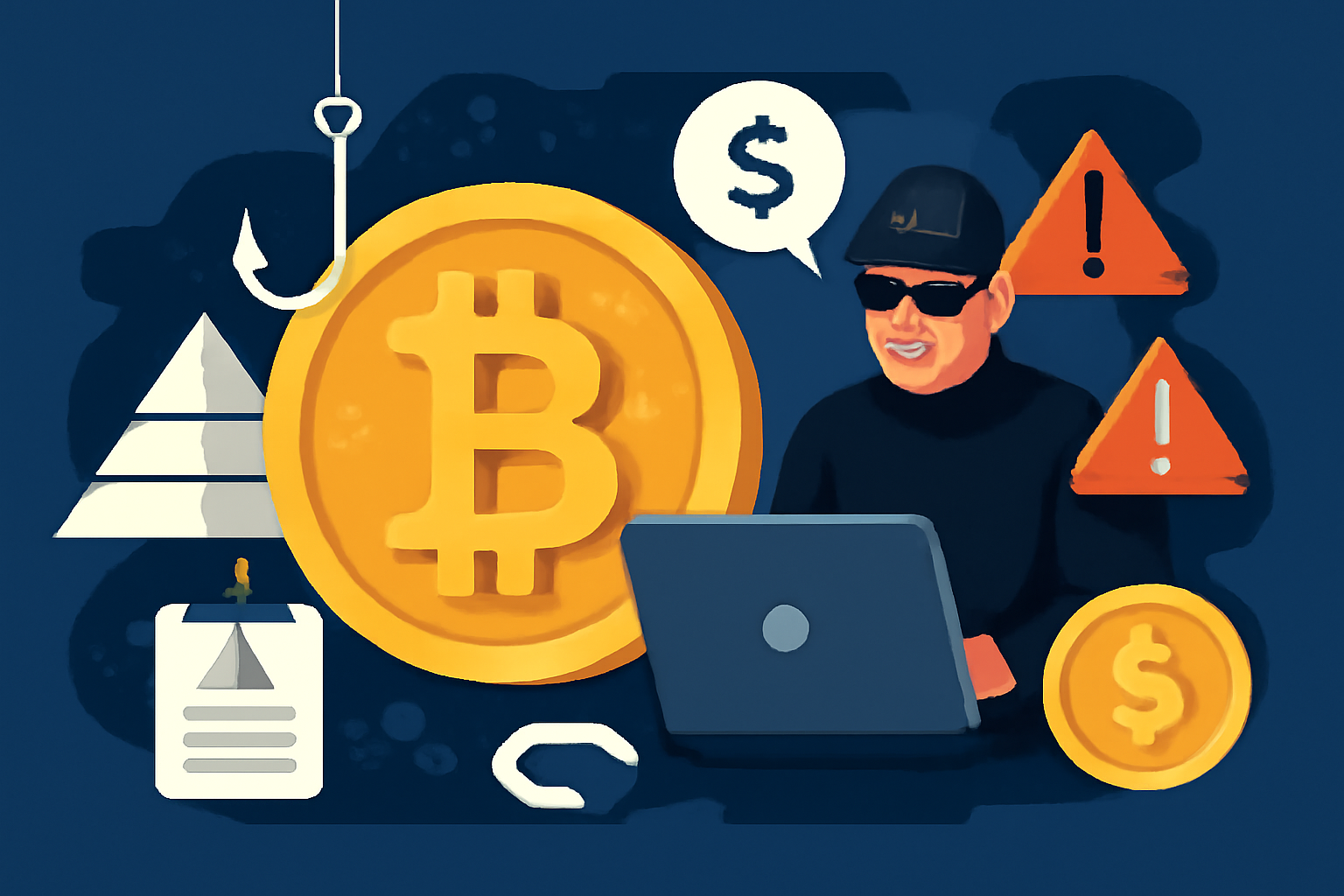
The rise of cryptocurrency has revolutionized the world of finance, offering investors a new, decentralized way to store value, transfer assets, and speculate on future prices. However, the explosion in popularity of crypto also attracted an increasing number of scammers looking to exploit unsuspecting individuals. As digital currencies grow in prominence, it’s essential for investors to understand how to identify and avoid fraudulent schemes that can lead to devastating financial losses.
What is a Crypto Scam?
A crypto scam refers to fraudulent schemes that deceive individuals into investing in fake or non-existent digital assets. These scams are often disguised as legitimate investment opportunities, promising high returns with little risk. The anonymity of blockchain technology and the unregulated nature of many cryptocurrency markets make it a prime target for scammers, who can operate with minimal oversight.
Types of Crypto Scams
- Ponzi Schemes and Pyramid Schemes
One of the most prevalent crypto scams is the Ponzi scheme, where early investors are paid returns using the investments of new participants rather than from profit made by the business. As long as the scheme can attract new investors, it will continue to operate, but once the flow of new funds slows down, the scheme collapses, leaving the later investors with nothing.
Pyramid schemes work similarly, where participants earn money by recruiting new members into the investment rather than through legitimate investments or profits. While these may appear as structured “business opportunities,” the reality is that the money is generated through recruitment, and not by any productive or profitable activities.
- Fake ICOs (Initial Coin Offerings)
In the early days of cryptocurrency, ICOs were an innovative way for blockchain projects to raise capital. However, over time, fraudulent companies started launching fake ICOs, promising investors access to groundbreaking digital tokens or coins that were often either non-existent or worthless. Scammers typically use flashy websites, professional whitepapers, and unrealistic promises of huge returns to lure investors into sending funds to a wallet address that they never see again.
- Phishing Scams
Phishing scams in the crypto space usually involve tricking individuals into providing sensitive information such as private keys, login credentials, or wallet information. These scams often come in the form of emails or fake websites that look remarkably similar to legitimate exchanges or wallets. Once an investor enters their private information, scammers can easily access their funds.
- Rug Pulls
A rug pull occurs when a cryptocurrency project, typically a decentralized finance (DeFi) token or liquidity pool, suddenly disappears after attracting significant investment. Developers or creators of a project can exit with the funds, leaving investors with worthless tokens. This is particularly common with new, unverified tokens on decentralized exchanges (DEXs) where investors are encouraged to provide liquidity to a pool that ultimately vanishes.
How to Identify Crypto Scams
- Unrealistic Promises
One of the red flags of a crypto scam is the promise of unrealistically high returns with little to no risk. In the volatile world of crypto, returns are uncertain, and anything that promises “guaranteed profits” should be viewed with suspicion. If an investment seems too good to be true, it often is.
- Lack of Transparency
Legitimate crypto projects will usually have clear and transparent information about their team, roadmap, tokenomics, and business model. If a project or investment opportunity lacks transparency, such as a missing whitepaper, anonymous team members, or no clear plan, it’s best to be cautious. Real projects often have verified public profiles or documents to support their claims.
- Pressure Tactics
Scammers frequently employ pressure tactics, urging potential victims to invest quickly before an “opportunity” expires. This could come in the form of limited-time offers, promises of early-bird access, or fear of missing out (FOMO) campaigns. Authentic investments rarely rush you into making a decision. If you feel pressured to act fast, it’s a red flag.
- No Audits or Security Measures
Another significant warning sign is a lack of audits or security measures. Reputable crypto projects will often undergo third-party audits to ensure their code and security practices are safe. Without an audit or some form of validation from a trusted source, it’s difficult to trust the legitimacy of the project.
- Anonymous Teams
While it’s true that some legitimate projects in the crypto space have anonymous developers or contributors, this is the exception rather than the rule. If the team behind a project cannot be identified or verified, it’s worth considering whether they might be hiding something. Authentic teams often have verifiable credentials and a visible online presence.
How to Avoid Crypto Scams
- Do Thorough Research
Before investing in any cryptocurrency, ICO, or blockchain project, conduct thorough research. This includes checking the project’s official website, reading reviews or discussions on reputable platforms, and looking for any audit reports. Communities on platforms like Reddit, Twitter, and Telegram can provide valuable insights into the credibility of a project.
- Stick to Trusted Platforms
When buying or trading cryptocurrencies, always use well-known, reputable exchanges and wallets. Stick to established platforms with a strong reputation for security and customer service. Avoid using unverified third-party services, as these are often the entry points for scammers.
- Enable Two-Factor Authentication (2FA)
To protect your investments, always enable two-factor authentication on your crypto exchange and wallet accounts. This adds an extra layer of security, ensuring that even if someone obtains your login credentials, they cannot access your funds without the second verification.
- Avoid “Too Good to Be True” Offers
As a general rule of thumb, avoid any investment that promises guaranteed returns or extremely high profits. Always ask yourself why such an opportunity is available to you and not to a larger group of investors. The crypto market is volatile, and no one can promise guaranteed gains.
- Consult With Professionals
If you are new to crypto investing or unsure about a particular project, consider consulting with a financial advisor or professional who is familiar with the crypto space. They can help you navigate the complexities of the market and identify potential scams or bad investments.
By staying informed, doing your due diligence, and being cautious of unrealistic offers, you can avoid falling victim to the numerous crypto scams that exist today.