
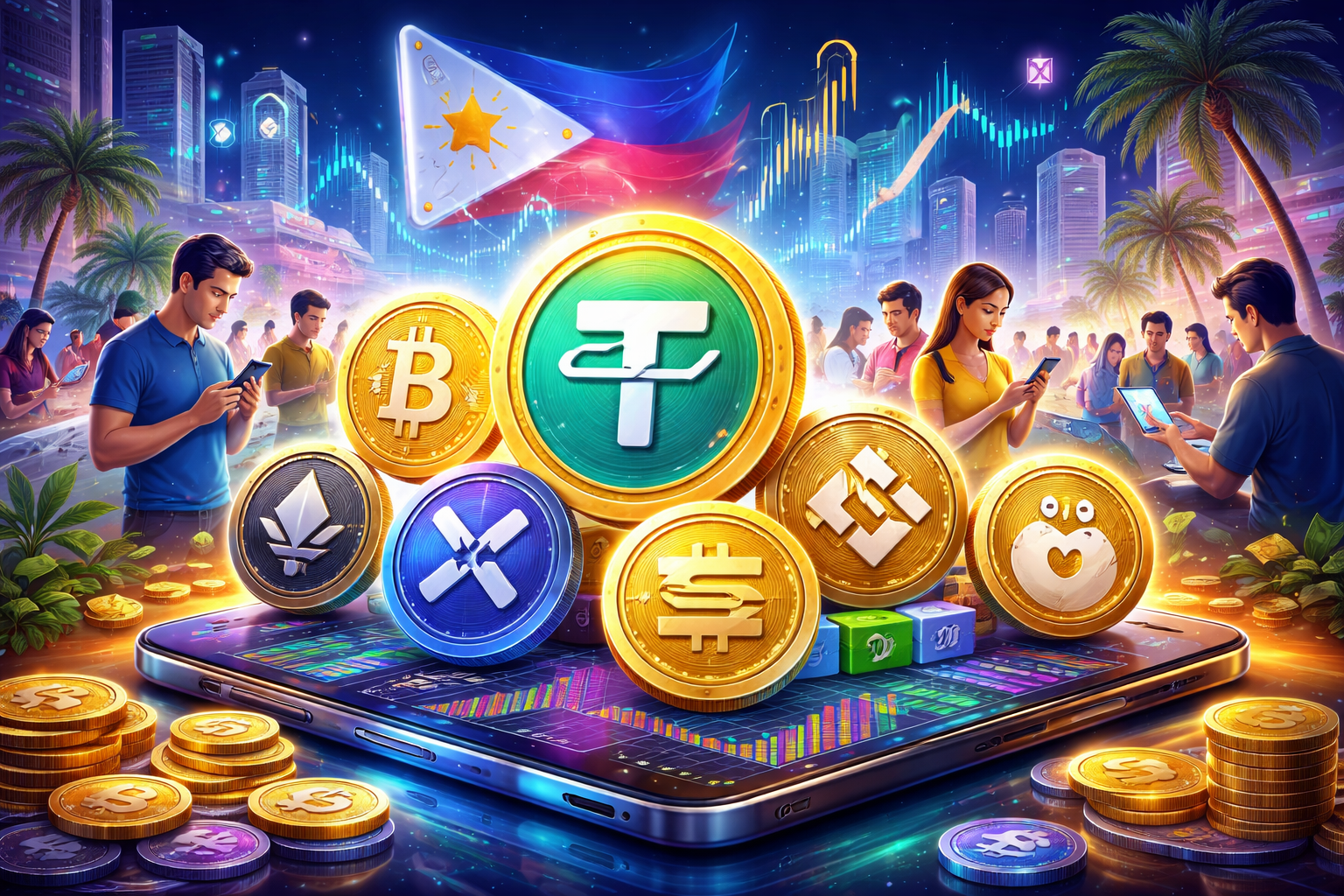
Crypto trading in the Philippines is shaped by a mix of practical needs—remittances, mobile-first payments, and easy access through apps—as well as global market forces. While the exact “most traded” coin can change day to day (and varies by platform), trading activity in the Philippines typically clusters around a familiar set of high-liquidity assets: Bitcoin (BTC), Tether (USDT), Ethereum (ETH), and a handful of other large-cap coins that Filipinos use for transfers, hedging, and speculation.
What “Most Traded” Really Means
Before comparing coins, it helps to define the yardsticks traders and analysts use:
- Spot volume: how much of a coin is bought/sold on exchanges (often shown per 24 hours).
- Pair dominance: which pairs are most active (e.g., BTC/USDT, USDT/PHP, ETH/USDT).
- Order book depth: how easily you can buy/sell without moving the price.
- P2P activity: especially relevant in the Philippines, where bank transfers and e-wallet rails are commonly used for peer-to-peer deals.
In many markets (including the Philippines), stablecoins act as the “bridge currency”, so coins paired with USDT often see heavier turnover than coins paired directly with PHP.
The Usual Top Tier in Philippine Trading
1) USDT (Tether) — Often the most “used” trading asset
Even when it isn’t the headline coin, USDT frequently sits at the center of trading. Many traders convert PHP → USDT first, then rotate into other coins. Why it’s heavily traded in the Philippines:
- Price stability vs. PHP volatility for short-term parking of value.
- Efficient transfers between platforms and wallets.
- Common quote currency: BTC/USDT and ETH/USDT style markets make USDT a default hub.
2) BTC (Bitcoin) — The benchmark and liquidity leader
Bitcoin tends to dominate “blue-chip” crypto demand. It’s often the coin people enter with first, then hold long-term or trade around major price moves.
- Strong brand recognition and broad availability across exchanges.
- Deep liquidity usually means tighter spreads and easier execution.
- Often favored as a macro hedge narrative (though still volatile).
3) ETH (Ethereum) — Trading plus utility demand
ETH commonly ranks near BTC in activity because it’s both an investment asset and a gateway to ecosystems (DeFi, NFTs, token launches).
- Traders move into ETH during network/ecosystem-driven rallies.
- It’s used for interacting with Web3 applications, even when users are not “trading” in the traditional sense.
The Frequent “High Activity” Contenders
XRP — Remittance narratives and regional popularity
XRP often attracts significant attention in Southeast Asia due to its long-standing association with cross-border payments. In the Philippines, that theme can resonate because remittances are a major economic lifeline. XRP trading activity tends to spike around market news, regulatory developments, or broader altcoin rotations.
BNB — Exchange-linked demand
BNB’s trading interest typically rises where Binance-linked ecosystems are popular and where traders chase lower fees or ecosystem launches. Even when not top-three, it can remain consistently liquid due to exchange-centric usage and wide pairing.
SOL (Solana) and DOGE (Dogecoin) — Retail-driven waves
SOL often benefits from “high-throughput, low-fee” narratives and meme/consumer-facing app cycles. DOGE, meanwhile, can see bursts of heavy turnover during social-driven rallies, especially among newer traders.
Why These Coins Win in the Philippines
Several local realities reinforce the same shortlist:
- Mobile money and on/off-ramp behavior: many users prefer quick conversion routes, which boosts USDT-centered trading.
- Remittance mindset: coins perceived as easier to transfer or convert can see extra interest.
- Liquidity preference: traders gravitate toward assets with tighter spreads and faster fills.
- Regulatory risk awareness: users often choose large, established coins because smaller tokens can carry higher delisting or compliance risk.
How to Verify “Most Traded” on Your Platform
To get an accurate, Philippines-relevant view, check:
- Your exchange’s Markets page and sort by 24h Volume.
- Compare USDT/PHP, BTC/USDT, ETH/USDT, and any PHP pairs available.
- Look at spread + order book depth, not just volume—high volume with wide spreads can still be costly.
If your goal is lower slippage and faster execution, the practical answer in many Philippine snapshots is: USDT as the hub, with BTC and ETH as the most consistently liquid major coins, followed by rotating contenders like XRP, BNB, SOL, and DOGE depending on the market cycle.