
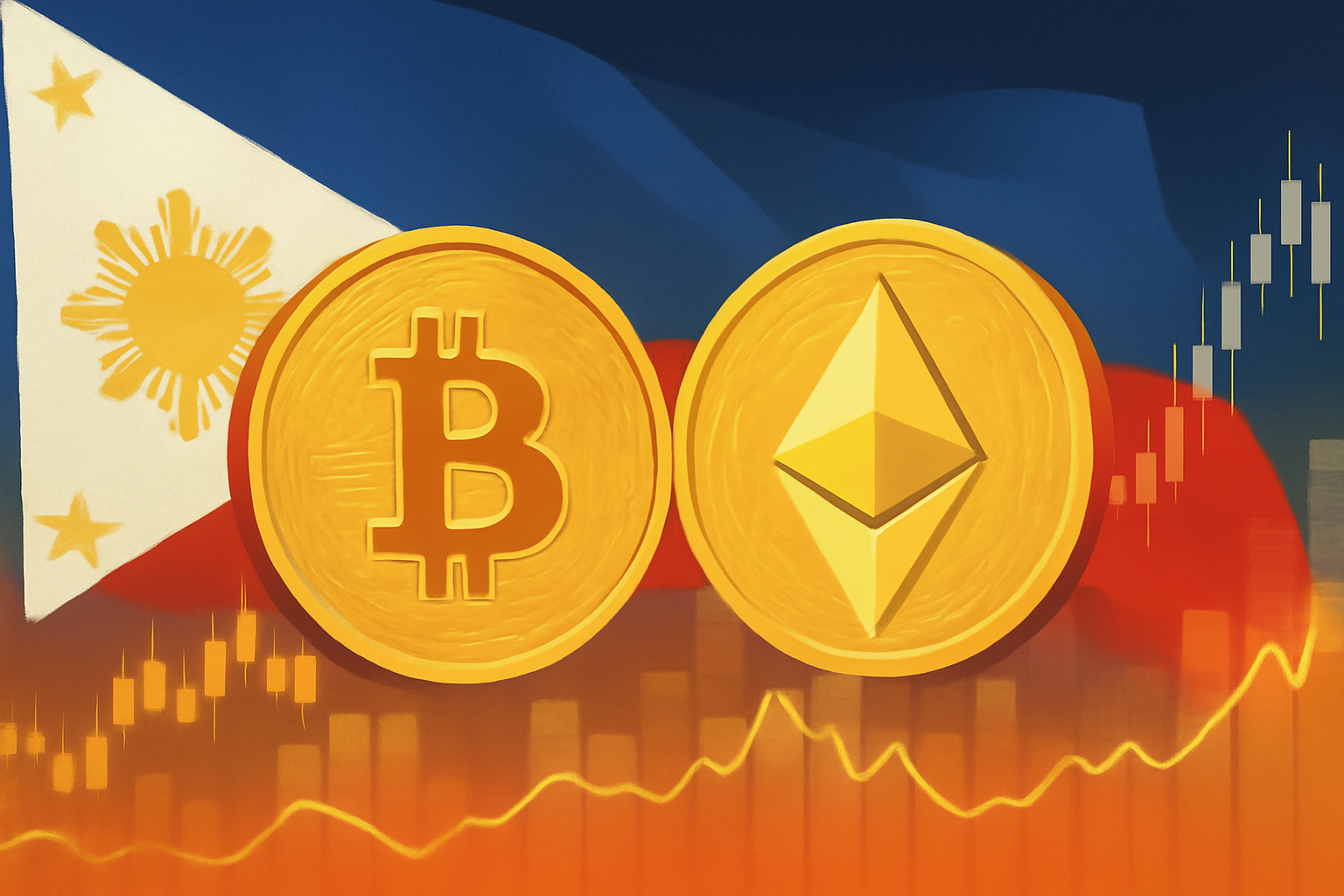
Cryptocurrencies, notably Bitcoin and Ethereum, have gained significant attention worldwide, including in the Philippines, where their adoption continues to grow. These digital assets have proven to be highly volatile, with their prices influenced by a multitude of factors. In this article, we delve into the performance of Bitcoin and Ethereum in the Philippines, exploring what influences their price fluctuations and their current standing in the Filipino market.
The Popularity of Bitcoin and Ethereum in the Philippines
Over the last few years, both Bitcoin and Ethereum have seen an increase in interest within the Philippines. According to reports from various cryptocurrency exchanges and industry surveys, the Philippines ranks high in global cryptocurrency adoption. Filipinos use cryptocurrencies for a range of activities, including remittances, investments, and even daily transactions. The increasing awareness of digital currencies, along with the country’s relatively young and tech-savvy population, has played a critical role in this growth.
Bitcoin, being the first cryptocurrency, has the largest market capitalization and recognition globally. Ethereum, with its ability to support smart contracts and decentralized applications (dApps), has emerged as the second most significant cryptocurrency. These characteristics have influenced the manner in which both coins are used and perceived within the Filipino market.
Key Factors Affecting Bitcoin and Ethereum Prices in the Philippines
Several factors contribute to the price volatility of Bitcoin and Ethereum. Below, we break down the primary influencers of their prices within the Philippines.
1. Global Market Trends and Sentiment
The performance of Bitcoin and Ethereum is highly correlated with global market trends. As the Philippines is an open market for cryptocurrencies, global sentiment can significantly impact local prices. Positive news regarding cryptocurrency adoption, regulation, or technological advancements often leads to price rallies. Conversely, bearish trends such as regulatory crackdowns or negative sentiment towards digital currencies in major markets (such as the US or China) can lead to sharp declines in prices.
For instance, during the bull market of 2020 and 2021, Bitcoin and Ethereum prices surged to new all-time highs due to a wave of institutional investments and increased public interest. In contrast, regulatory crackdowns in major countries like China or the US, or negative media coverage, can cause sudden price dips. Filipinos, as active participants in the global cryptocurrency market, are directly affected by such shifts.
2. Regulatory Landscape in the Philippines
Regulation plays a critical role in the performance of cryptocurrencies in any market. In the Philippines, the regulatory environment has become more supportive of cryptocurrencies in recent years. The Bangko Sentral ng Pilipinas (BSP) has established guidelines for virtual asset service providers (VASPs), which has helped create a safer environment for both users and investors.
The BSP’s regulatory stance provides a level of legitimacy to cryptocurrencies, encouraging adoption. However, any changes in the regulatory framework could impact investor confidence. For example, if the Philippine government were to introduce stricter cryptocurrency regulations or taxes, it might lead to short-term price fluctuations as investors react to the potential effects on the market.
Conversely, positive news regarding regulatory developments, such as the recognition of cryptocurrencies as legitimate financial assets or clear tax guidelines, could drive up demand, leading to higher prices.
3. Economic and Political Stability
The general economic environment of the Philippines can influence the performance of Bitcoin and Ethereum. In times of economic uncertainty or political instability, cryptocurrencies are often seen as a safe-haven asset. During periods of inflation, currency devaluation, or financial crises, Filipinos may turn to Bitcoin and Ethereum as an alternative store of value.
For instance, when the Philippine peso faces depreciation due to global economic conditions or domestic issues, Filipinos may view Bitcoin as a more stable alternative. In such cases, the demand for cryptocurrencies may rise, driving their prices up. This shift often happens when inflation or economic crises cause loss of confidence in the traditional banking system.
4. Local Adoption and Use Cases
The growing use of Bitcoin and Ethereum in the Philippines has contributed to their price fluctuations. In particular, Bitcoin is popular for remittances, with a significant number of Filipinos working abroad. Cryptocurrencies offer a faster, more affordable way to send money across borders, bypassing traditional remittance channels that can be costly and slow. As more Filipinos adopt cryptocurrency for remittances, the demand for Bitcoin can drive its price upward.
Ethereum, with its ability to support decentralized finance (DeFi) applications, is also gaining traction in the Philippines. Local users are increasingly engaging with Ethereum-based dApps for activities like lending, borrowing, and trading. This adoption can lead to increased demand for Ethereum, thereby impacting its price.
5. Technological Developments and Network Upgrades
Both Bitcoin and Ethereum undergo periodic network upgrades and technological advancements that can influence their value. Ethereum, in particular, has undergone significant changes with its transition from a proof-of-work (PoW) to a proof-of-stake (PoS) model through Ethereum 2.0. These upgrades aim to make Ethereum more scalable, secure, and energy-efficient, which can enhance its appeal to investors and developers.
For Bitcoin, technological advancements such as the introduction of the Lightning Network—aimed at improving transaction speed and scalability—also have the potential to drive up its value by improving its utility. The Philippine market is quick to react to such upgrades, as local users are often very engaged with the development of these cryptocurrencies.
Conclusion
In the Philippines, the performance of Bitcoin and Ethereum is shaped by a blend of global market dynamics, regulatory actions, local adoption trends, economic factors, and technological innovations. While these cryptocurrencies are often volatile, their role in the financial ecosystem of the Philippines continues to expand. Investors and users alike should keep a close eye on both global and local events, as their impact can significantly affect the prices of Bitcoin and Ethereum in the Philippine market. As cryptocurrencies become more deeply integrated into the Filipino economy, understanding these influencing factors will be essential for anyone looking to navigate this evolving market.