
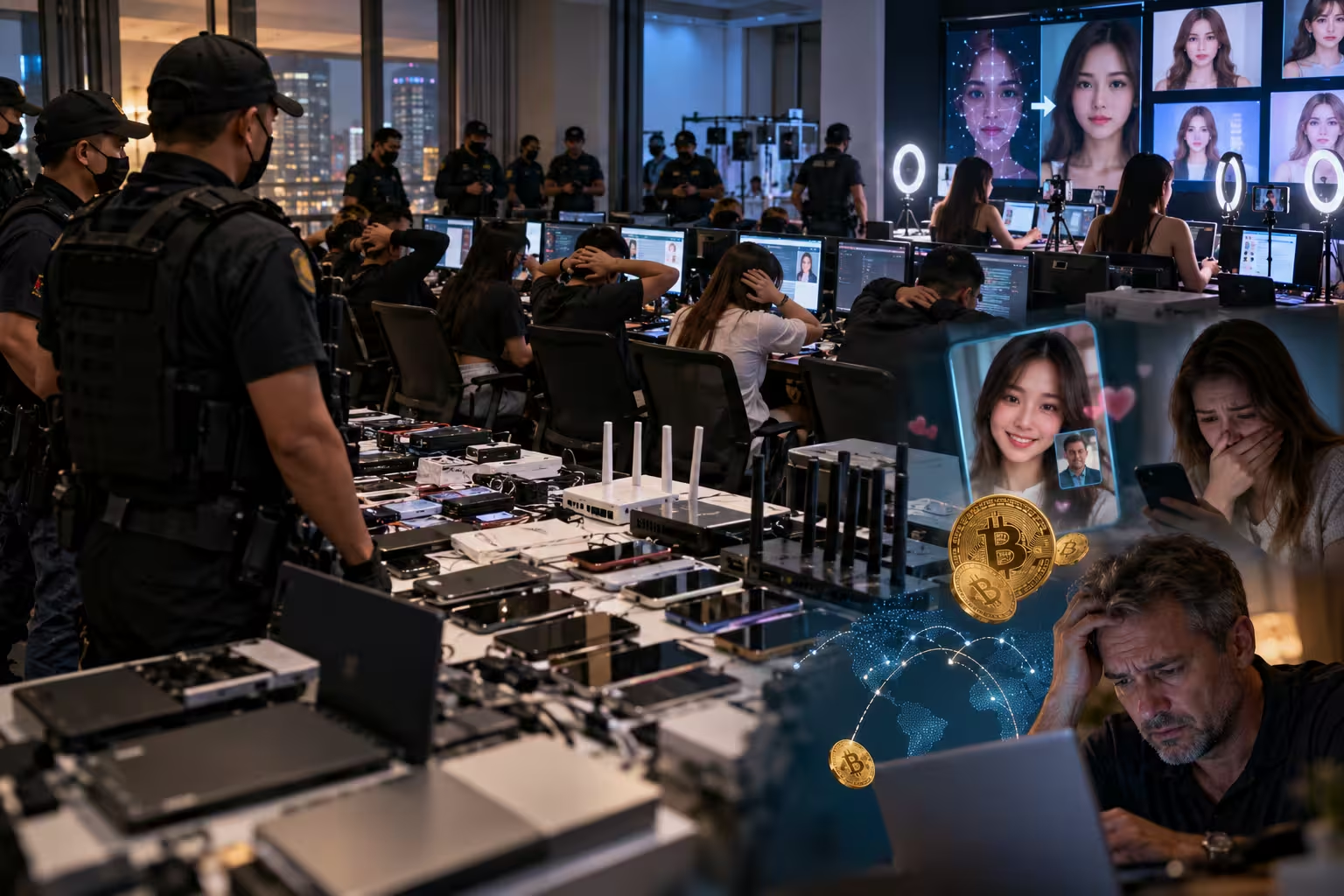
The Philippines’ anti-cybercrime dragnet is no longer chasing lone wolves. In 2026, the National Bureau of Investigation (NBI) has dismantled a series of sophisticated, call center-style cryptocurrency fraud syndicates operating from residential condominiums and commercial buildings—revealing an industrial-scale deception economy that targets victims across the United States, Europe, and Southeast Asia.
The Anatomy of a Crypto-Powered Scam Hub
The NBI’s Special Action Unit (SAU) has repeatedly found the same operational blueprint: rows of computer workstations, stacks of mobile phones, internet routers, and pre-written conversational scripts stored in digital files. These are not disorganized boiler rooms. They are structured fraud factories where operators rotate through fake online identities on dating apps and messaging platforms, building romantic trust before pivoting to fabricated investment opportunities. Victims are then directed to transfer funds through cryptocurrency wallets—often linked to bogus trading websites designed to mimic legitimate platforms. The use of crypto is deliberate: it obscures the money trail and allows syndicates to move illicit funds across borders with minimal friction.
AI and the New Deception Economy
A May 2026 raid in Parañaque City exposed a technological leap that should alarm regulators and consumers alike. Inside the hub, NBI operatives discovered a separate “models” room equipped with an application called “AI SWAP 2,” reportedly capable of real-time face replacement and deepfake video generation. This signals a shift from text-based romance fraud to immersive, AI-generated emotional manipulation. Scammers can now manufacture live video calls, voice notes, and personalized visual content to shatter the last remnants of victim skepticism. The syndicate arrested in that operation included 14 Filipinos and three foreign nationals, suggesting a hybrid workforce of local labor and foreign direction.
From POGO Ban to Scam Hub Shift
The NBI has publicly acknowledged that criminal networks are adapting to regulatory pressure. Following the ban on Philippine offshore gaming operators (POGOs), displaced operators and their infrastructure have migrated into scam hubs and cryptocurrency-related activities. This pivot explains the call center-like physical setups: the same buildings, the same shift-based staffing, and the same cross-border connectivity that once served online gambling have been repurposed for financial fraud. The result is a resilient, decentralized ecosystem that can relocate quickly when law enforcement closes in.
The NBI’s Forensic Counteroffensive
The bureau’s response has become increasingly intelligence-driven. Operations in Pasay City in July 2026 and Mandaluyong City in May 2026 followed months of surveillance and digital forensic analysis, with the NBI’s Digital Forensic Laboratory Division extracting scripts, wallet addresses, and communication logs from seized devices. Suspects face charges under the Cybercrime Prevention Act of 2012 and the Anti-Financial Account Scamming Act (AFASA), reflecting a legislative push to close gaps that crypto anonymity once exploited. NBI Director Melvin Matibag has framed these operations as a sustained campaign rather than isolated busts, emphasizing coordination with prosecutors and judicial authorities to build cases that survive legal scrutiny.
A Global Victim Pool, a Local Vulnerability
What makes these syndicates particularly dangerous is their targeting logic. The Parañaque hub focused on victims in the United States, Bangkok, and several European countries—markets where crypto adoption is high and cross-border recovery is notoriously difficult. Yet the operational footprint remains deeply local: Filipino recruits are drawn into these schemes, sometimes knowingly, sometimes through deceptive job postings that blur the line between legitimate call center work and criminal fraud. The NBI’s rescues of trafficked scam hub workers in 2026 underscore that the syndicates exploit both ends of the supply chain—the victims abroad and the labor force at home.