
The Ticketing Pain Point That NFT Solves in the Philippines
The Philippines has one of Southeast Asia’s most active live-event markets, but its ticketing ecosystem remains vulnerable to the same old failures: fake PDFs, photoshopped QR codes, bots that wipe out inventories, and scalpers who resell at multiples of face value. The problem is not theoretical. In June 2026, organizers of the BTS “Arirang” stop in Bulacan imposed strictly non-transferable, name-locked digital tickets precisely because conventional ticketing could not contain unauthorized resale. That case shows how far promoters are willing to go to protect access—and it also exposes the limits of Web2 ticketing: the solution is rigid, difficult to enforce at the gate, and offers fans nothing beyond entry.
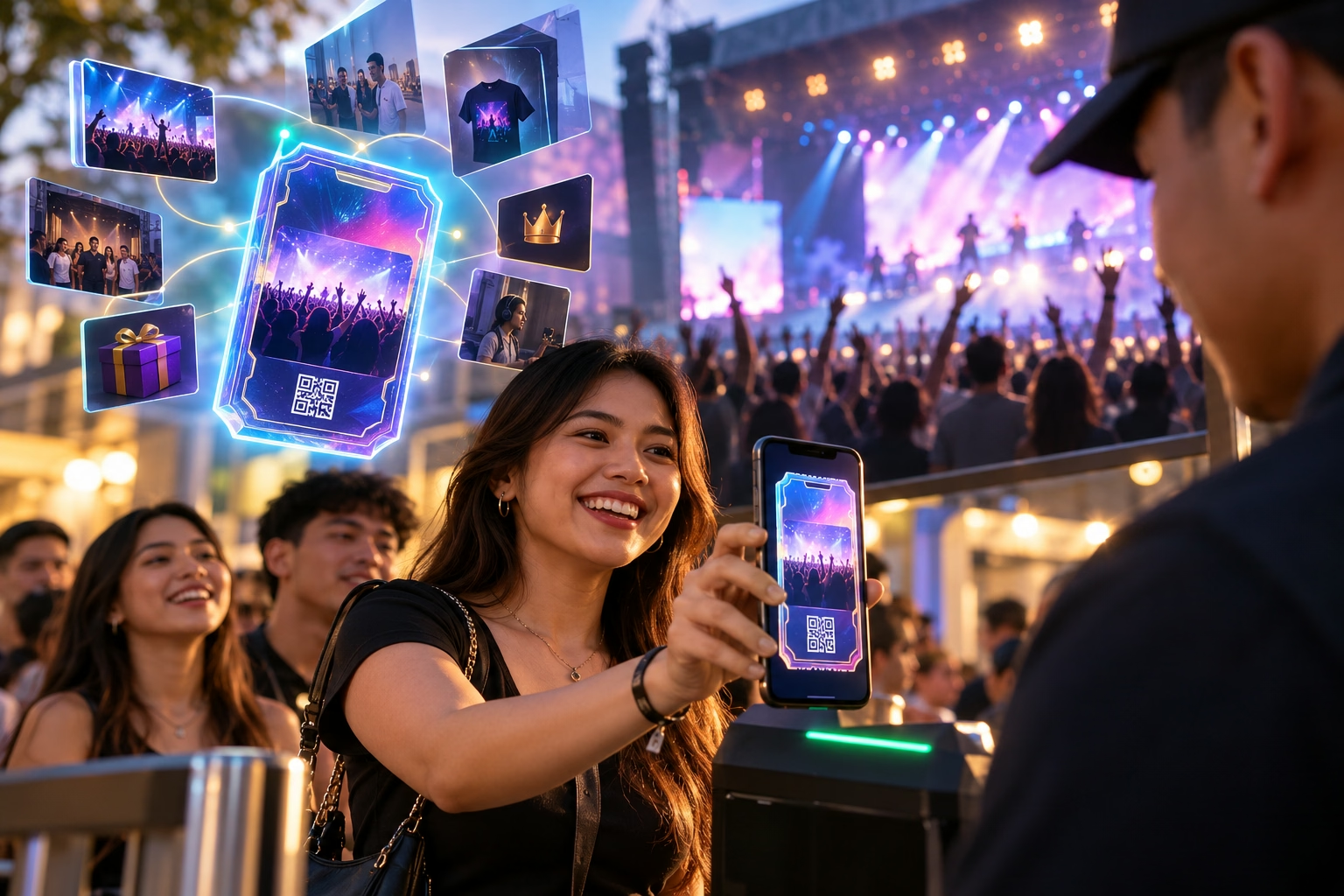
NFT ticketing approaches the same problem differently. A ticket becomes a unique token on a blockchain, carrying verifiable ownership, event metadata, and programmable rules. It cannot be duplicated, photocopied, or faked. Smart contracts can cap resale prices, route royalties back to organizers, and—crucially for the Philippine market—turn the ticket itself into something worth keeping after the show ends. As the local Web3 glossary now notes, NFTs have moved beyond digital art into event tickets, in-game items, and membership passes.
Local Platforms Are Already Testing the Model
Ang Huling El Bimbo and the Mintoo–PDAX Blueprint
One of the most documented Philippine use cases is the NFT ticket rollout for Ang Huling El Bimbo, the musical staged at Newport Performing Arts Theater. Tickets were sold as digital collectibles on Mintoo, the NFT platform integrated into PDAX, allowing buyers to transact in Philippine pesos. Each NFT covered entry for two people and generated a QR code redeemable through the PDAX app. The model did more than digitize a ticket: it created a commemorative asset tied to a specific cultural production, redeemable at the venue but also permanently owned by the fan.
Stanible, ReQuest, and the Rise of Filipino-Built NFT Ticketing
Stanible, a Filipino-founded platform built around fandom culture, became the sole ticketing service for concerts such as the Chicosci Summer Party, attaching unique QR codes to NFTs so that entry and collectibility were fused into one asset. ReQuest, a Filipino-led ticketing dApp, took second place at the Solana APAC Summit by using blockchain-stored ticket data to give organizers tamper-proof demand metrics—not just fraud prevention, but a smarter booking and pricing layer. FairPass, another emerging project, explicitly targets the Philippine market with smart contracts that enforce resale price ceilings and pay perpetual royalties to artists on secondary sales.
Beyond Entry: Tickets as Collectibles and Membership Keys
The deeper shift is not about replacing paper with tokens. It is about changing what a ticket is. In the Philippine context, where fandom is intensely participatory, an NFT ticket can become a membership credential—a key that unlocks future presales, meet-and-greet lotteries, exclusive content, or loyalty rewards across an organizer’s events. Because the token lives in the fan’s wallet, the relationship does not expire when the gate closes. Organizers can airdrop benefits to holders, and fans can display or trade their collections.
This is where the economics become interesting for Philippine promoters. A conventional ticket is a one-time transaction. An NFT ticket is a programmable relationship: the organizer can earn royalties on resales, verify attendance history, and reward repeat buyers. For fans, the ticket becomes a digital keepsake—a proof-of-attendance that carries cultural value long after the concert shirt has faded.
What the 2026 Market Signals for Organizers and Fans
The Philippine NFT ticketing story is still early, but the direction is clear. The infrastructure now exists: PDAX and Mintoo provide peso rails, Stanible has demonstrated fandom-driven adoption, and ReQuest and FairPass are building fraud-resistant, data-rich alternatives to legacy ticketing. The remaining friction is user experience—wallet onboarding, venue scanning, and consumer education—but these are solvable engineering problems, not conceptual ones.
The 2026 lesson from Bulacan is that promoters will accept strict controls when fraud becomes unbearable. NFT ticketing offers a more elegant version of that control: strict enough to protect access, flexible enough to give fans something back. In a market as passionate and as digitally connected as the Philippines, that combination is difficult to ignore.