
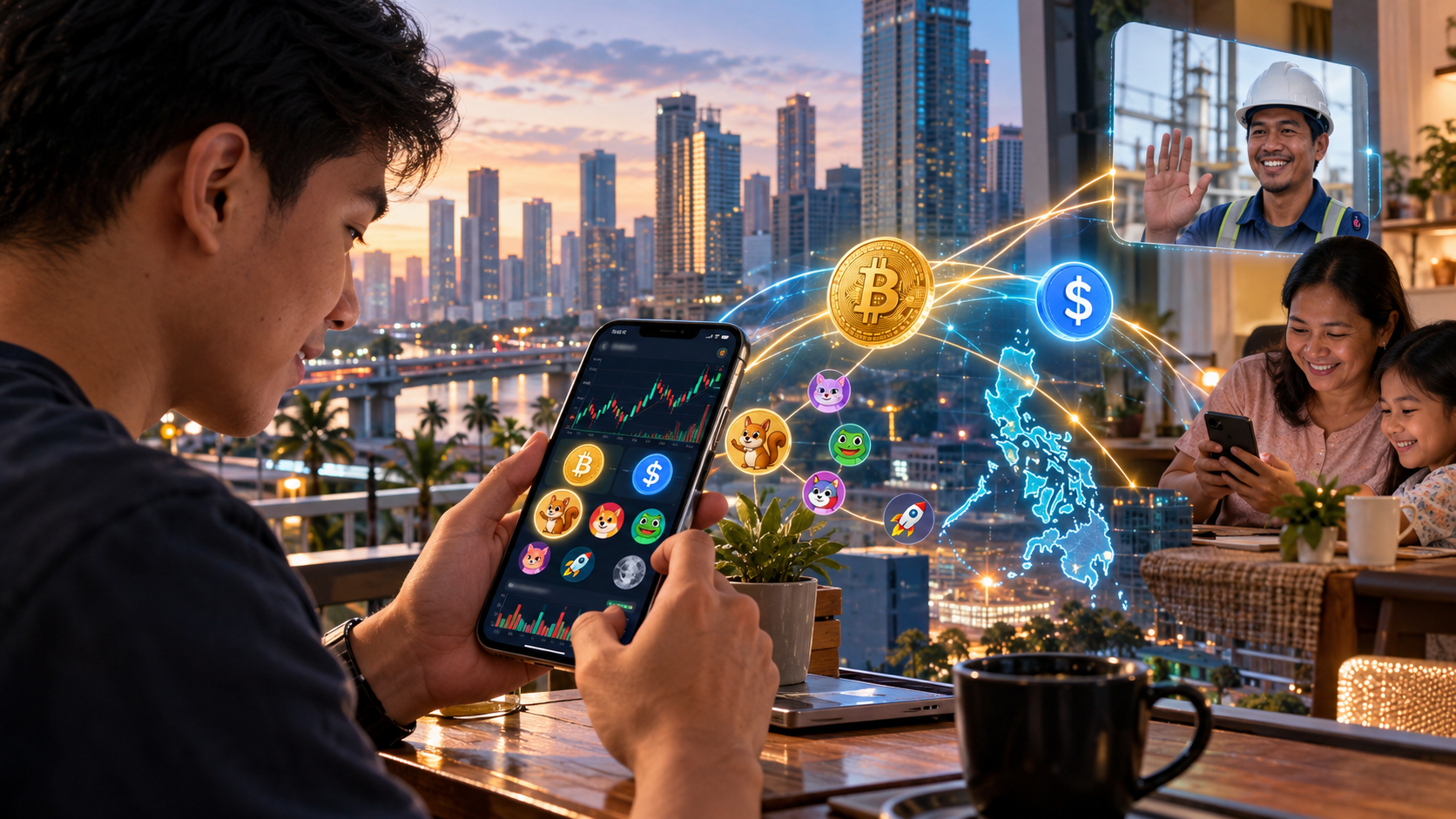
Why Filipino Retail Traders Gravitate Toward Low-Cap Tokens
The demographic composition of Philippine crypto ownership explains much of this behavior. Approximately 46 percent of crypto owners are between 18 and 34 years old, a cohort that has grown up with mobile-first financial interfaces and decentralized platforms. For these users, a ₱2.64 token that can triple in value overnight represents a more tangible form of participation than fractional Bitcoin holdings.
Maya Crypto, the spot-trading arm of Philippine digital bank Maya, expanded its token roster from 24 to 33 assets in February 2026, explicitly adding meme coins including WIF, BONK, and PEPE. This institutional validation from a regulated bank signals that meme coins are no longer a fringe curiosity in the Philippines—they are a core component of the retail trading landscape.
Bitcoin’s Philippine Peso Surge: A Currency Story, Not Just a Crypto Story
While meme coins capture headlines with their volatility, Bitcoin’s rise against the Philippine peso tells a deeper macroeconomic story. In September 2026, Bitcoin reclaimed $81,000, translating to roughly ₱4.7 million per coin at the prevailing exchange rate of ₱62.91. Bitcoin has consistently hit all-time highs against local currencies in the Philippines, Japan, and Argentina—three economies with distinct monetary pressures.
For Filipino investors, Bitcoin’s peso-denominated surge is not merely a reflection of crypto market sentiment. It reflects the depreciation of the Philippine peso against hard assets, a dynamic that has accelerated as the Bangko Sentral ng Pilipinas (BSP) navigates a complex monetary environment shaped by U.S. Federal Reserve rate decisions.
The Remittance Revolution Fueling Structural Demand
The Philippines receives approximately $38.3 billion in annual remittances from Overseas Filipino Workers (OFWs). Historically, these transfers moved through traditional banking channels, incurring fees and delays. In 2026, a substantial portion of remittances is being routed through blockchain networks due to lower costs and faster settlement times.
The Bank of the Philippine Islands (BPI) announced a pilot program to settle cross-border remittances using stablecoins, targeting freelancers and virtual assistants who receive income from abroad. This is not speculative trading. It is infrastructure. When a bank like BPI integrates stablecoin rails, it creates structural, recurring demand for digital assets that operates independently of market sentiment. Stablecoins like USDC, integrated into the GCash ecosystem since late 2025, have become a faster and cheaper option for OFW families.
Regulatory Tightening: The BSP’s Push for Controlled Growth
The surge in crypto activity has prompted the BSP to tighten oversight. In September 2026, the central bank proposed a 12-month freeze on new payment system operator registrations, alongside stricter controls on payment arrangements involving virtual asset service providers (VASPs). Under the draft framework, supervised financial institutions providing merchant acquisition services would need direct relationships with regulated VASPs, subject to enhanced due diligence and transaction monitoring.
This regulatory posture is not anti-crypto. It is pro-integration. By restricting offshore platforms and requiring banks to deal only with authorized virtual asset businesses, the BSP is creating a walled garden where domestic players like Coins.ph, Maya, and GoTyme can operate with regulatory clarity. GoTyme Bank launched its crypto investment feature in partnership with Alpaca, offering on-demand access to 11 selected cryptocurrencies including Bitcoin, Ethereum, and Solana.
The consequence for price dynamics is significant. Regulatory clarity attracts institutional capital, and institutional capital creates price floors that meme coin-driven volatility alone cannot sustain. When a regulated bank offers crypto exposure to its depositors, it brings millions of previously sidelined users into the market. The Philippines is projected to reach 12.79 million crypto users by the end of 2026, up from approximately 10 percent of the population.
The Divergence Ahead: Meme Coins vs. Utility Assets
The Philippine market in 2026 is witnessing a bifurcation. On one side, meme coins like PNUT and MOODENG generate explosive, short-term price movements driven by retail speculation and social momentum. On the other, Bitcoin and stablecoins are being integrated into the country’s financial plumbing through remittance rails, bank partnerships, and regulatory frameworks.
The surges that matter most—the ones that will define the Philippine crypto market beyond 2026—are not the fivefold meme coin spikes. They are the quiet, structural increases in demand created when a bank settles remittances in stablecoins, when a central bank builds a licensing framework for VASPs, and when 12 million Filipinos begin treating digital assets as a practical financial tool rather than a speculative bet. The volatility will remain. But beneath it, the market is maturing.