
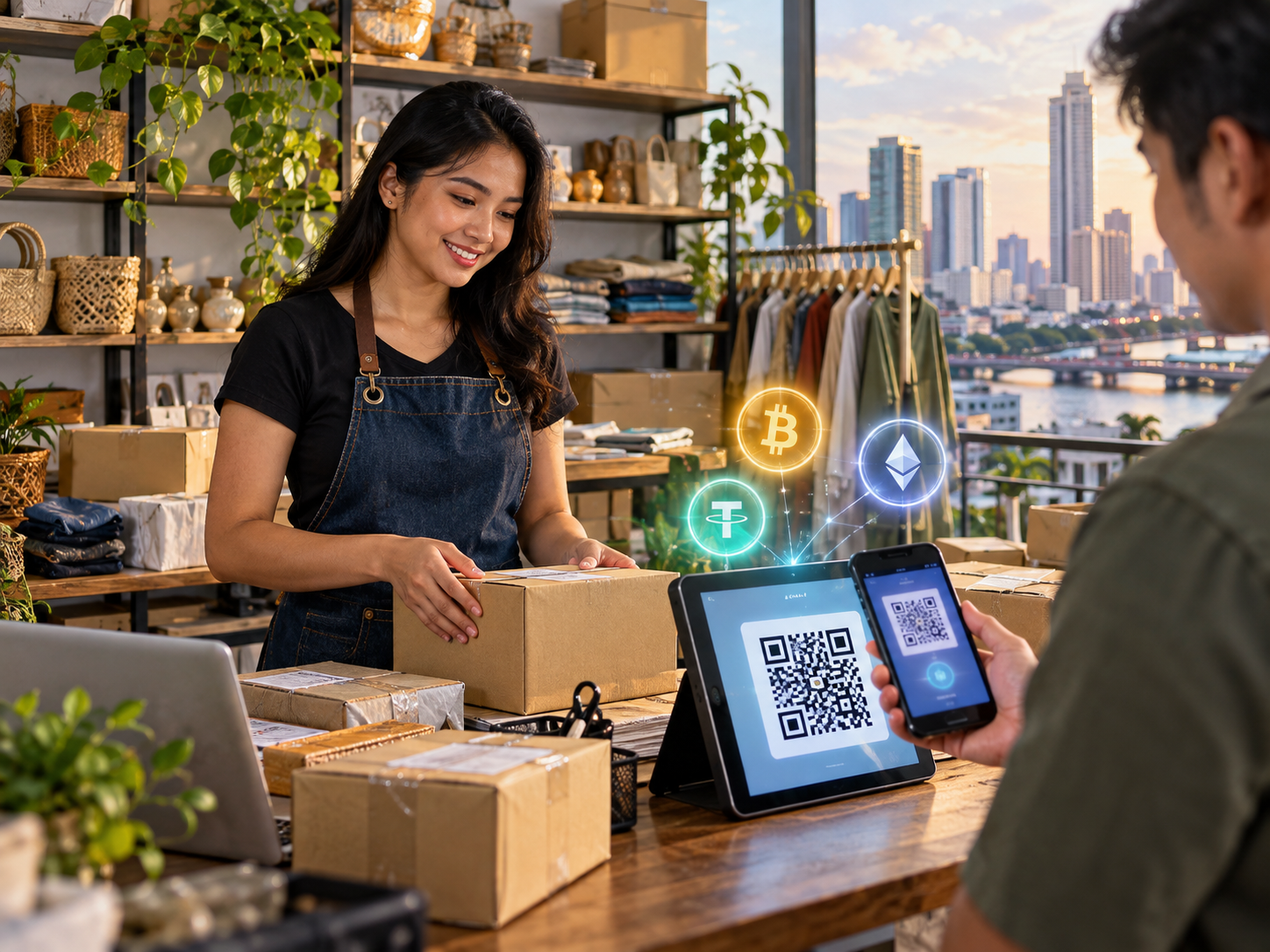
The $20 Billion Backdrop: Why Web3 Now Matters in Filipino Online Commerce
The Philippines e-commerce market is projected to reach USD 20.05 billion in 2026, up from USD 17.65 billion in 2025, on a trajectory toward USD 37.95 billion by 2031 at a 13.61% CAGR. Mobile wallets like GCash have amassed 94 million users, and digital payments now account for 52.8% of retail transaction volume. Against this backdrop, Web3 is no longer a fringe experiment—it is becoming payment infrastructure.
The Philippines ranked ninth globally in Chainalysis’ 2025 Global Crypto Adoption Index, with nearly 15% of the population holding cryptocurrency. This is not speculation. It is consumer behavior waiting to be monetized by e-commerce platforms.
Maya and Lydian: Crypto Checkout Without the Volatility Problem
The most consequential Web3 development for Filipino merchants in 2026 came in March, when Maya partnered with Lydian—a digital asset infrastructure firm backed by Tether and Cantor Fitzgerald—to enable cryptocurrency payments across Maya’s merchant network.
The mechanics matter for e-commerce operators. Shoppers can pay with stablecoins through familiar checkout flows: QR code scanning, payment links, or a “Pay with Crypto” online option. Critically, merchants receive same-day settlement in Philippine pesos, eliminating the volatility and custody risks that historically deterred crypto acceptance. Maya handles regulatory compliance, including wallet screening, Travel Rule adherence, and BSP-aligned reporting.
Lydian CEO Carl Grimstad framed the value proposition bluntly: “By offering same-day settlement in Philippine pesos, we eliminate the volatility and cost barriers”. For e-commerce sellers operating on thin margins, that removes the single largest objection to Web3 payments.
QR Ph Goes Crypto: 700,000 Retail Touchpoints
In June 2026, Coins.ph integrated Bitcoin and Ethereum into the QR Ph network, the national QR payment standard, reaching nearly 700,000 retail merchants nationwide. This is a quiet but profound shift. QR Ph is not a crypto-native rail—it is the interoperability backbone that BSP pushed to unify digital payments. Adding BTC and ETH to that network signals that crypto is being treated as a payment method, not a separate asset class.
For e-commerce, the implication is straightforward: merchants already accepting QR Ph payments can now settle crypto transactions through the same infrastructure, without onboarding entirely new systems.
Tokenization and the Real-World Asset Play
Web3’s e-commerce opportunity extends beyond payments. At Philippine Blockchain Week 2026, PDAX reported that approximately 700,000 new bondholders now hold Philippine treasuries in token form, following the introduction of tokenized bonds. SEC Commissioner Rogelio Quevedo signaled that existing legal frameworks can support real-world asset (RWA) tokenization, with four companies testing projects in the regulator’s sandbox.
For e-commerce, tokenized assets open possibilities in fractional ownership of inventory, supply-chain financing, and loyalty programs built on programmable tokens. The Philippine SEC’s openness to RWA tokenization is a regulatory green light that few Southeast Asian markets have matched.
The Regulatory Tightrope: BSP’s 12-Month Freeze and What It Means
The Bangko Sentral ng Pilipinas is simultaneously enabling and constraining Web3 adoption. In September 2026, BSP proposed a 12-month freeze on new payment system operator registrations, alongside stricter rules requiring banks and e-wallets to sign direct contracts with regulated virtual asset service providers (VASPs) rather than routing crypto payments through multiple intermediaries.
For e-commerce merchants, the message is clear: compliance is non-negotiable. The BSP is building a traceable, fraud-resistant framework where crypto payments flow through regulated rails—not offshore platforms. Merchants integrating Web3 payments through Maya, Coins.ph, or similar licensed providers align with this direction. Those attempting to bypass it face operational risk.
The Strategic Takeaway for Filipino E-Commerce Operators
Web3’s role in Philippine e-commerce in 2026 is not about speculation. It is about settlement speed, cost reduction, and access to a crypto-holding consumer base that already exceeds 15% of the population. With the e-commerce market growing at double-digit rates and mobile wallet penetration deepening, the infrastructure is in place. The merchants who move first on integrated crypto checkout will capture a demographic that is already spending—just not yet through Web3 rails.