
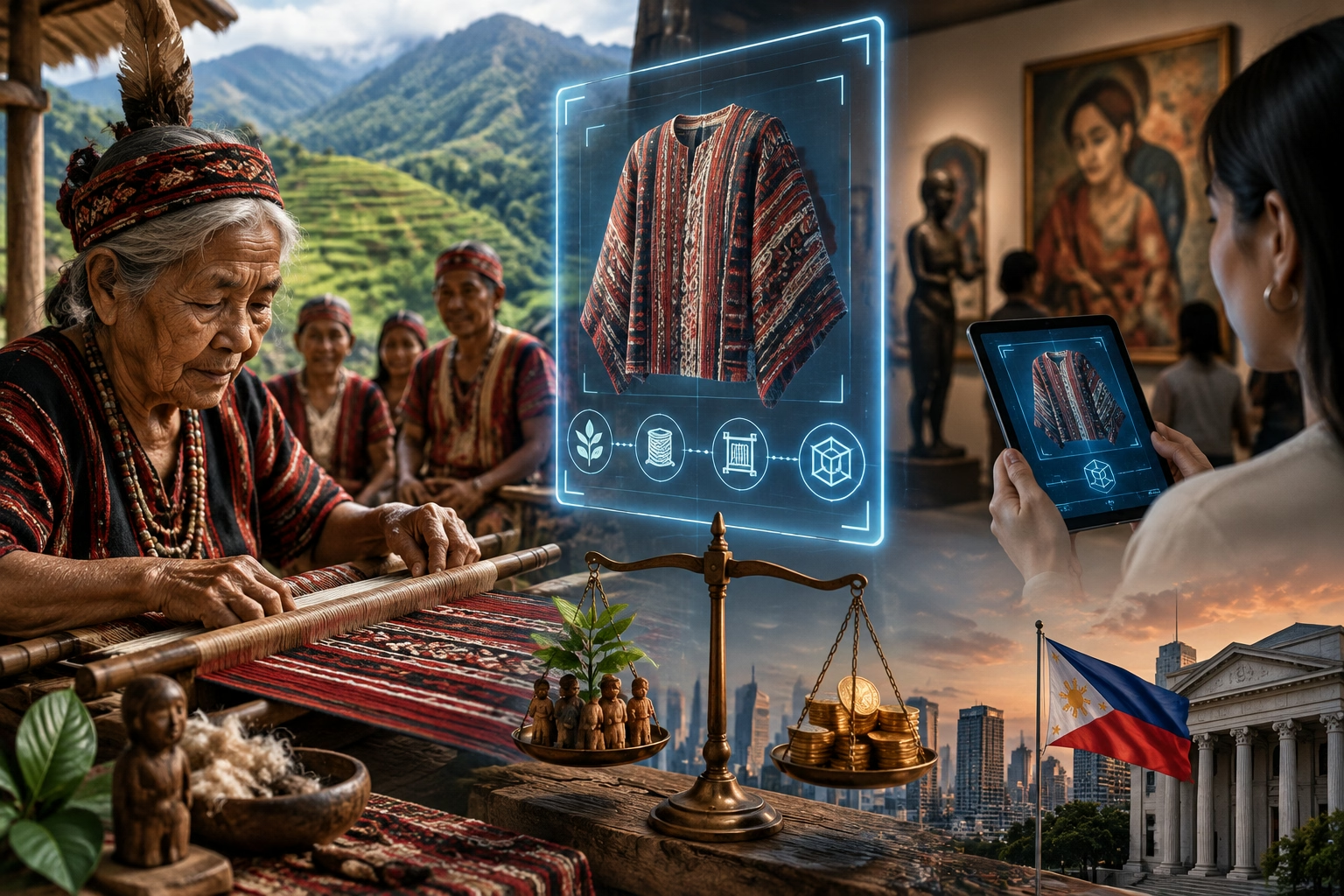
When Ancestral Craft Meets Blockchain
The convergence of non-fungible tokens (NFTs) with traditional Filipino art has moved beyond speculative hype into a tangible cultural experiment. As the Philippines accelerates its digital economy in 2026, artists, indigenous communities, and cultural institutions are grappling with a critical question: can blockchain technology genuinely honor ancestral craftsmanship, or does it risk commodifying heritage that was never meant to be owned by the highest bidder?
The Opportunity: Digital Twins and Cultural Preservation
The most compelling case for NFTs in traditional Filipino art lies in their capacity to create verifiable digital twins of physical masterpieces. Kandama, a social enterprise in Ifugao, has pioneered this approach by minting NFTs of handloom woven garments, including pieces worn by Miss Universe 2015 Pia Wurtzbach for a Vogue Italia editorial. Each NFT carries a unique code that traces the garment’s journey from raw abaca fiber to finished textile, embedding provenance directly into the digital asset. Victor Baguilat Jr., Kandama’s CEO, frames this as “innovation is key to preservation,” arguing that Web3 accessibility allows global audiences to connect with indigenous weaves without diluting their cultural significance.
Beyond fashion, platforms like Artifract have tokenized works by National Artists Abdulmari Imao and Federico Aguilar Alcuaz, democratizing access to fine art that was previously confined to private collections. The Philippines’ NFT market is projected to expand significantly through 2032, driven by art, collectibles, and gaming sectors. This momentum suggests that digital ownership frameworks can generate sustainable revenue streams for traditional artisans who often struggle to monetize their craft in conventional markets.
The Risk: Cultural Appropriation and Intellectual Property Theft
Yet the same technology that enables preservation also enables exploitation. The National Commission on Indigenous Peoples (NCIP) has raised alarms about “digital exclusion,” warning that indigenous artworks and crafts are being posted and sold online without community consent. Reden Ulo, head of the NCIP’s subcommission on cultural communities, noted that “digital thieves act as if claiming ownership of the IPs’ authentic artworks”.
The Whang-od controversy remains the defining cautionary tale. In 2021, online learning platform Nas Academy launched a “Whang-Od Academy” course on Kalinga batok tattooing, claiming it had secured a thumbprint contract from the 109-year-old mambabatok. The NCIP later determined the contract was “grossly onerous” and lacked valid consent, granting Nas Academy exclusive ownership of Whang-od’s likeness and voice. The agreement was ultimately nullified, but the case exposed how easily traditional knowledge can be appropriated under the guise of digital innovation.
Regulatory Guardrails: BSP’s 2026 Framework
The Bangko Sentral ng Pilipinas (BSP) has responded to these tensions with a sweeping regulatory overhaul. In June 2026, the BSP approved guidelines mandating that all licensed Virtual Asset Service Providers (VASPs) conduct six-area due diligence before listing any virtual asset, covering issuer background, market maturity, use case, transparency, liquidity, and legal compliance. The framework also prohibits privacy coins like Monero and Zcash from domestic exchanges, citing anti-money laundering concerns.
For NFT creators working with traditional art, these regulations introduce both a compliance burden and a legitimacy boost. Projects that can demonstrate transparent provenance, community consent, and ethical sourcing will likely find themselves advantaged in an increasingly scrutinized marketplace.
A Balanced Path Forward
The most promising model may be what Kandama represents: NFTs as digital certificates of authenticity that enhance rather than replace physical artifacts, with revenue flowing back to the communities that created them. Filipino NFT artist Jose Antonio Reyes and UnionBank’s Digital Asset Markets Unit have engaged in public dialogues about this convergence, signaling institutional interest in ethical frameworks.
The challenge for 2026 is clear: build systems where technology serves culture, not the reverse. NFTs can either become tools of extraction or instruments of empowerment. The choice depends on whether the Philippines’ regulatory, artistic, and indigenous communities can collectively enforce the principle that cultural heritage belongs to its creators first.