
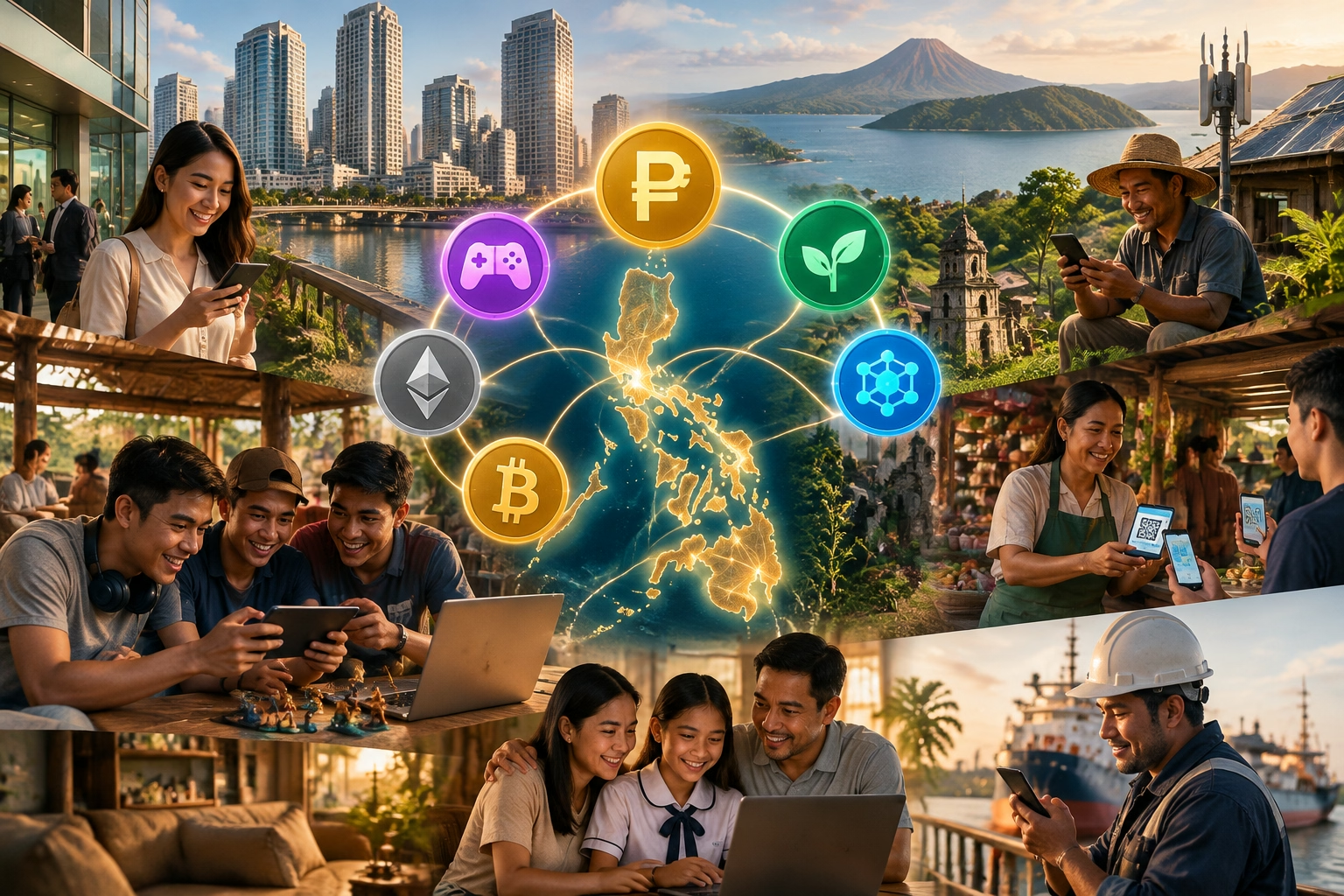
The Philippine cryptocurrency landscape in 2026 has evolved dramatically from the speculative frenzy of previous years. While global markets often react to macroeconomic shifts in the United States or Bitcoin halving cycles, the surge in specific coins within the Philippine archipelago tells a much more localized, utility-driven story.
According to data from the Bangko Sentral ng Pilipinas (BSP) and blockchain analytics firms, transaction volumes in the country have shifted away from pure trading pairs and toward payment settlements and gaming rewards. This pivot explains why certain assets are experiencing parabolic gains while legacy coins remain stagnant.
The Institutional Shift: From Sandbox to Mainstream
The most significant catalyst for price action in 2026 is the full implementation of the BSP’s Digital Asset Regulatory Framework. Unlike previous years where regulation was ambiguous, the 2026 guidelines have officially licensed several Virtual Asset Service Providers (VASPs) to operate as remittance and payment gateways.
This legal clarity has unlocked institutional liquidity. Banks that were previously hesitant to touch crypto rails are now partnering with licensed exchanges. This has led to a massive inflow into PHPC (Philippine Peso Coin) and other peso-backed stablecoins. The reason for the price surge in these specific assets is not volatility against the dollar, but rather the transaction velocity and yield generation mechanisms being offered to holders.
As of Q2 2026, stablecoin transaction volume in the Philippines has outpaced traditional mobile wallet transfers for cross-border transactions, according to the latest BSP Financial Inclusion Survey 2026. This specific trend validates the liquidity pool growth that is pushing these coins up in market cap rankings.
The GameFi Evolution: Why “Play-to-Earn” Coins Are Spiking Again
The second major driver of the 2026 surge is the revival of the GameFi sector, but with a structural twist. The “Axie Infinity” era of 2021 was based on unsustainable inflation. The 2026 leaders are built on “Play-to-Own” (P2O) economies where in-game assets are NFTs with cross-platform utility.
Coins like SIP(SipagToken)∗∗and∗∗SIP(SipagToken)∗∗and∗∗YIELD Guild Governance Tokens are spiking not because of hype, but because of massive user acquisition in rural provinces. These tokens are now being used to pay for micro-insurance, electricity bills, and even tuition through partner payment gateways.
Case Study: The Rise of Micro-Guilds
In 2026, the surge in these utility tokens is heavily correlated with the rise of “micro-guilds.” These are small, community-run groups in cities like Cebu and Davao that pool resources to farm in-game assets. Unlike 2021, these guilds are registered as cooperatives. Their monthly payouts to members are distributed via these specific altcoins, creating constant buy pressure. The price spikes occur when guilds conduct their monthly “sweep” of liquidity to cover operational costs, creating predictable, cyclical volatility that savvy traders exploit.
Remittance Integration: The Hidden Hand Behind the Pump
The Philippines is one of the top remittance-receiving countries in the world. In 2026, the friction of converting crypto to PHP has been almost eliminated for Overseas Filipino Workers (OFWs).
Coins integrated into the “OFW Corridor” are seeing unprecedented organic growth. Specifically, Layer-2 solutions that offer sub-cent transaction fees are being adopted by remittance centers in Hong Kong, Singapore, and the Middle East.
Why Altcoins Over Bitcoin?
The fluctuation is more pronounced in specific altcoins because Bitcoin is increasingly viewed as a “store of value” rather than a medium of exchange in the local market. Filipino traders are looking for yield and utility. They are flocking to tokens that offer liquid staking derivatives or those that power decentralized physical infrastructure networks (DePIN), such as community-owned internet hotspots in underserved areas.
The 2026 Regulatory Catalyst: Tax Clarity
A significant factor driving the “lonjakan” (spike) in specific coins is the new tax regime implemented in January 2026. The government introduced a tiered tax system where transactions using “utility tokens” for goods and services are taxed at a lower rate than those classified purely as “securities.”
This incentivizes traders to rotate capital out of speculative meme coins and into infrastructure tokens. The price fluctuation here is a direct result of capital rotation driven by tax efficiency rather than purely technical chart patterns.
Key Insight: If you are analyzing the Philippine market in 2026, tracking social media sentiment is less important than tracking BSP licensing approvals. A coin listed as an approved settlement asset by the BSP typically experiences a 15-20% price surge within 48 hours of the announcement.