
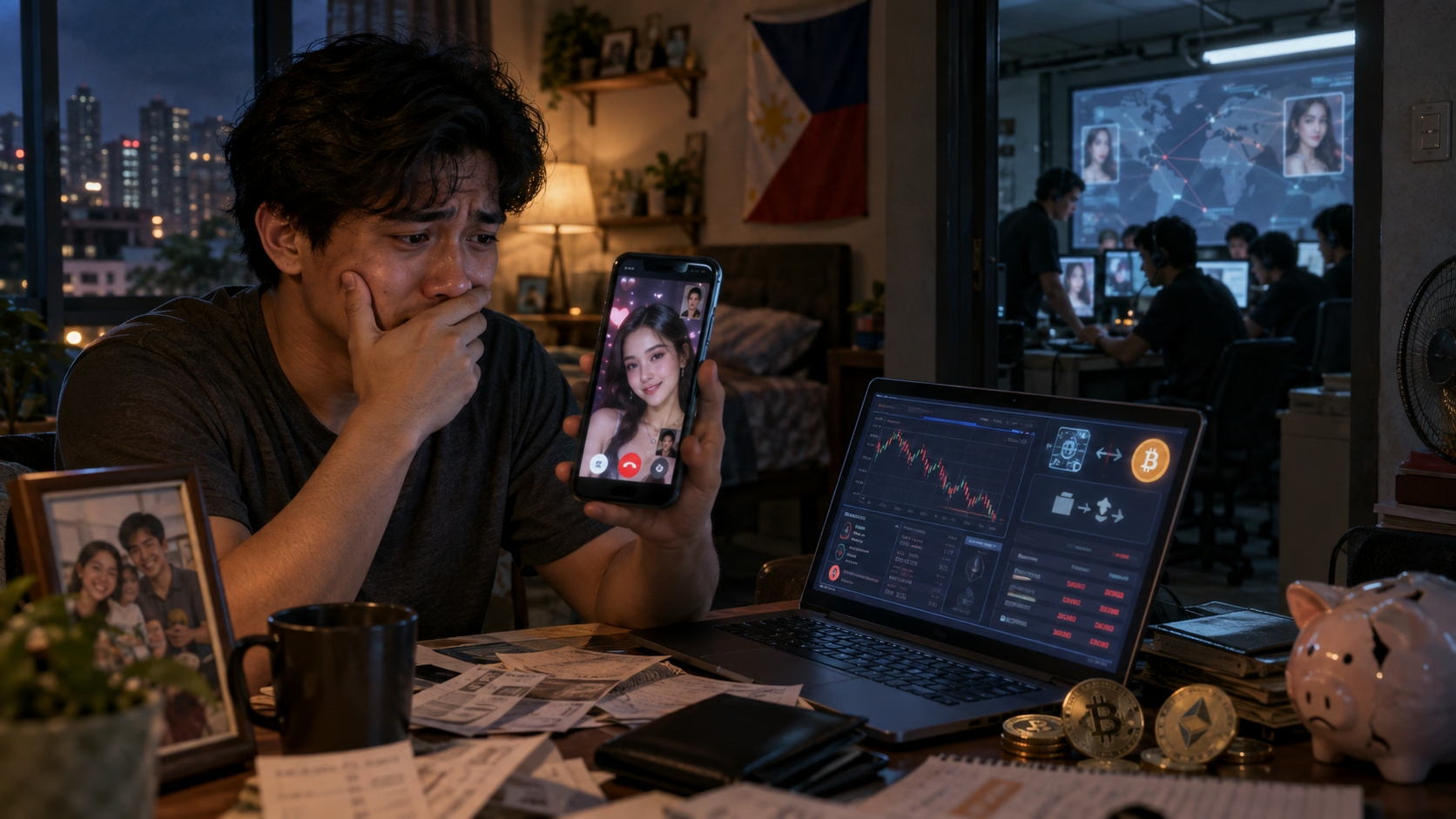
The digital landscape of the Philippines in 2026 is a paradox. While the nation leads Southeast Asia in Web3 gaming adoption and crypto wallet penetration, it simultaneously serves as the most fertile hunting ground for organized cryptocurrency fraud. The era of simple “rug pulls” and obvious Ponzi schemes is over; it has been replaced by a terrifyingly effective industrial complex of psychological manipulation and technological exploitation. The proliferation of these scams is not a random occurrence but the result of a perfect storm: a young, tech-savvy population desperate for financial inclusion colliding with advanced Artificial Intelligence (AI) tools and a regulatory framework struggling to keep pace.
The Evolution from Ponzi Schemes to Psychological Warfare
Investment fraud in the Philippines has undergone a significant evolution. In 2024 and 2025, the primary vector was the “pig butchering” model, where scammers spent weeks building romantic or platonic trust before introducing victims to fake trading platforms. By 2026, the volume of these interactions has forced syndicates to automate the grooming process.
The “Digital Face” Threat
The most alarming trend of 2026 is the commodification of AI video synthesis. Scammers are no longer just sending stolen photos; they are executing real-time video calls using deepfake streaming technology. A syndicate operative can now appear on a video call as a highly attractive Western or Korean male/female, perfectly lip-synced to a script generated by a Large Language Model (LLM).
These AI personas are trained to target the Filipino diaspora and local middle class. They discuss “high-yield liquidity mining” with the cadence of a legitimate financial advisor. Because the video call feels so intimate and real, the traditional warning signs of a scam are erased. Victims are not just losing money; they are experiencing a unique form of trauma where they struggle to accept that the person they video-called every night for a month never existed.
The POGO Aftermath and the “Scam Hubs 2.0”
When the Philippine government officially banned Philippine Offshore Gaming Operators (POGOs) in late 2024 due to links to human trafficking and violent crime, it was assumed the criminal infrastructure would dissolve. However, 2026 data reveals a decentralization strategy.
Criminal syndicates have abandoned the massive, easily identifiable call center buildings in Manila and Clark. They have relocated to “Scam Hubs 2.0″—smaller, high-tech operations disguised as legitimate Business Process Outsourcing (BPO) firms in provinces like Cebu, Davao, and even smaller tourist islands like Siargao.
These hubs no longer rely on physical coercion to the extent of their predecessors. Instead, they hire freelance “taskers”—often unemployed college graduates—who are paid commission only. These workers are provided with pre-loaded scripts and access to “spoofing” software that can mask the true location of their servers. According to the Philippine National Police Anti-Cybercrime Group (PNP ACG), the shift to these micro-hubs has made law enforcement 40% slower in executing search warrants, as the legal distinction between a legitimate freelance marketing job and a scam operation has blurred.
The Social Commerce Vector: From Lazada to Ledger
A distinct Filipino cultural nuance in 2026 is the exploitation of Facebook Groups and Viber communities. The “suki” (loyal patron) culture, which thrives on trust and personal recommendation, has been weaponized.
Scammers are infiltrating local “Marketplace” and “Investment Tips” groups with alarming precision. The modus operandi involves a “community leader” who spends months providing genuine, small-scale financial advice. They build a reputation. Once trust is established, they introduce a “special opportunity” usually tied to a foreign token (often called a “Gas Fee Rebate Program” or “AI Trading Bot”). Because the recommendation comes from a trusted peer within a tight-knit community, the conversion rate is astronomical.
The damage in 2026 is amplified by the ease of converting Philippine Pesos to untraceable assets. The rise of P2P (Peer-to-Peer) crypto exchanges has become the primary funnel. Scammers instruct victims to buy stablecoins like USDT via local P2P markets, then transfer them to external wallets. This bypasses the strict KYC (Know Your Customer) processes of centralized exchanges like Binance or PDAX, making the flow of funds nearly impossible to freeze once it leaves the country.
The Socioeconomic Impact: A Generation in Debt
The consequences of this epidemic extend far beyond individual losses. The Securities and Exchange Commission (SEC) of the Philippines reported a staggering increase in “financial ruin” cases in early 2026, with many victims being between the ages of 22 and 35.
The “Lending App” Trap
A concerning ripple effect is the entanglement of victims with loan sharks and instant lending apps. Many scam victims, believing they are about to make a profit, borrow money from high-interest digital lending platforms (OLAs) to increase their “investment” capital. When the scam collapses, they are left not only with zero assets but also with compounding daily interest rates from predatory lenders. This has led to a spike in mental health crises and social shaming, as these lending apps notoriously access the victim’s phone contacts to send mass harassment messages.
The banking sector is now experiencing a decline in credit scores among the millennial demographic, potentially stagnating legitimate consumer spending and home ownership rates.
The Regulatory Whack-a-Mole
The Bangko Sentral ng Pilipinas (BSP) and the SEC are not idle, but their strategy is often reactive. In 2026, the SEC has shifted from simply publishing “advisories” to actively petitioning for the blocking of IP addresses associated with unregistered exchanges. However, syndicates counter this by utilizing decentralized hosting and frequently changing domain names.
The government is now pushing for SIM Card Registry 2.0, which would require biometric verification for buying SIM cards used in financial transactions. However, privacy advocates argue this is a Band-Aid solution that fails to address the core issue: the lack of digital literacy regarding blockchain technology.
To see the official list of entities authorized to solicit investments and avoid falling victim to these fake platforms, the public is continuously urged to check the SEC’s official advisory portal:
SEC Philippines Investment Scam Advisories
The Need for Behavioral Defense
As 2026 progresses, security experts argue that technology cannot solve a problem rooted in human desire. The scammers are winning because they offer a narrative of escape from the high cost of living in Metro Manila. Until legitimate financial literacy programs in the country catch up with the sophistication of the dark web, the screens of young Filipinos will remain a battlefield where desire is the primary weapon.