
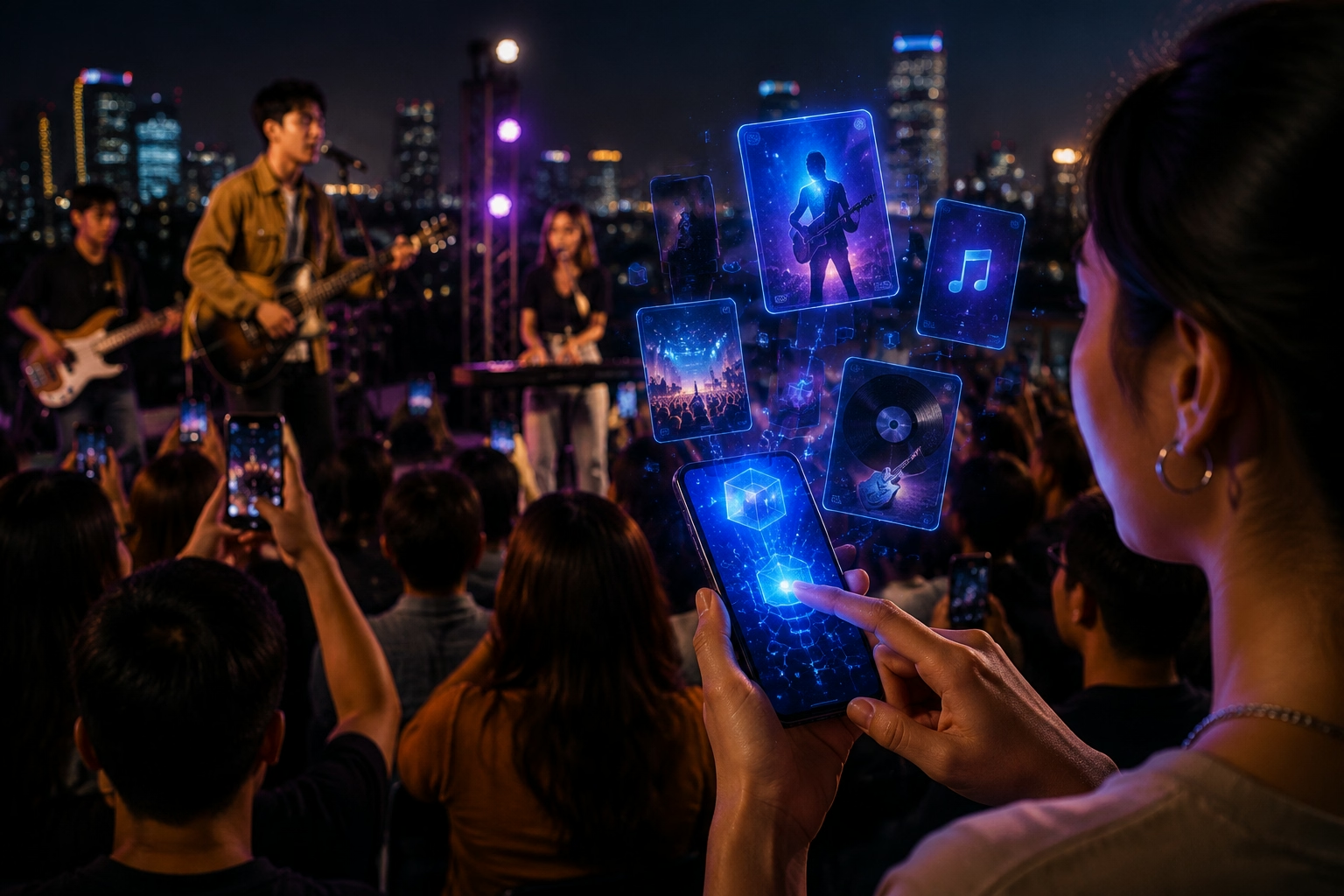
The Philippine music industry is in the midst of a digital renaissance. While the global conversation around Non-Fungible Tokens (NFTs) has shifted from speculative profile pictures to utility-driven assets, the Southeast Asian archipelago has emerged as a hotbed for innovation. Filipino artists, long constrained by the geographical limitations of the live events market and the minuscule payouts from traditional streaming platforms, are now leveraging blockchain technology to establish direct-to-fan pipelines. This shift is not merely a trend; it is a fundamental restructuring of how music is funded, marketed, and experienced in a nation where the population is young, hyper-social, and digitally native.
The Economic Realities: Solving the Streaming Paradox
For years, the economics of music streaming have been brutal for independent artists. In the Philippines, where the average payout per stream on platforms like Spotify is a fraction of a cent, artists have historically relied on brand endorsements and live gigs to survive. The pandemic exposed the fragility of this model, but the subsequent return to live events has not solved the underlying revenue disparity.
NFTs offer a viable alternative by reintroducing the concept of “digital scarcity.” When a Filipino band like Ben&Ben or a solo R&B artist like Denise Julia releases a limited collection of digital assets, they are not just selling music files—they are selling membership, ownership, and exclusivity. The blockchain allows artists to bypass the traditional gatekeepers of distribution, ensuring that a sale happens directly between the creator and the listener. This “Creator Economy 3.0” model means that instead of waiting months for royalty checks from labels, an artist can see immediate returns on a drop, funding their next music video or studio session instantly.
Tokenizing Royalties: A New Investment Class in Manila
One of the most profound, yet under-discussed, changes is the tokenization of music rights. In the past, the only people who profited from the royalties of a hit song were the record labels and publishers. Now, Filipino artists are experimenting with fractionalizing their royalty streams.
Imagine a situation where a fan can purchase a “share” of a song. As the song gains traction on TikTok or radio, the value of that share appreciates, or it generates passive income for the holder. This transforms fans from passive listeners into active stakeholders. In a country where the middle class is growing but investment options for the youth are limited, owning a piece of a popular OPM (Original Pilipino Music) track provides a novel entry point into the financial market.
This model is particularly powerful for legacy acts. Veterans of the 90s Manila rock scene are now finding ways to monetize their back catalogs by selling NFT collections that grant holders a percentage of future licensing deals. According to an analysis on the state of music royalties by Royal.io, the industry is moving toward a more equitable distribution of wealth, where blockchain provides the transparent ledger necessary to track micro-payments across millions of users. This transparency is key to building trust in a market that has historically been plagued by opaque accounting practices.
From Merch to Community: The Marketing Evolution
The marketing strategy behind Filipino music has traditionally been linear: release a single, shoot a video, promote it on radio, and hope it charts. NFTs are changing this narrative by making the release cycle an interactive game.
Gamified Superfans and P-Pop Dominance
The P-Pop (Pinoy Pop) genre, led by powerhouse groups like SB19 and BINI, has mastered the art of fandom engagement. These fandoms are notoriously organized and willing to spend. Integrating NFTs into their releases creates a tiered system of access.
Rather than just selling a physical album, groups are now releasing “Digital Collector’s Packs.” These packs contain high-resolution art, but more importantly, they contain “Unlockable Content.” This could be a private Discord channel access, voting rights on the next single’s choreography, or a chance to win a one-on-one video call. This transforms the act of purchasing music from a transaction into an experience.
The Rise of MusicFi in the Provinces
While Manila remains the epicenter, blockchain technology is empowering artists from the provinces (Cebu, Davao, and Iloilo). For a Bisaya rapper or an Ilonggo indie band, breaking into the national charts is incredibly difficult due to language barriers and the centralization of media in Luzon. However, NFTs are borderless. An artist in Cebu can sell a digital collectible to a fan in Tokyo or Toronto without needing a major label to facilitate the export. This has allowed niche genres to thrive, creating micro-economies where the cultural value of local language music is validated by global demand on the blockchain.
Challenges and the Path to Mass Adoption
Despite the promise, the integration of NFTs into the Philippine music scene is not without friction. The primary hurdle remains the user experience. For the average listener, setting up a crypto wallet, purchasing ETH or MATIC, and understanding gas fees is intimidating. However, the industry is responding with “Web2.5” solutions. Many Filipino NFT platforms are now allowing users to purchase digital assets directly with credit cards or GCash, a dominant mobile wallet in the Philippines, abstracting the blockchain away from the user.
Furthermore, environmental concerns regarding energy-intensive blockchains have largely been addressed by the shift to Proof-of-Stake (PoS) networks like Solana and Polygon, which consume a fraction of the energy. This makes the technology more palatable to an audience that is increasingly eco-conscious.
The future of music in the Philippines is likely to be a hybrid one. The fan who streams a song for free on Spotify may one day own the “VIP Pass” NFT that grants them backstage access at a concert, or they may hold a fraction of the song’s royalty. It is a shift from renting access to owning culture, and the Filipino artist is leading the charge in making that ownership meaningful.