
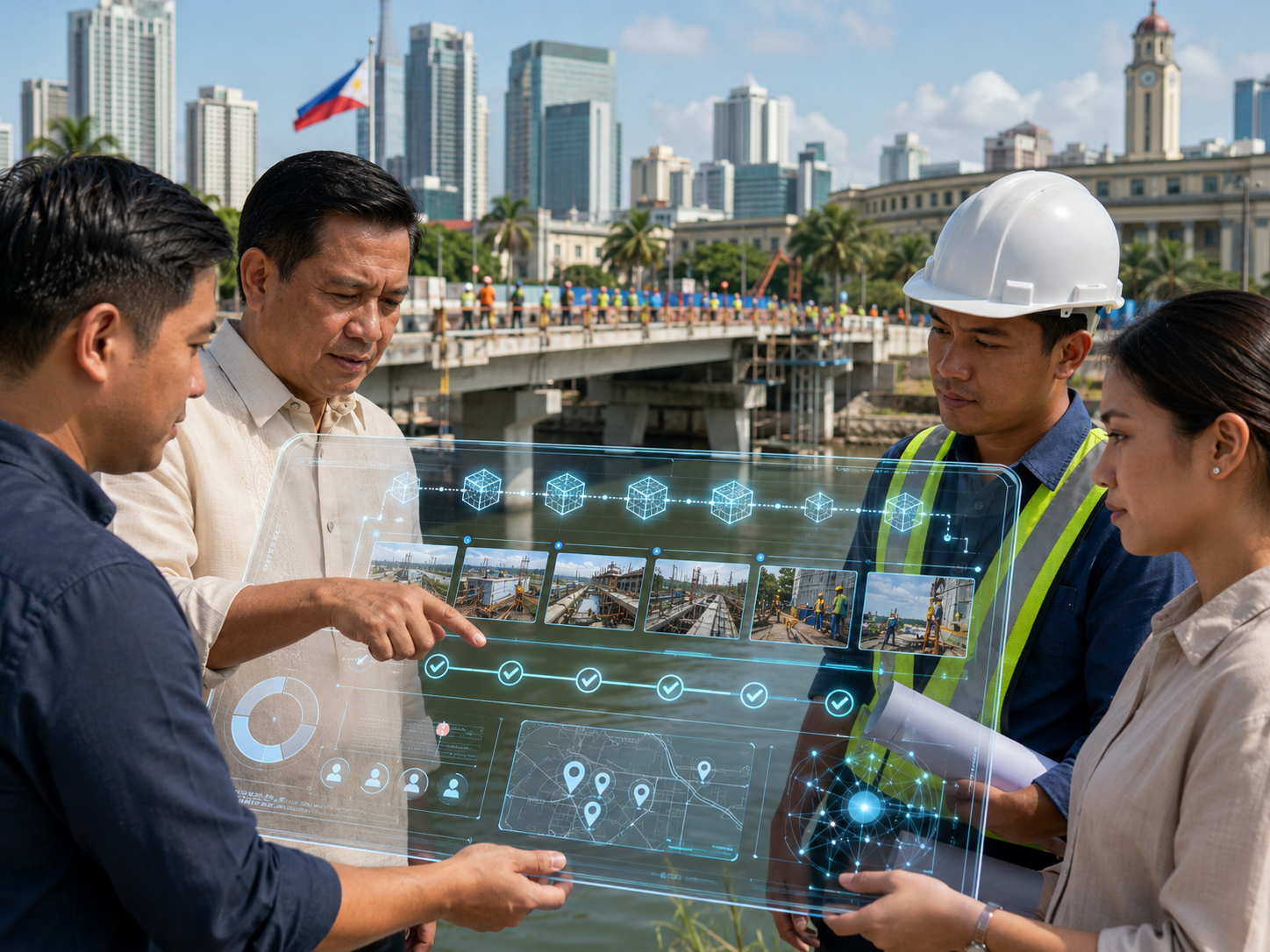
The Philippines has made steady progress in digital government, from online public services to electronic procurement platforms. Yet one of the country’s most persistent governance challenges remains the same: how to make public spending, agency decisions, and citizen-facing services easier to verify. This is where Web3 technology—especially blockchain, smart contracts, and decentralized identity—could offer a new layer of public accountability.
Why Transparency Still Matters in Philippine Governance
Public trust depends on whether citizens can see how decisions are made, how funds are released, and whether government projects are delivered as promised. In the Philippines, procurement and infrastructure spending are especially sensitive because they involve billions of pesos in taxpayer money, multiple implementing agencies, and complex local government participation.
A practical starting point is public procurement. The Philippine Government Electronic Procurement System, or PhilGEPS, already serves as the country’s official electronic procurement portal: https://www.philgeps.gov.ph/. A Web3-based transparency layer would not replace PhilGEPS; instead, it could strengthen the system by creating tamper-resistant records of bid notices, contract awards, delivery milestones, and payment releases.
How Web3 Adds Value Beyond Traditional Databases
Traditional government databases are usually controlled by a central administrator. While this can be efficient, it also creates risks: records may be altered, delayed, hidden, or difficult for the public to audit. Blockchain changes the structure of trust by recording transactions in a shared ledger where changes are traceable.
For the Philippine public sector, this could mean every major procurement event—bid submission, evaluation timestamp, contract signing, variation order, inspection report, and final payment—gets assigned a verifiable digital record. Journalists, civil society groups, auditors, and citizens would not need to rely only on PDF uploads or delayed agency disclosures. They could track the lifecycle of a project through a public, searchable, and time-stamped audit trail.
Smart Contracts for Public Spending
Smart contracts could automate parts of government transactions based on verified conditions. For example, a road project payment could be released only after inspection data, geotagged photos, and agency certification are uploaded and validated. This does not remove human oversight, but it reduces discretion in routine payment workflows and creates a clearer chain of responsibility.
In local government units, smart contracts could also help monitor disaster relief funds, agricultural subsidies, or social assistance programs. Each fund release could be linked to eligibility criteria, delivery records, and beneficiary confirmation, helping reduce leakage and duplicate claims.
A Realistic Use Case: Procurement and Infrastructure Monitoring
The most realistic Web3 pilot for the Philippines would be procurement transparency for infrastructure projects. These projects often involve national agencies, local governments, private contractors, auditors, and citizens affected by delays or poor implementation.
A blockchain-backed dashboard could show the project budget, contractor identity, award date, expected completion date, milestone updates, inspection records, and payment status. If a bridge, school building, or flood-control project is delayed, the public could see whether the issue came from procurement, funding release, contractor performance, or permit approval.
This would be especially powerful when combined with open data, satellite imagery, geotagging, and community reporting. Web3 would serve as the trust layer, while existing digital tools would supply the evidence.
Key Barriers the Philippines Must Address
Web3 is not a magic solution. Poor data entered into a blockchain remains poor data. The government would need strong rules for data accuracy, privacy, cybersecurity, and agency accountability. Public officials also need training, and systems must be designed for ordinary citizens, not only developers or crypto users.
There is also a legal and institutional question: which agency validates records, who can correct errors, and how disputes are resolved. Without clear governance, blockchain transparency could become another expensive digital experiment.
Why 2026 Could Be a Turning Point
By 2026, the strongest opportunity is not to “put government on blockchain” overnight. The better strategy is targeted adoption: procurement, audit trails, public infrastructure monitoring, social aid distribution, and digital identity verification. These are areas where transparency gaps are visible and where Web3 can provide measurable value.
For the Philippines, Web3 should be framed not as a cryptocurrency trend, but as a public accountability infrastructure. If implemented carefully, it can help citizens follow the money, verify public records, and hold institutions accountable with evidence that is harder to manipulate.