
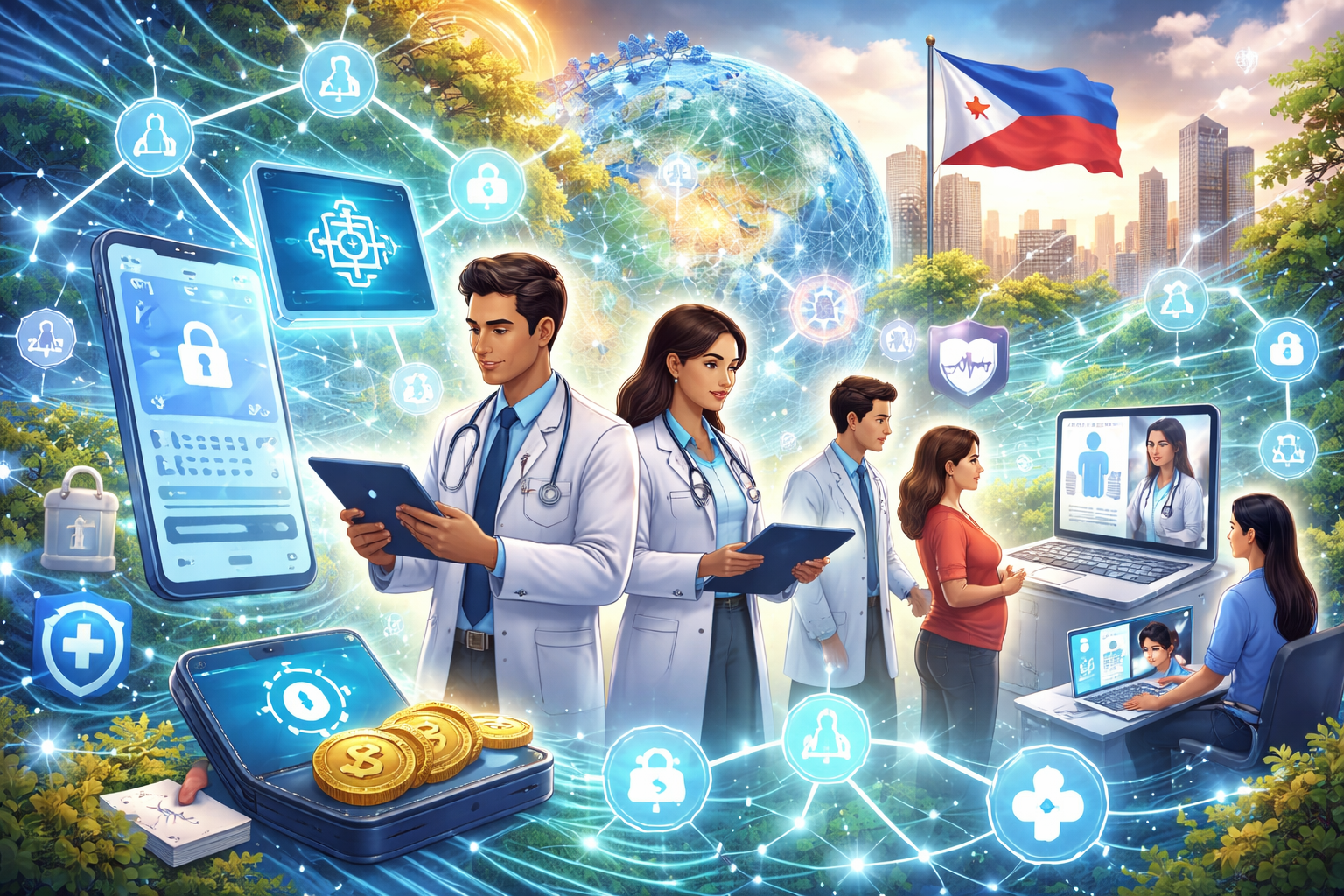
The healthcare sector is undergoing a transformative shift worldwide, and the Philippines is no exception. As the world increasingly embraces digital solutions, Web3 technologies are emerging as a powerful force in revolutionizing industries, including healthcare. Web3, a decentralized internet built on blockchain technology, promises transparency, security, and efficiency in data management, as well as creating new economic models. In this article, we will explore how Web3 technologies are reshaping the healthcare landscape in the Philippines and the significant impact they have on access to care, patient privacy, and the overall healthcare experience.
What is Web3 and How Does it Work?
Web3 refers to the third generation of internet technologies, which build on the concept of decentralization using blockchain as its foundational technology. Unlike Web2, which is dominated by centralized platforms (think Google, Facebook, or Amazon), Web3 operates through a decentralized network of nodes that communicate directly with each other, reducing the role of intermediaries. This offers a number of advantages, particularly in industries like healthcare, where data privacy, security, and accessibility are paramount.
In Web3, users have more control over their data, and they can participate in decentralized applications (dApps) that run on blockchain networks. These dApps operate on smart contracts, which are self-executing contracts with predefined rules, enabling trustless interactions without the need for third-party intermediaries.
Enhancing Patient Privacy and Data Security
One of the most significant benefits Web3 brings to healthcare is the ability to secure patient data. In the Philippines, where cybersecurity threats are an ongoing concern, blockchain technology can offer a robust solution. With Web3, patient information is stored in decentralized databases rather than centralized servers, reducing the risk of data breaches and unauthorized access.
Blockchain’s encryption capabilities ensure that personal health data remains secure while being transparent to authorized parties. Each transaction or update to a patient’s medical record is immutably stored, creating an audit trail that prevents tampering or fraud. In a country like the Philippines, where medical identity theft and data breaches have been reported in the past, this level of security can make a significant difference in protecting patient privacy.
Moreover, patients can gain more control over their medical records, allowing them to share their data selectively with healthcare providers, researchers, or insurance companies. This control enables patients to grant access to their data on a need-to-know basis, reducing the risk of unauthorized access or misuse.
Decentralized Health Records: A New Era of Interoperability
In the traditional healthcare system, medical records are often fragmented across different healthcare providers and institutions. This lack of interoperability can lead to delays in diagnosis, treatment errors, or redundant tests. Web3 technology aims to resolve this issue by enabling decentralized health records that are universally accessible and interoperable across various platforms.
In the Philippines, where many citizens rely on both public and private healthcare services, patients often face challenges when transferring their health data between institutions. Web3-based solutions can provide a seamless way for patients to store and access their medical histories, including test results, diagnoses, prescriptions, and treatment plans. Blockchain ensures that all healthcare providers involved in a patient’s care can access the same updated and accurate information, improving efficiency and reducing the chances of medical errors.
Streamlining Payments and Reducing Fraud
Web3 can also streamline the payment process in the healthcare sector. Traditional payment methods, especially in developing countries like the Philippines, often involve numerous intermediaries, leading to delays and additional costs. With Web3-based decentralized finance (DeFi) systems, transactions can be conducted directly between parties using cryptocurrencies or tokens, cutting out middlemen and reducing transaction fees.
The transparency and immutability of blockchain also provide a mechanism for reducing fraud in healthcare billing and insurance claims. With Web3, every transaction can be verified on the blockchain, making it easier to track payments and reimbursements. This can particularly benefit the Philippines, where fraudulent claims and corruption in healthcare systems have been problematic in the past.
Expanding Access to Healthcare Services through Decentralized Platforms
One of the most promising applications of Web3 in healthcare is its ability to increase access to services, especially in rural or underserved areas. In the Philippines, where many remote communities have limited access to medical professionals and healthcare infrastructure, decentralized healthcare platforms can bring care directly to patients. By leveraging blockchain and Web3, health services can be delivered in a more efficient and decentralized manner, reducing barriers such as travel, time, and cost.
Telemedicine platforms powered by Web3 allow patients to consult with doctors through secure video calls or chat, without the need for physical visits. This model not only improves access to healthcare for people in rural areas but also reduces the strain on urban healthcare facilities.
Additionally, Web3 enables the creation of decentralized autonomous organizations (DAOs) in healthcare, where a community or group of healthcare providers can govern themselves without a centralized authority. DAOs can be used to fund public health projects, distribute resources, and manage healthcare programs more efficiently. This could be a game-changer for the Philippine healthcare system, which faces significant challenges such as a shortage of healthcare professionals and medical supplies.
Facilitating Research and Innovation
Web3 also holds the potential to transform healthcare research and innovation in the Philippines. Blockchain technology can be used to securely share research data, enabling collaboration among researchers, pharmaceutical companies, and healthcare institutions. By providing a transparent and verifiable record of data, Web3 can accelerate the pace of innovation and improve the efficiency of clinical trials.
In the Philippines, where access to cutting-edge medical research can be limited, Web3 can democratize access to research findings and enable local healthcare providers to implement the latest medical practices. Furthermore, tokenization and crowdfunding models based on Web3 can allow individuals to invest in and support medical research projects, potentially unlocking new funding sources for innovative healthcare solutions.
As Web3 technology continues to evolve, it holds immense potential to reshape the future of healthcare in the Philippines, improving patient outcomes, reducing costs, and fostering innovation in an increasingly digital world.