
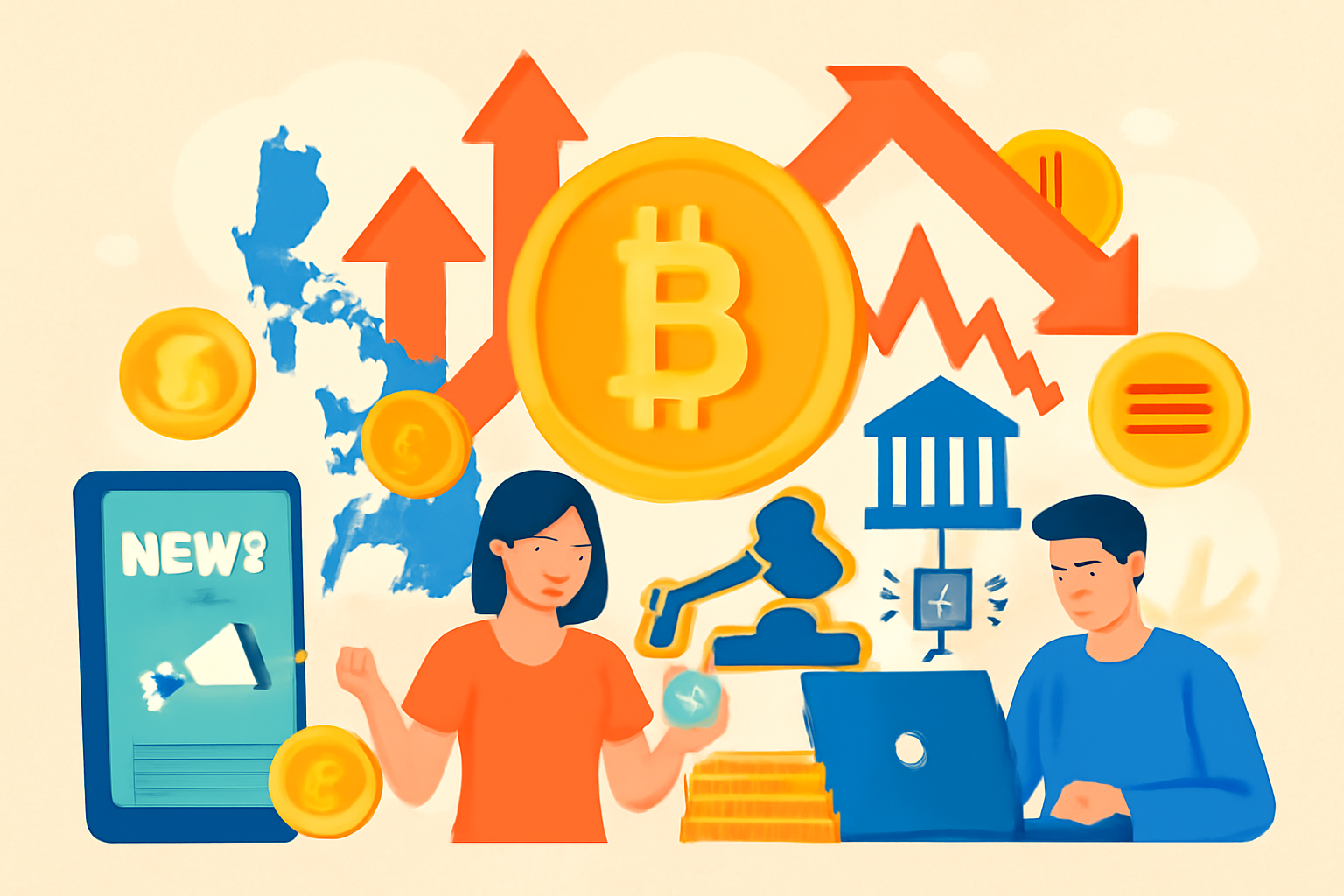
The cryptocurrency market is notoriously volatile, with prices of digital currencies often experiencing significant fluctuations within short periods. In the Philippines, this volatility is especially pronounced, as the country has become one of the most active markets for cryptocurrencies in Southeast Asia. From Bitcoin and Ethereum to local tokens and newer altcoins, the surge and decline in crypto prices have caught the attention of investors, regulators, and tech enthusiasts alike. So, what exactly drives the price fluctuations of cryptocurrencies in the Philippines, and why do some coins experience dramatic surges? Let’s explore the factors influencing these dynamics.
1. Market Sentiment and Speculation
In the crypto world, market sentiment plays a massive role in price movements. Sentiment is often driven by news, social media trends, and speculation about future events that could affect the market. In the Philippines, as in other parts of the world, social media platforms such as Twitter, Reddit, and Facebook groups dedicated to cryptocurrency are filled with opinions and rumors, sometimes leading to dramatic price swings. Positive news, such as a large company accepting cryptocurrency as payment or a government announcement on crypto regulation, can trigger buying sprees, causing prices to surge. On the flip side, negative news, such as security breaches or crackdowns on cryptocurrency activities, may lead to panic selling.
For instance, the Philippine government’s increasing interest in regulating and integrating cryptocurrency into the financial system has led to both optimism and uncertainty among investors. When the country’s central bank, Bangko Sentral ng Pilipinas (BSP), makes moves towards clearer regulations, it often stirs a mix of excitement and caution, affecting how traders react to the market.
2. Global Crypto Trends
While local factors influence the price of crypto in the Philippines, global trends have a significant impact as well. The crypto market is highly interconnected, and major price shifts in global markets often affect local prices. For example, when major cryptocurrencies like Bitcoin or Ethereum experience a surge or decline in price on international exchanges, Filipino traders are quick to follow suit.
Moreover, the Philippines has a high number of crypto users, and many Filipinos rely on international exchanges, meaning global news about crypto can instantly reflect on local prices. Events like Bitcoin halving or Ethereum’s transition to Ethereum 2.0 (moving from proof-of-work to proof-of-stake) have sparked significant attention, driving price fluctuations both in global and Philippine markets.
3. Adoption and Use Cases of Cryptocurrencies
In the Philippines, the adoption of cryptocurrencies for practical use cases is also contributing to price fluctuations. Filipinos use cryptocurrencies not only for investment purposes but also for remittances, payments, and as a hedge against inflation. Cryptocurrencies like Bitcoin and stablecoins are increasingly used in the Philippines as an alternative to traditional money transfers, especially for overseas Filipino workers (OFWs).
For instance, coins such as Bitcoin and XRP have seen increased usage in remittance corridors due to lower transaction fees and faster transfer speeds compared to conventional methods like Western Union. When more people begin to adopt or use a specific cryptocurrency, demand increases, leading to a surge in its price. Additionally, with the rise of decentralized finance (DeFi) platforms and the popularity of non-fungible tokens (NFTs), other altcoins that power these platforms, such as Ethereum and Solana, have experienced surges.
4. Regulation and Legal Framework
The regulatory environment is a significant factor influencing the price of cryptocurrencies in the Philippines. The Philippines has been proactive in developing a legal framework for cryptocurrencies, with the BSP introducing guidelines for exchanges and companies operating in the crypto space. These regulations create a sense of legitimacy and stability, encouraging both domestic and foreign investors to engage in crypto trading.
However, regulatory uncertainty in other parts of the world can create volatility in the Philippine market. For example, when countries like China or India introduce restrictive policies on cryptocurrency trading or mining, it creates a ripple effect, causing investors in the Philippines to re-evaluate their portfolios. Likewise, when the Philippines takes a progressive stance, such as legalizing the use of cryptocurrencies for remittances, the price of certain coins can rise, reflecting increased investor confidence.
5. Market Liquidity and Trading Volume
The liquidity and trading volume of a cryptocurrency can also play a role in its price fluctuations in the Philippines. Cryptocurrencies with higher liquidity tend to experience more stable price movements, as large buy or sell orders are less likely to cause dramatic shifts. On the other hand, lesser-known altcoins or coins with lower trading volumes are more prone to erratic price movements. This is particularly noticeable during times of market uncertainty, when traders may rush to buy or sell assets based on fear or greed.
The role of Filipino crypto traders in influencing price surges can also not be underestimated. As more Filipinos engage in crypto trading, especially through mobile apps and exchanges, the collective buying power of local investors can drive prices up. If a particular cryptocurrency becomes popular in the local community, it may experience a sharp price increase as demand outpaces supply.
6. Technological Advancements and Network Upgrades
Finally, technological advancements and network upgrades can influence the price of certain cryptocurrencies in the Philippines. The launch of new features, improvements in blockchain scalability, or the introduction of new applications (such as NFTs or DeFi protocols) can significantly impact investor perception. For instance, Ethereum’s transition to Ethereum 2.0 has been a major factor in the surge in Ethereum prices worldwide, including in the Philippines.
Likewise, when developers announce upgrades to existing blockchains, such as faster transaction speeds or lower energy consumption, the perceived value of the cryptocurrency may increase. These developments encourage both retail and institutional investors to purchase the coins in anticipation of future price increases due to improved functionality.
The cryptocurrency market in the Philippines is dynamic, with various factors driving price fluctuations. From market sentiment and global trends to adoption rates, regulation, liquidity, and technological advancements, several elements interact to cause dramatic surges in some coins. As the crypto market continues to evolve, staying informed about these factors is crucial for investors looking to navigate the volatility and potentially profit from the rise and fall of digital currencies.