
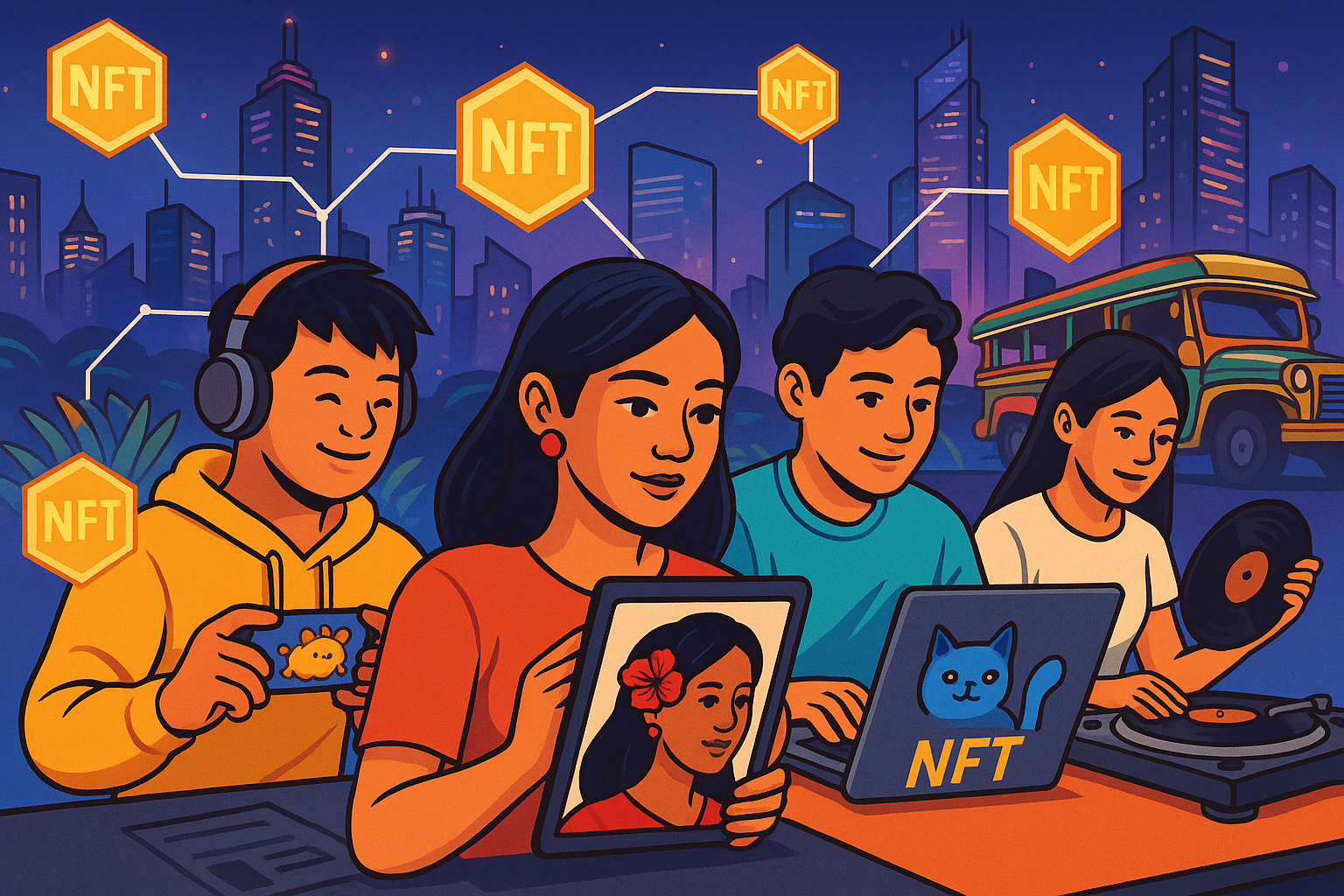
The Philippines has emerged as one of the most enthusiastic adopters of NFTs (non-fungible tokens) in Southeast Asia. What began with the play-to-earn gaming craze during the pandemic has evolved into a broader movement touching art, music, fashion, and digital entrepreneurship. For many Filipinos, NFTs are not just a tech trend, but a new way to earn, create, and connect with global audiences.
From Play-to-Earn Craze to NFT Awareness
NFTs first gained mass attention in the Philippines through blockchain games such as Axie Infinity, where players could earn tokens and potentially convert them into real income. In a country with relatively low average wages and high mobile internet usage, the idea of “playing to earn” spread quickly. This surge introduced millions of Filipinos to crypto wallets, digital ownership, and the concept of NFTs as unique digital assets.
Although the initial hype has cooled and earnings have become less predictable, that first wave played an important educational role. Many former players later became collectors, traders, or even creators of NFTs, seeding a broader NFT culture that now extends far beyond gaming.
New Opportunities for Filipino Creators
For Filipino artists, designers, and illustrators, NFTs opened doors that were previously challenging to access. Instead of relying solely on local galleries or client commissions, creators can mint their work on global marketplaces and sell directly to collectors around the world. Royalties embedded in smart contracts also mean artists can earn a percentage each time their NFT is resold.
Filipino crypto artists have experimented with everything from cyberpunk Manila skylines and jeepney-inspired designs to works that highlight local folklore and social issues. Musicians are also exploring NFTs to release limited-edition albums, exclusive tracks, or access passes to virtual events, while photographers use NFTs to authenticate and protect their images in the digital space.
Strengthening Communities and Collaboration
The rise of NFTs in the Philippines has been accompanied by strong community building. Local groups host Twitter Spaces, Discord communities, and physical meetups in cities like Manila and Cebu. These spaces allow artists, developers, and collectors to share knowledge about pricing, marketing, security, and technical tools.
Collaborative NFT collections featuring multiple Filipino artists have become a way to cross-promote and highlight shared cultural themes. Some initiatives even donate a portion of sales to charity or community projects, tying digital creativity to real-world social impact.
Economic Potential and Its Limits
NFTs offer the possibility of income in global currencies, which can be especially powerful in a country with a large diaspora and widespread use of remittances. A single successful drop can be life-changing for an emerging artist. However, this potential also comes with significant risks.
Crypto markets are volatile, and earnings from NFT sales or play-to-earn tokens can fluctuate dramatically. Oversupply of low-quality projects makes it hard for new artists to stand out. Scams, rug pulls, and phishing attacks are persistent threats, especially for beginners who lack technical literacy. As a result, NFTs cannot be seen as a guaranteed pathway out of poverty, but rather as one more tool in a broader creative economy.
Regulatory, Ethical, and Environmental Questions
Regulators in the Philippines are still refining their stance on digital assets. While there has been guidance on cryptocurrencies and exchanges, NFTs often sit in a gray area between collectibles, securities, and digital goods. This uncertainty can make it difficult for startups, galleries, and creators to plan long-term business models.
Ethical and environmental issues also surface in local debates. Although major blockchains like Ethereum have shifted to more energy-efficient mechanisms, many people still associate NFTs with high carbon footprints. Plagiarism and unauthorized minting of other people’s artwork are serious concerns, forcing Filipino creators to learn how to protect their intellectual property and verify the authenticity of collections.
Where the Filipino Creative Ecosystem Might Go Next
Despite the challenges, NFTs are likely to remain part of the Philippine creative landscape. Developers are exploring how NFTs can represent tickets, memberships, in-game assets, or intellectual property rights. Educators and community leaders are starting workshops on crypto literacy, digital security, and sustainable creative careers.
If combined with better regulation, consumer protection, and infrastructure, NFT technology could strengthen the country’s already vibrant creative sectors—from comics and animation to indie music and game development. In this sense, the rising popularity of NFTs in the Philippines is not just a passing trend, but a laboratory for how a digitally savvy, highly creative population can reshape the way culture and value are produced and exchanged.