
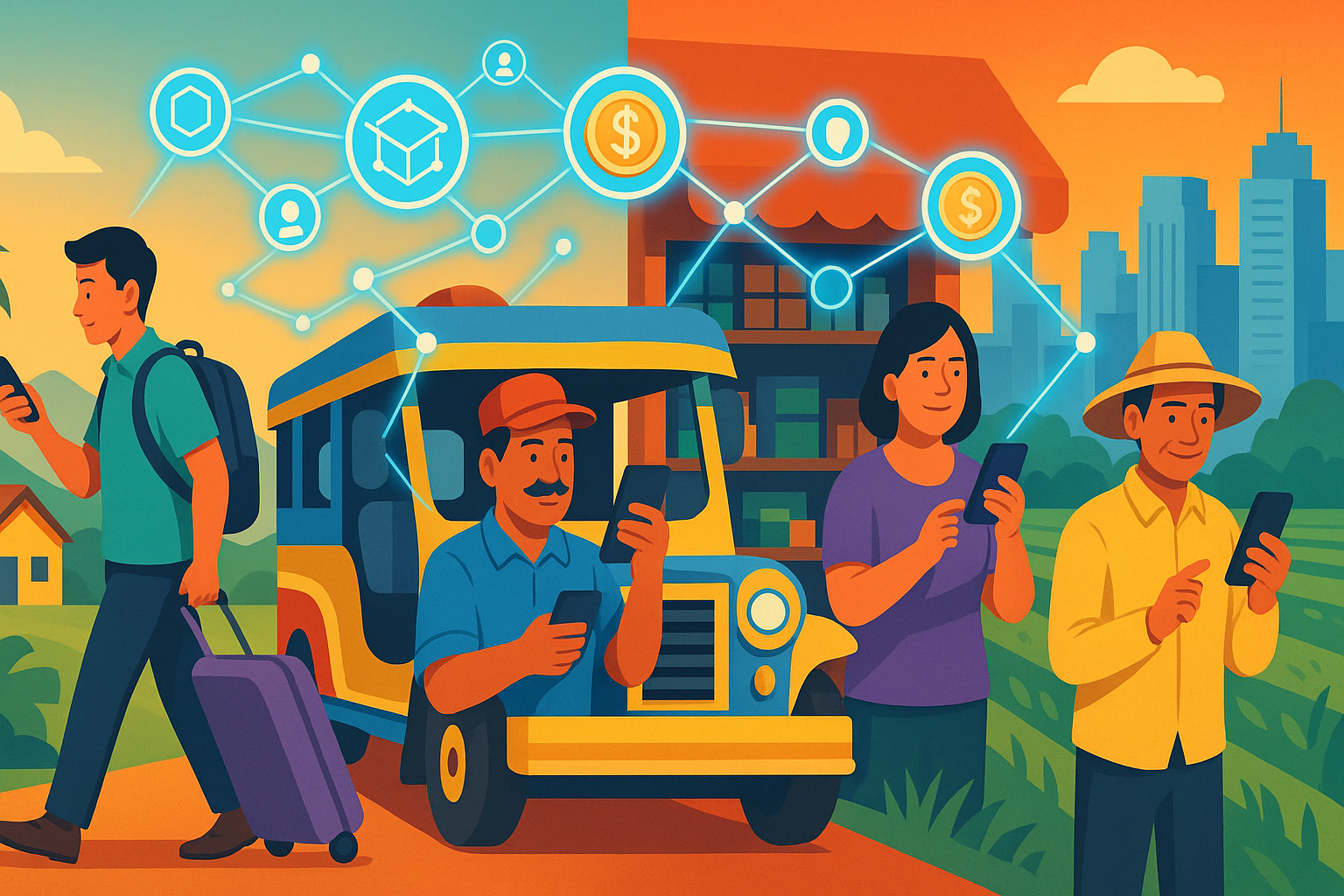
For millions of Filipinos, especially those in rural areas or working overseas, traditional banking still feels distant, expensive, and complicated. Many adults do not have a formal bank account, rely heavily on cash, and face long queues and high fees for simple services like sending or receiving money. At the same time, the Philippines has one of the world’s most active populations on the internet and social media, with high mobile phone penetration and a young, tech-savvy demographic. This contrast creates a powerful opening for Web3-based financial solutions.
Web3 refers to a new generation of internet infrastructure built on blockchain technology, where users can own digital assets directly, interact peer-to-peer, and access financial services without always going through traditional intermediaries. In the context of the Philippines, Web3 has the potential to make financial services more open, affordable, and tailored to the realities of everyday life.
One of the clearest opportunities lies in remittances. Millions of Overseas Filipino Workers (OFWs) send money home each month, often paying significant fees and waiting days for funds to arrive. Web3-based payment rails, especially those using stablecoins (cryptocurrencies pegged to a relatively stable asset like the US dollar or, in the future, possibly the Philippine peso), can move value across borders in minutes with lower costs. Local fintechs and Web3 startups can then provide user-friendly apps and cash-out partners—such as pawnshops, sari-sari stores, and agents—to turn those digital funds into pesos on the ground.
Beyond remittances, Web3 can help people who are “underbanked” rather than completely excluded. Decentralized finance (DeFi) platforms can offer savings, lending, and investment opportunities to anyone with a smartphone and internet connection. In theory, a small business owner or farmer could access credit based on on-chain transaction history or tokenized collateral, instead of needing formal payslips or land titles that many do not have. While this vision is still emerging and comes with risks, it points to a model where financial history can be built digitally, not just on paper.
Another promising area is tokenization of real-world assets and community initiatives. Cooperatives, local businesses, or even neighborhood projects could issue digital tokens representing shares, loyalty points, or future revenue. These tokens could be traded or used as collateral on Web3 platforms, potentially widening access to capital for micro, small, and medium enterprises (MSMEs) that struggle to get bank loans. For a country where MSMEs are a backbone of employment, this could be transformative if applied carefully and ethically.
Web3 also enables programmable money through smart contracts. This is valuable for things like micro-insurance and targeted aid. For instance, a crop insurance payout could be triggered automatically based on weather data feeds, reducing paperwork and delays. Government agencies, NGOs, or international donors could distribute assistance in token form, time-locked or restricted to certain merchants, improving transparency and reducing leakage.
However, the path is far from simple. Web3 can amplify existing inequalities if only the already tech-savvy benefit. Many Filipinos still struggle with digital literacy, unreliable connectivity, and English-heavy interfaces. Volatile crypto assets and scams have also damaged trust in the space. Without strong consumer protection, clear regulation, and robust education, the very people Web3 aims to help could be exposed to new kinds of risk.
Regulation in the Philippines will play a central role. The central bank has already engaged with digital payments and virtual asset service providers, but Web3 introduces new questions: How to handle DeFi protocols without a clear legal entity? How to enforce anti–money laundering rules while respecting user privacy? How to integrate peso-backed stablecoins into the financial system? Balanced rules that protect consumers without stifling innovation are essential.
To unlock Web3’s real potential for financial access in the Philippines, several elements need to come together: user-friendly apps in local languages, strong and affordable on/off-ramps between pesos and digital assets, partnerships between banks, fintechs, and Web3 startups, and broad-based education efforts that explain both opportunities and risks.
If these pieces align, Web3 will not simply be about speculative trading for a small urban minority. It could become part of the everyday financial toolkit of OFWs, jeepney drivers, sari-sari store owners, and farmers—helping them store value more safely, move money more cheaply, and access opportunities that were once out of reach.